

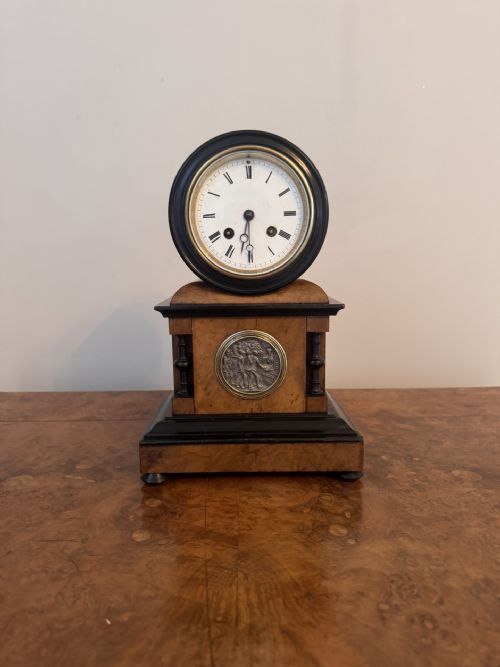
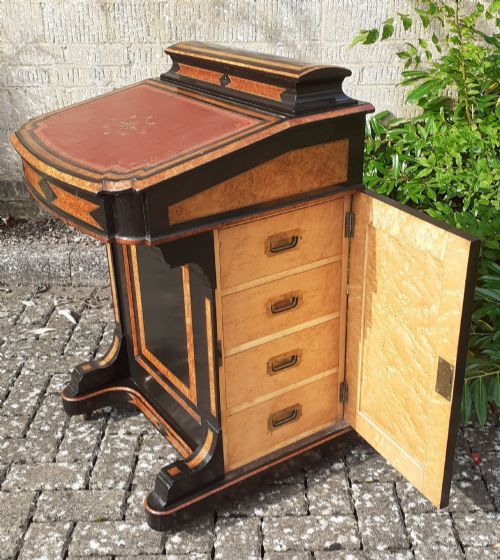
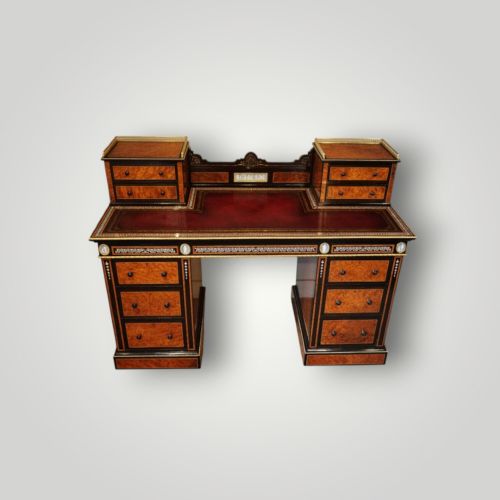
Antique Ebonised Desk
An antique ebonised desk brings a dramatic, dark-finished surface to a room, offering both historic utility and striking visual contrast.
Antique Ebonised Desk
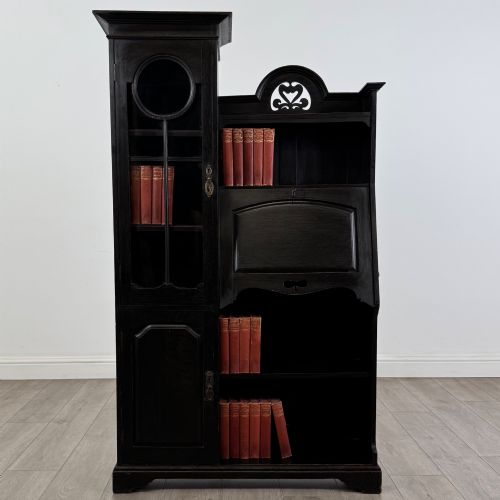
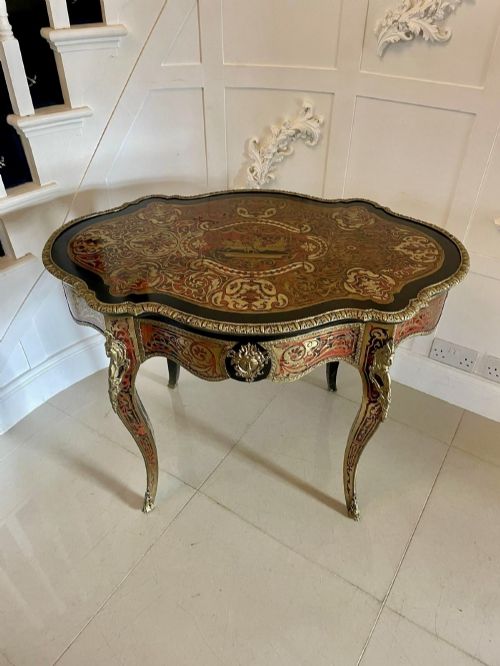
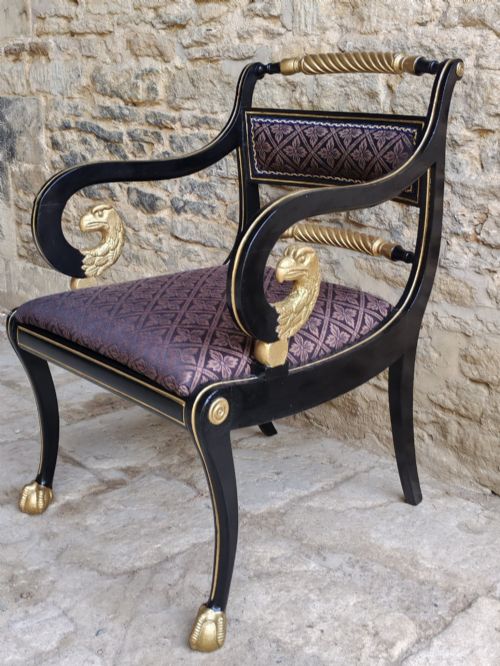
When searching for an antique ebonised desk, buyers encounter writing furniture coated in a dark, opaque finish designed to mimic expensive ebony wood. These pieces emerge predominantly from the nineteenth century, including Victorian and Aesthetic Movement iterations.
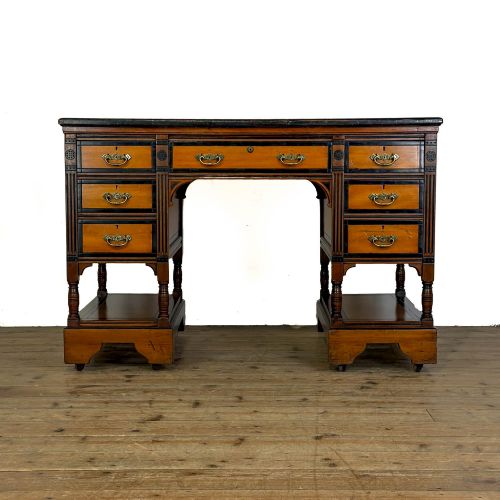
The most common forms on this page include partners desks, pedestal desks, Davenport desks, and smaller writing tables. Makers utilised this dark finish to create formal, striking silhouettes suited to period libraries and studies.
Beyond standard writing desks, the category encompasses bureau plat writing tables, ladies writing desks, and campaign styles. These variations display the broad application of ebonising across different scales and social functions.
How they were made
Cabinet makers typically used fruitwoods, beech, or mahogany as a base timber, applying a dark stain or black paint to achieve the dense ebonised finish. This technique allowed workshops to produce fashionable dark furniture without relying entirely on scarce tropical hardwoods.
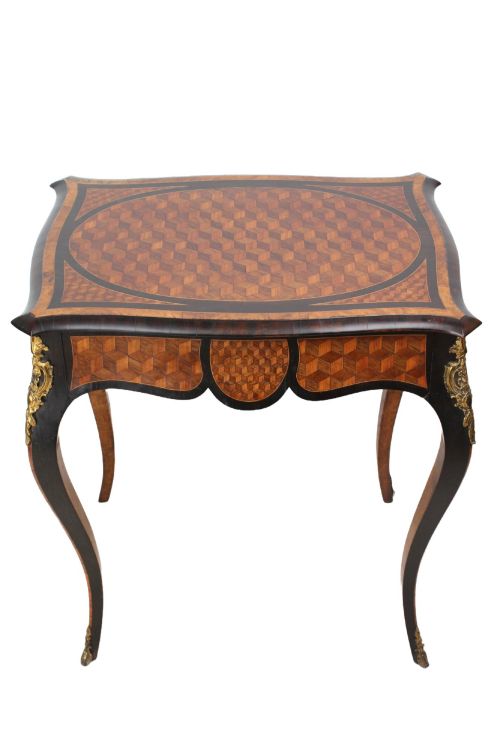
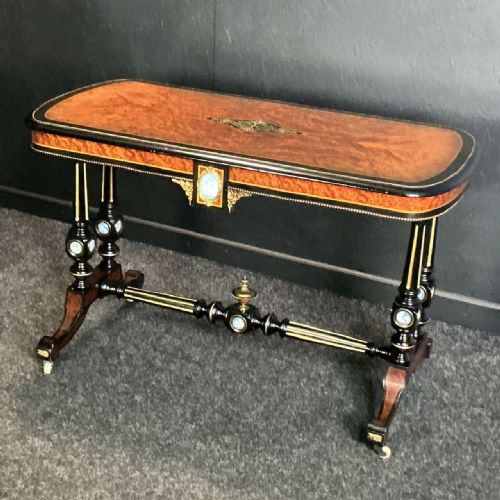
Surfaces frequently incorporate contrasting inlays of burr walnut, amboyna, or mother of pearl, alongside gilt details and brass mounts. Writing surfaces commonly feature inset panels of tooled leather to provide a durable writing plane.
Structural embellishments often include porcelain plaques, Wedgwood inserts, or ormolu mounts, reflecting the high craftsmanship of Victorian and French design influences. Joinery techniques from the period ensured robust construction beneath the decorative dark exterior.
Antique Ebonised Desk Retail Price Guide 2026
Typical asking prices for ebonised desk among the pieces listed under this phrase on Sellingantiques today, from the lower quarter to the upper quarter. They describe what is for sale here now, not the wider market.
The furniture records span Victorian, Regency, Edwardian, and Aesthetic Movement design styles.
What varies in quality
Quality in these desks is determined by the depth and preservation of the ebonised finish and the precision of any contrasting inlay work. Superior examples exhibit tightly fitted brass mounts, crisp carving, and intact secondary timbers such as oak or mahogany within the drawers.
The sophistication of the internal fittings, such as secret compartments in bureau desks or finely turned stationery galleries, separates standard production from exceptional cabinet work. Maker attribution, through stamps or documented styles, elevates the standing of a piece.
The integration of secondary decorative elements, including hand-tooled leather inserts and undamaged ceramic or porcelain plaques, indicates a higher tier of original manufacture.
JAS Shoolbred·Jackson and Graham·Edwards and Roberts·Gillows·Wilkinson and Son·Marsh Jones of Leeds
The Antique Ebonised Desk Glossary
- Ebonised
- Wood treated with stain, paint, or chemical processes to simulate the dark, dense appearance of ebony. This finish became especially popular during the Victorian and Aesthetic periods.
- Davenport
- A compact writing desk featuring a sloping, hinged desktop over a bank of side drawers. It typically includes internal compartments for stationery.
- Partners Desk
- A large double-sided desk designed for two people to work opposite one another, featuring drawers and cupboards on both sides. These were staples of nineteenth-century libraries and offices.
- Ormolu
- Gilt bronze ornamentation applied to furniture and decorative objects. It provides metallic contrast against dark ebonised wooden surfaces.
- Bureau Plat
- A freestanding writing table with drawers in the frieze, lacking the superstructure of a traditional bureau. Originating in France, these tables offer finished backs for placement in the centre of a room.
Antique Ebonised Desk: Frequently Asked Questions
How do I care for an ebonised finish?
Maintain the surface by dusting with a soft, dry cloth and avoiding direct sunlight or excessive moisture. Apply specialist wax sparingly to preserve the sheen of the dark wood.
Harsh chemical cleaners can strip the historical finish. Gentle handling ensures the longevity of the ebonised surface.
What is an Aesthetic Movement desk?
Aesthetic Movement desks reflect late nineteenth-century design principles emphasising simplicity, geometric lines, and artistic decoration over heavy historic revivalism. They frequently feature ebonised surfaces paired with subtle gilt or brass highlights.
These pieces often draw inspiration from Japanese art and design. They represent a shift toward lighter, more stylized domestic furnishings.
Can I use a partners desk in a small room?
Partners desks are substantial pieces built to be viewed from all sides, requiring ample central floor space to function effectively. Placing one against a wall obscures one set of drawers, diminishing its original purpose.
Consider room dimensions carefully before acquiring a double-sided desk. Smaller writing tables or Davenport desks serve tighter spaces better.
How do I identify a Victorian ebonised desk?
Examine the secondary timbers inside the drawers, such as oak or pine, alongside the construction methods typical of nineteenth-century workshops. Stylistic clues often include incised gilt decoration, burr walnut panels, and brass hardware.
Maker stamps or registration marks can provide definitive dating. The presence of specific revival motifs, such as Louis XV or Renaissance details, also points to the Victorian era.