



19th Century Escritoire
A 19th century escritoire provides a private writing space with a fitted interior behind a drop-front panel.
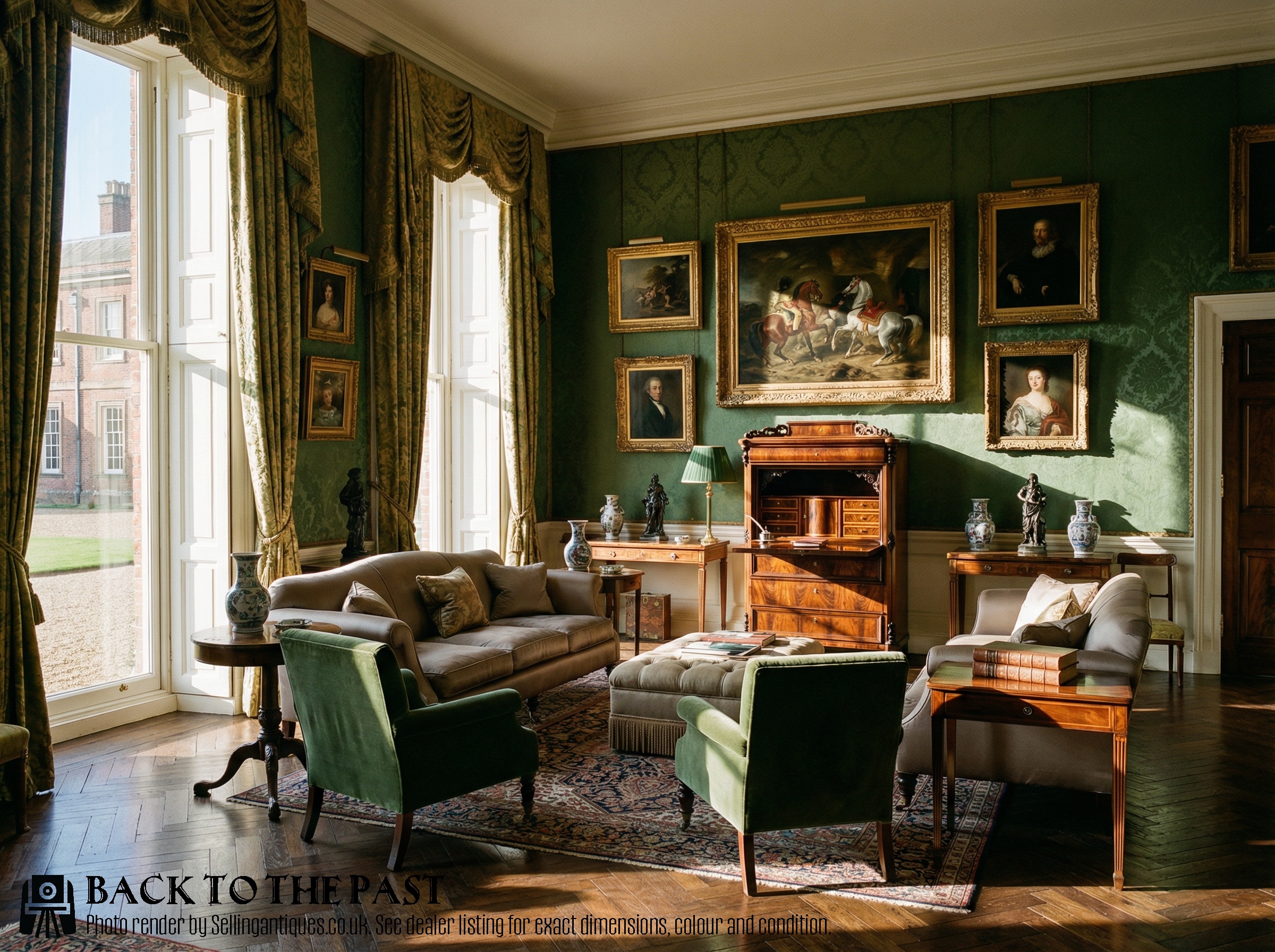
19th Century Escritoire
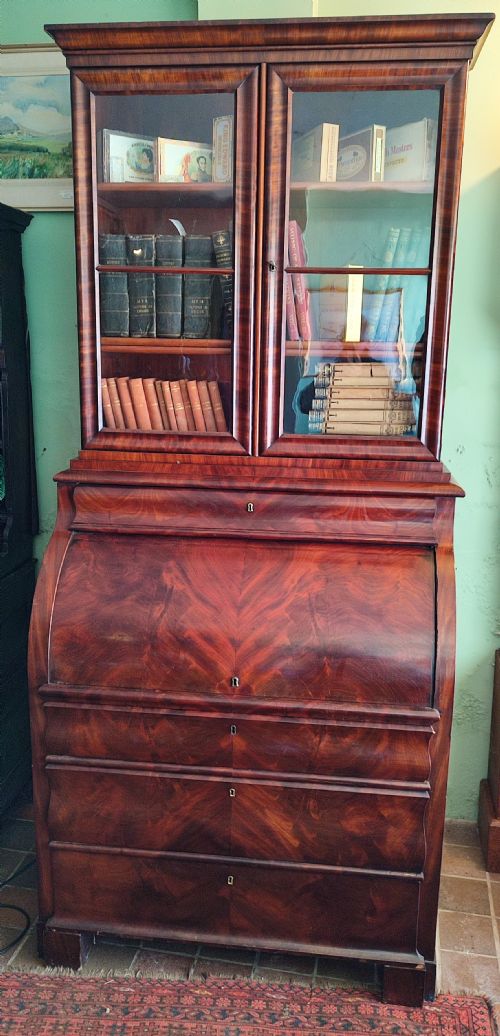
A 19th century escritoire is a dedicated writing cabinet featuring a fall-front desk surface that conceals internal pigeonholes and small drawers. These pieces range from upright cabinets known as secretaires to smaller ladies writing desks and bureau bookcases.
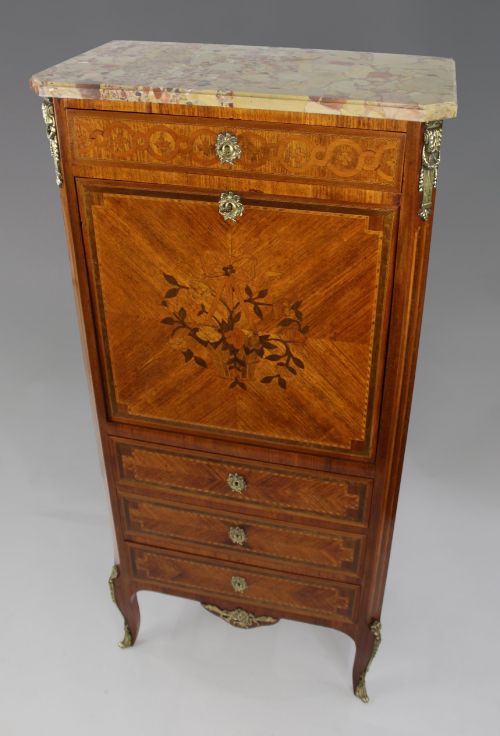
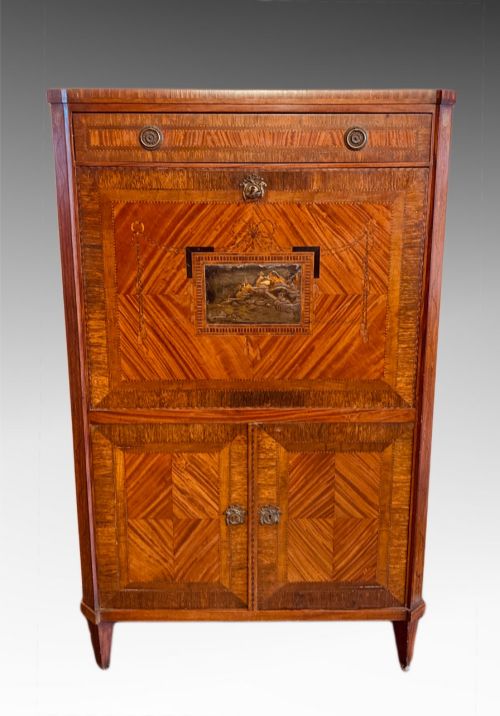
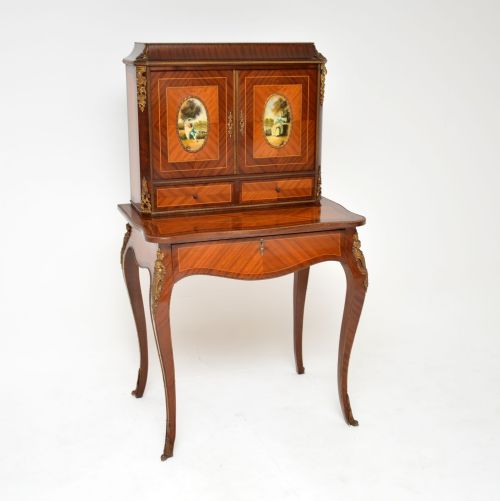
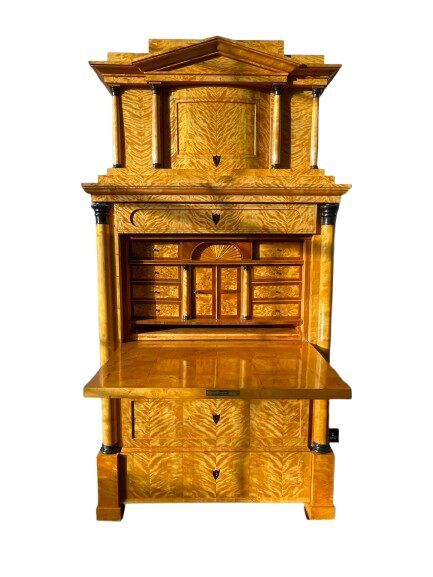
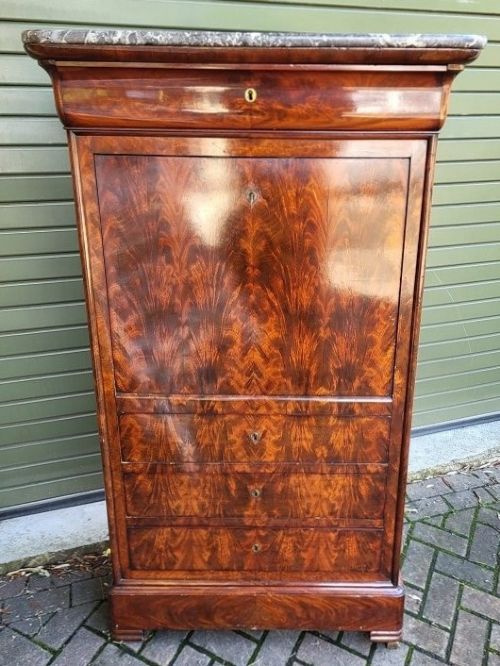
The versions most frequently met on this page include French fall-front cabinets adorned with marquetry and ormolu, alongside architectural Biedermeier examples in birch and mahogany. They combine concealed storage with a compact footprint designed for domestic correspondence.
How they were made
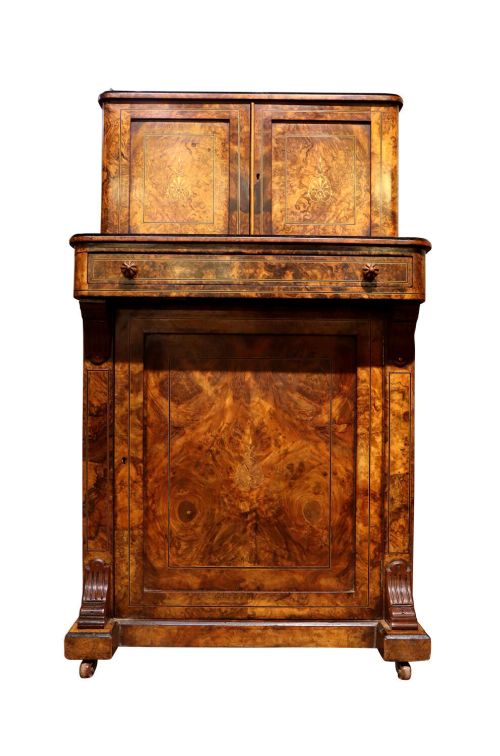
Cabinetmakers constructed carcass frames from solid woods like mahogany, oak, and pine, applying decorative veneers of kingwood, rosewood, walnut, and satinwood to the exterior surfaces. Marquetry panels and contrasting stringing added elaborate pictorial details.
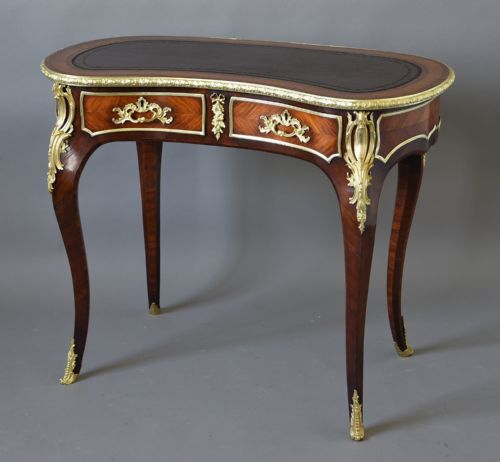
Metal mounts in brass and ormolu reinforced corners and framed drawers, while specialised fittings included inset leather writing surfaces and marble tops. Interior mechanisms often incorporated secret compartments operated by hidden spring catches.
19th Century Escritoire Retail Price Guide 2026
Typical asking prices for 19th century escritoire among the pieces listed under this phrase on Sellingantiques today, from the lower quarter to the upper quarter. They describe what is for sale here now, not the wider market.
Listings feature 19th century escritoires in mahogany, rosewood, kingwood, and satinwood, spanning French Rococo, Biedermeier, and Victorian styles.
What varies in quality
The refinement of the cabinetwork dictates the standing of an individual piece, visible in the precision of the marquetry cuts and the grain alignment across drawer fronts. Superior examples exhibit hand-chased ormolu mounts rather than cast-brass alternatives.
Internal execution reveals structural standards, observed in the secret drawers, flush-fitting fall-front panels, and the choice of secondary woods used inside the pigeonholes. Consistency between internal joinery and external decoration defines the upper tiers.
Befort Jeune·George Faulkner Armitage·Morris and Co·George W Jack
The 19th Century Escritoire Glossary
- Escritoire
- A writing cabinet featuring a sloping or vertical drop-front panel that opens to reveal a desk surface and interior compartments. It serves the dual purpose of enclosed storage and private correspondence.
- Secretaire à abattant
- An upright cabinet with a hinged fall-front writing flap that conceals fitted drawers and pigeonholes. This taller format maximises vertical wall space while offering a full writing desk.
- Ormolu
- Gilded bronze mounts applied to furniture for decorative enrichment and corner protection. The technique involves a mercury amalgamation process used extensively in French cabinetmaking.
- Marquetry
- Inlaid wood veneers assembled to create pictorial or geometric patterns across flat surfaces. Craftsmen select contrasting timbers to achieve natural tonal variations.
- Bonheur du jour
- A light ladies writing desk featuring a small cabinet or superstructure atop the main writing surface. This refined form gained popularity during the 19th century for boudoir use.
19th Century Escritoire: Frequently Asked Questions
What is a 19th century escritoire?
A 19th century escritoire is a formal writing cabinet designed with a hinged drop-front panel that opens into a writing surface. These pieces provide concealed storage for stationery behind architectural or decorative facades.
Cabinetmakers built these desks to combine utility with display, incorporating internal compartments and drawers within domestic furniture.
How were they used historically?
Owners utilised these desks for private correspondence, storing letters, and managing personal accounts away from household traffic. The drop-front panel provided an immediate writing surface that could be closed to hide unfinished work.
In period interiors, they occupied parlours, bedrooms, and studies as functional focal points that matched the prevailing revival styles.
How do I identify a Biedermeier escritoire?
Biedermeier pieces display restrained geometric forms, flat planes, and pale Scandinavian or Germanic fruitwoods such as birch and mahogany. They emphasise natural wood grain over applied surface ornament.
Unlike ornate French revival cabinets, these designs favour architectural clarity and functional simplicity.
How do I live with a writing cabinet?
These cabinets suit modern living rooms and studies as compact storage units that open into impromptu desks. The internal compartments accommodate modern stationery while maintaining a traditional aesthetic.
Placing the cabinet away from direct sunlight protects delicate veneers like rosewood and kingwood from fading.