
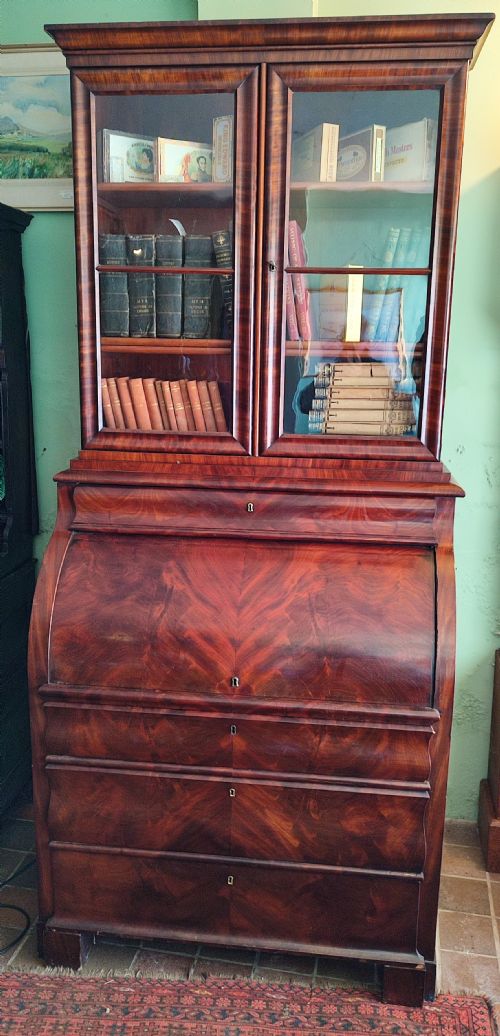


Antique Biedermeier Desk
An antique biedermeier desk brings clean continental lines and striking timber grain into a study, combining architectural restraint with practical workspace.
Antique Biedermeier Desk
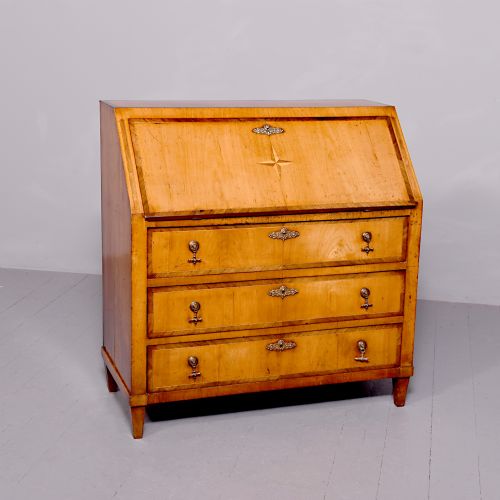
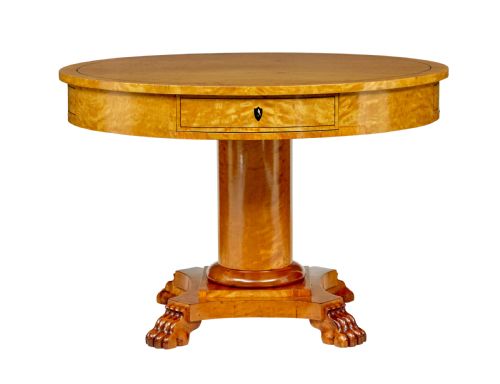
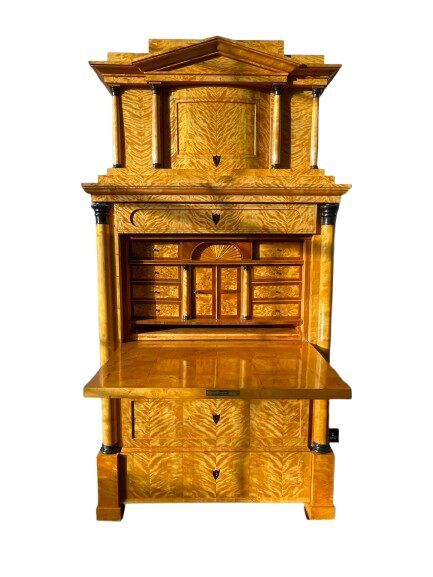
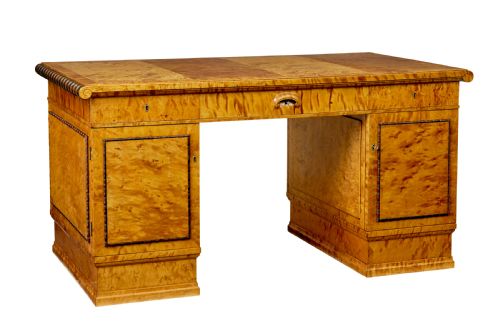
When you search for an antique biedermeier desk, you encounter pieces that originate primarily from continental Europe and Scandinavia during the nineteenth century. The selection ranges from pedestal desks and cylinder bureau bookcases to tall drop-front secretaire chests with fitted writing drawers.
Swedish and German workshops dominate these forms, often pairing architectural presence with restrained neoclassical proportions. Many examples function as multi-purpose items, integrating hidden compartments, leather inserts or fold-down writing surfaces behind polished cabinet fronts.
Evaluating the standard
Quality rests principally on the choice and handling of the veneer, where book-matched figuring and careful symmetry distinguish superior cabinetwork from plain construction. The depth of the polish and the crispness of the architectural mouldings further separate workshop output.
The internal execution of fitted drawers, secret compartments and drop-front mechanisms determines the merit of a piece. Original brass fittings and sound structural integrity complete the hierarchy between standard regional furniture and master cabinetmaker production.
A travelling purser needed a secure desk aboard ship just as much as a Swedish count needed one in a salon.
Conrad Eduard Mappe
The Antique Biedermeier Desk Glossary
- Secretaire
- A cabinet or desk featuring a concealed writing surface, often a drop-front panel that folds down to reveal small drawers and pigeonholes.
- Biedermeier
- A style of Central European furniture from the nineteenth century defined by utilitarian comfort, clean lines and an emphasis on architectural form over heavy ornamentation.
- Veneer
- A thin layer of figured wood applied over a secondary timber base to create decorative patterns and display rich grain without structural warping.
- Ebonised
- Wood treated with a chemical stain or finish to imitate ebony, providing dark, contrasting highlights against blonde birch or mahogany.
- Pedestal desk
- A freestanding writing table supported by two banks of drawers or columns rather than traditional corner legs.
Antique Biedermeier Desk: Frequently Asked Questions
How do I identify a genuine period desk?
Examine the timber preparation, veneer matching and internal secondary woods to confirm nineteenth-century construction methods. Genuine examples display hand-cut joinery and period-appropriate hardware rather than modern fixings.
Look closely at the drop-front hinges and drawer linings for signs of age and consistent wear. Continental workshops utilised specific regional timbers like birch and mahogany that differ from later reproductions.
How should I care for timber surfaces?
Keep the wood away from direct heat sources and strong sunlight to prevent the veneer from drying and splitting. Regular dusting with a dry, soft cloth maintains the polished finish.
Apply a quality beeswax polish sparingly when the wood appears dry, buffing gently along the grain. Avoid chemical sprays that can degrade the historic polish.
Were these desks used for writing?
Drop-front secretaires and pedestal tables served administrative, correspondence and study needs in nineteenth-century homes. The fitted interiors held stationery, inkwells and private documents behind locked doors.
Many designs concealed the writing compartment when closed, allowing the furniture to double as decorative storage in salons and bedrooms.
What is the difference between birch and mahogany pieces?
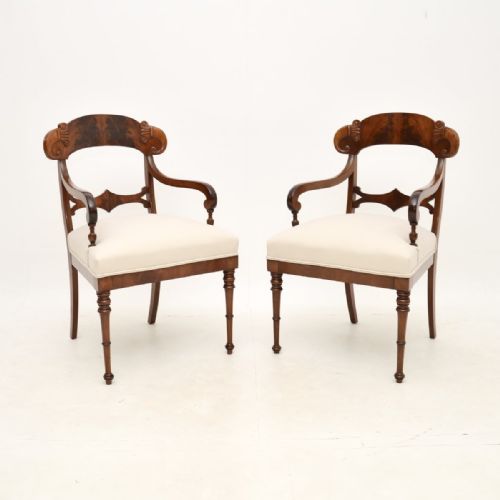
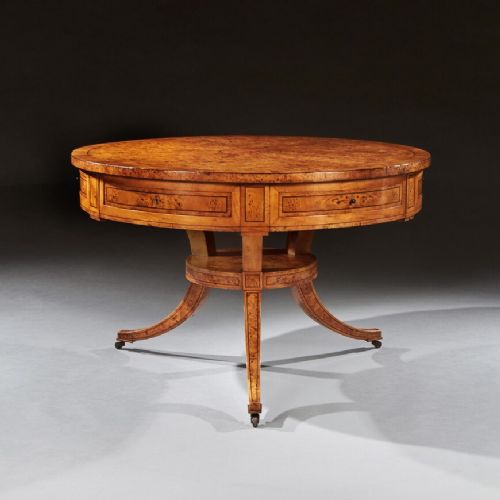
Birch and masur birch variants tend to originate from Scandinavian workshops, offering lighter, blonde tones with lively, figured grain patterns. Mahogany and walnut versions often reflect German or broader continental production, featuring deeper, reddish-brown hues.
Both timbers received the same high standard of cabinetmaking but create entirely different visual impacts within an interior space.