



1930s Art Deco Bureau
A 1930s art deco bureau combines geometric elegance with practical writing storage, offering a sophisticated centrepiece for a period workspace.
1930s Art Deco Bureau
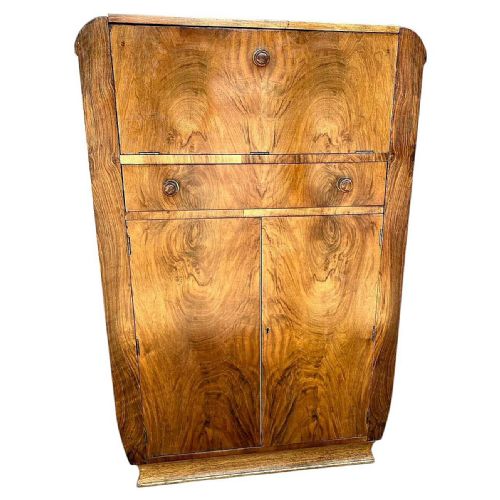
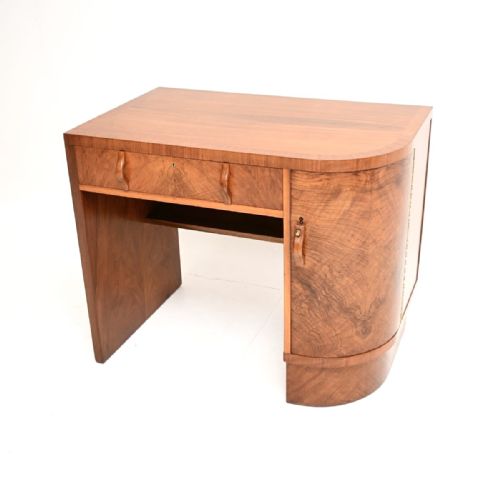
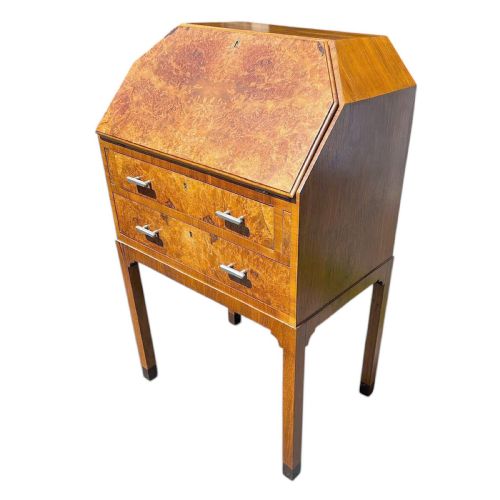
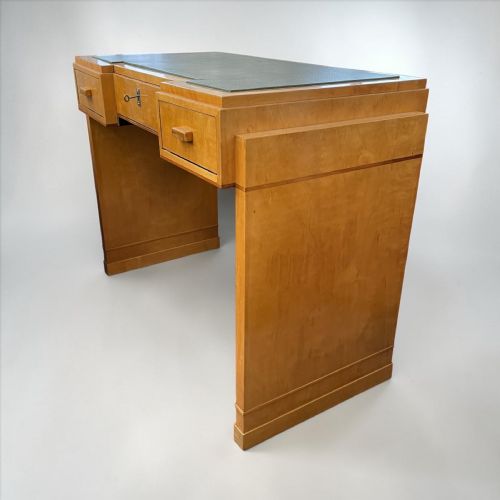
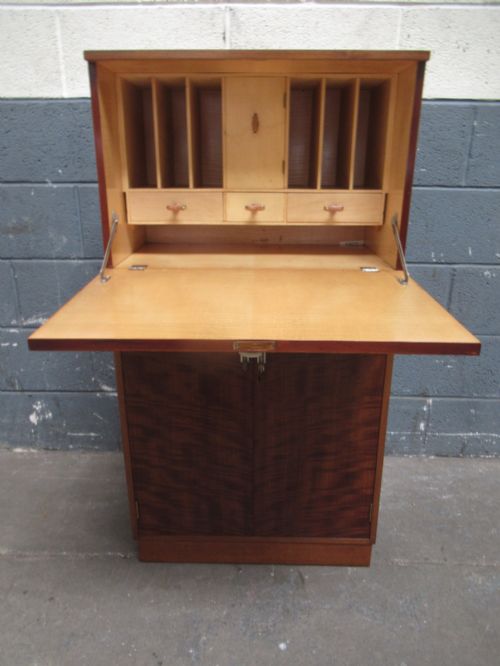
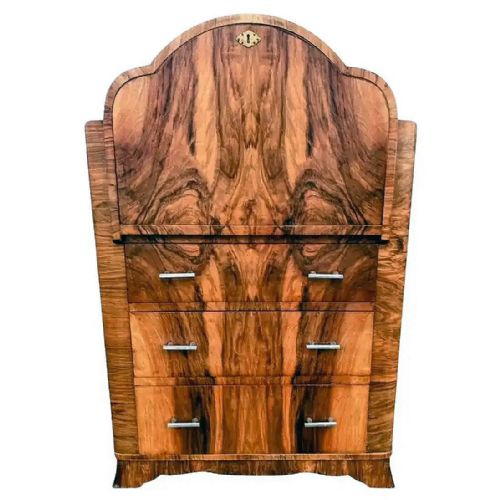
A 1930s art deco bureau is a dedicated writing surface that integrates enclosed compartments or shelving, typical of the 1930 period style. These pieces span from compact writing desks to upright glazed bookcase bureaus and cloud shaped writing furniture.
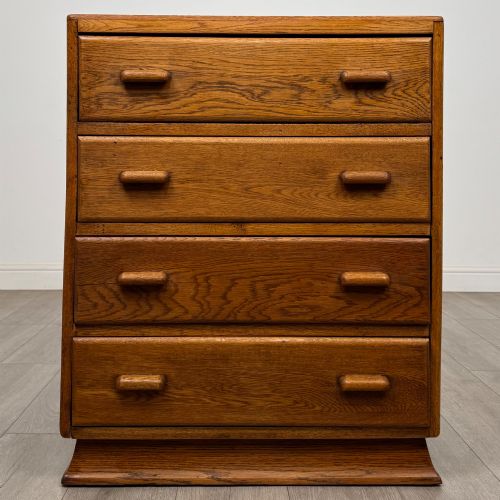
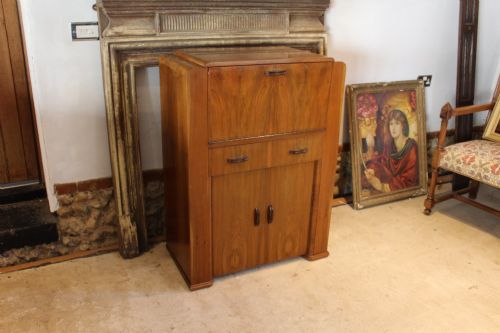
Most examples found on this page originate from the 1930 decade, though related forms draw upon Edwardian and 1920 influences. Alongside standard bureaux and desks, related forms include chests of drawers and cocktail cabinets.
Makers and origins vary between English workshops and continental designers, incorporating distinctive architectural silhouettes characteristic of the Art Deco style.
What varies in quality
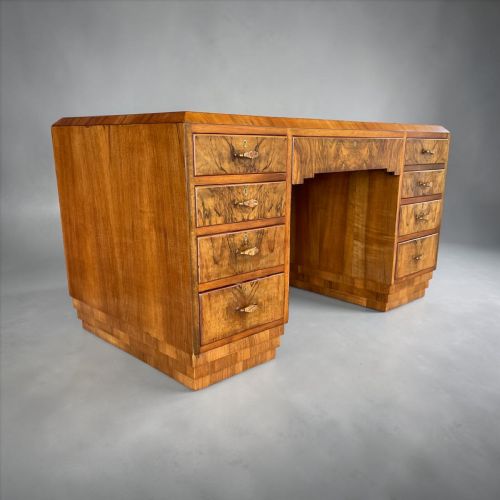
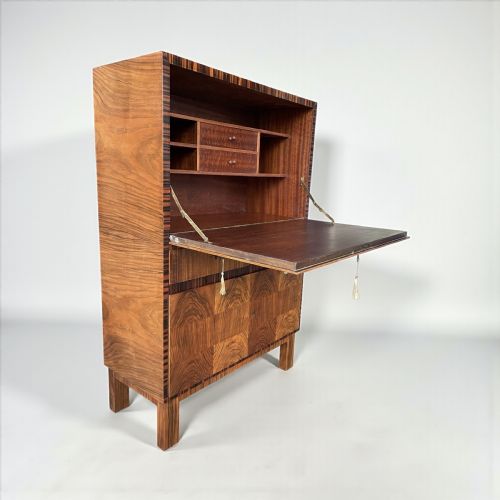
The selection and matching of wood veneers dictate the visual appeal of each surface, with figured and burr walnut showing distinct grain patterns. The integration of specialty materials like burr elm and glass elements changes the overall execution.
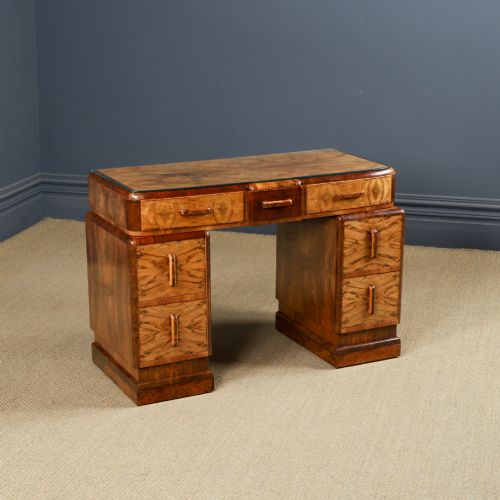
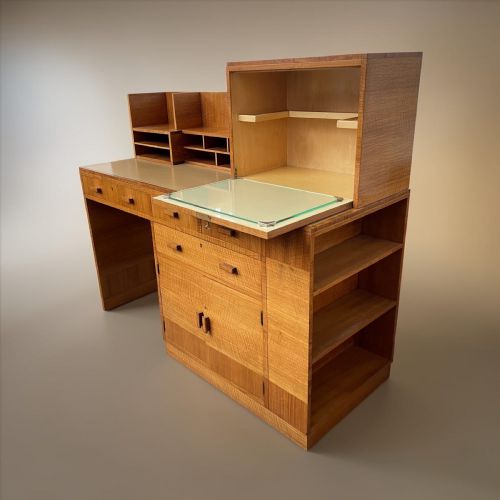
Structural complexity ranges from simple upright writing desks to elaborate bureau cabinets featuring glazed bookcases and pedestal office designs. The attribution to known makers or specific retail houses introduces distinct craftsmanship variations.
The furniture spans writing desks, bureau cabinets, cocktail cabinets, and chests of drawers rooted in the 1930 style.
F.H. Marshall & Co Glasgow·Heal's·Étienne Kohlmann·Maurice Adams
The 1930s Art Deco Bureau Glossary
- Bureau
- A writing desk fitted with a hinged flap that conceals pigeonholes and small drawers. This form provides a concealed workspace when closed.
- Burr Walnut
- Timber taken from a tree growth that produces intricate, swirling grain patterns. Cabinet makers prize this wood for its decorative surface finish.
- Pedestal Desk
- A flat top writing table supported by two piers or columns of drawers. These often feature upright pedestals flanking a central kneehole.
- Cocktail Cabinet
- A piece of furniture designed for storing drinks and glassware. These units frequently match the walnut veneers of contemporary bureaux.
1930s Art Deco Bureau: Frequently Asked Questions
Where were these bureaus made?
The pieces originate primarily from English workshops, alongside continental pieces such as French designs from the era. Makers range from established retailers to named designers.
Regional variations appear in the choice of secondary timbers and the specific interpretation of the Art Deco style.
How do I care for walnut veneer surfaces?
Maintain walnut and burr walnut veneers by keeping them away from direct sunlight and consistent heat sources to prevent fading and drying. Use soft cloths for dusting.
Apply appropriate furniture wax sparingly to preserve the sheen of the timber without building up excess residue.
What is the difference between a bureau and a desk?
A bureau specifically incorporates a sloping or drop down writing flap that encloses small compartments and pigeonholes when not in use. A standard desk offers an open flat surface.
Bureaux often double as bookcase combinations or compact writing cabinets suitable for smaller residential spaces.