
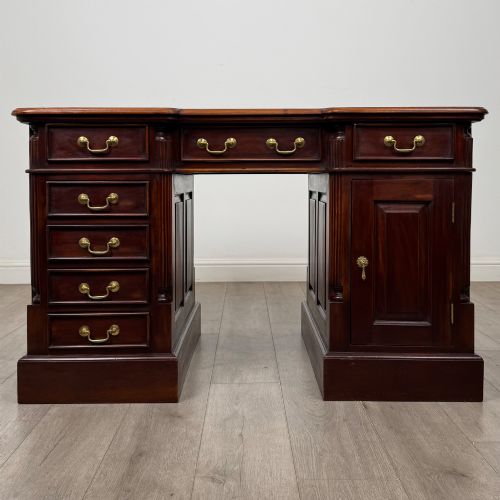
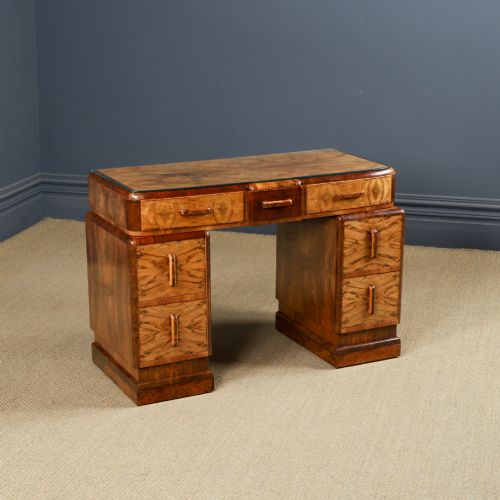
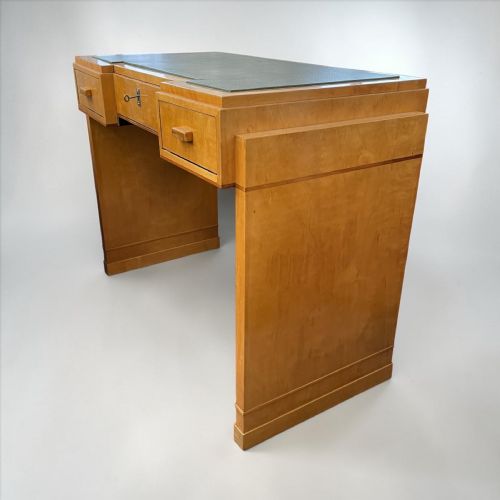
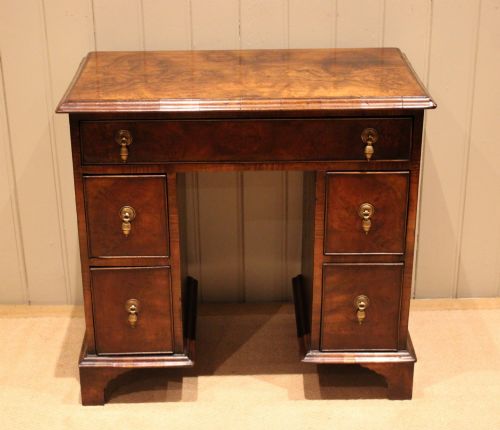


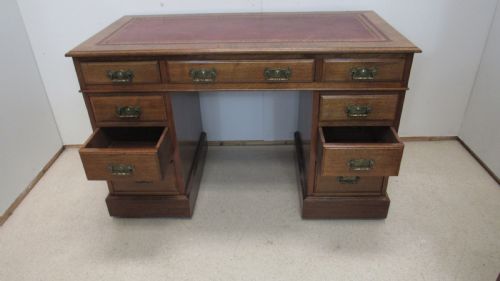
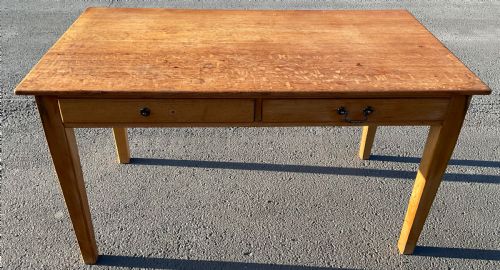


Vintage Wooden Computer Desk
A vintage wooden computer desk is a sturdy pedestal or kneehole workspace built from traditional timbers, combining period character with modern function.
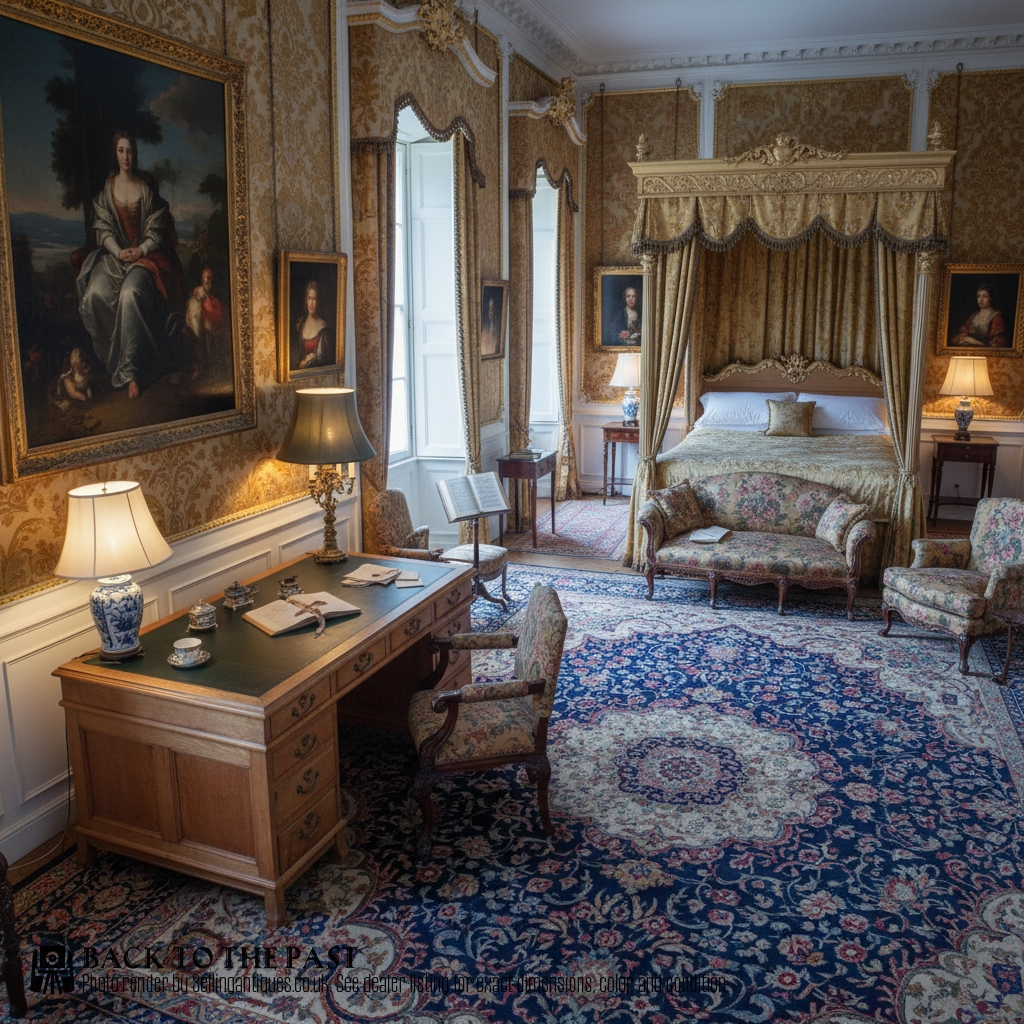
Vintage Wooden Computer Desk
A vintage wooden computer desk brings solid timber construction and traditional joinery to a modern workspace. When searching for a vintage wooden computer desk, buyers encounter pedestal desks, writing tables, and kneehole forms originating from the nineteenth and twentieth centuries.
The pieces listed on this page span the Victorian era, the Edwardian period, and the 1930s Art Deco movement. Mahogany and oak dominate the selection, accompanied by walnut, burr elm, birch, and pitch pine.
Pedestal formats with central kneeholes provide the typical layout found in these listings. These workspaces range from compact proportions to large golden oak writing tables suited for daily use.
How they were made
Cabinet makers constructed these pieces using dense hardwoods like mahogany, oak, and walnut, frequently enhancing surfaces with figured burr elm veneers. Timber selection dictated the structural integrity and visual depth of each pedestal desk.
Secondary materials such as brass hardware and leather inserts complement the primary wooden frames. Glazing appears on select Art Deco skyscraper designs, while traditional joinery secures the drawers and pedestals.
Pitch pine makes an appearance here, proving that even humble workshop timbers scrub up rather nicely for the parlour.
What varies in quality
Quality rests in the selection of timber figures, such as highly grained burr walnut or figured mahogany, alongside the crispness of the serpentine fronts and mouldings. Finer examples display balanced proportions and substantial secondary timbers throughout the interior drawers.
The refinement of period details, from Edwardian brass handles to Chippendale Revival or Queen Anne style flourishes, separates standard utilitarian pieces from exceptional cabinet work.
The Vintage Wooden Computer Desk Glossary
- Pedestal desk
- A freestanding desk comprising two supporting pedestals of drawers with a central kneehole space between them. This form provides substantial storage capacity while maintaining a finished appearance on all sides.
- Kneehole
- The central recessed space beneath the desk top designed to accommodate the user's legs while seated. It is often flanked by banks of smaller drawers.
- Burr elm
- A distinctive timber growth featuring swirling, irregular grain patterns highly prized for decorative veneer panels. Cabinet makers utilised it to create striking visual contrast on drawer fronts and top surfaces.
- Serpentine front
- A furniture front characterised by a gentle undulating contour curving outward at the centre and inward at the sides. This technique demands advanced woodworking skill to shape accurately.
Vintage Wooden Computer Desk: Frequently Asked Questions
Are these desks suitable for modern computers?
These pieces offer generous surface areas and sturdy pedestal construction that easily support contemporary screens and equipment. Their traditional drawer configurations accommodate modern office accessories while maintaining period charm.
Buyers often place laptops and monitors on these wooden surfaces without altering the original structure. The deep pedestals provide ample room for organising modern office supplies.
How do I identify a Victorian desk?
Victorian pieces frequently feature dense mahogany or oak timbers, deep drawers with hand-cut dovetails, and substantial proportions. Stylistic markers often include heavy mouldings and traditional brass pull handles.
Examining the secondary woods inside the drawers helps confirm the nineteenth-century origin. The weight and patination of the timber develop distinct characteristics over decades of use.
What is an Art Deco desk?
Art Deco desks from the 1930s showcase streamlined geometric forms, polished walnut veneers, and occasional glass elements like the skyscraper style. These designs favour sleek silhouettes over ornate Victorian carvings.
Such pieces reflect modernist interior trends of the interwar period. The emphasis shifts to smooth polished surfaces and dramatic wood grain patterns.
How should I care for a wood desk?
Maintain the timber finish by applying appropriate natural waxes and avoiding direct placement near heat sources or strong sunlight. Regular dusting with a soft cloth preserves the historical patination.
Harsh chemical cleaners can damage the historic polish and veneer surfaces. Gentle maintenance ensures the wood retains its natural lustre over time.