
Black Writing Table
A black writing table brings a dark, deliberate surface to a room, offering a functional desk grounded in ebonised wood, lacquer or leather.
Black Writing Table
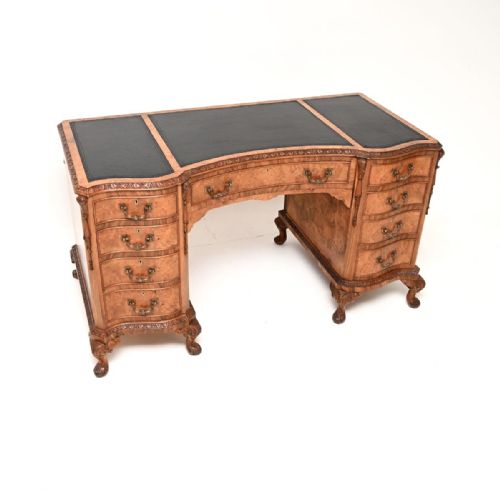
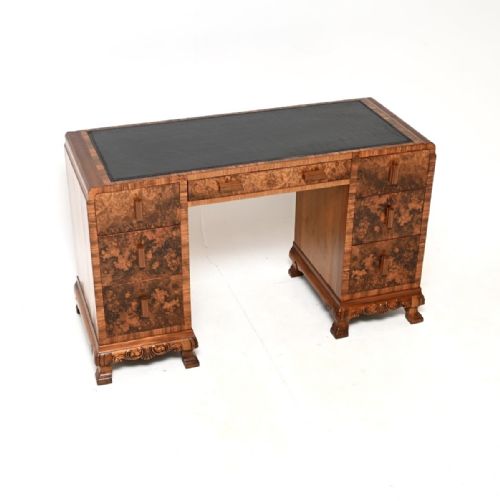
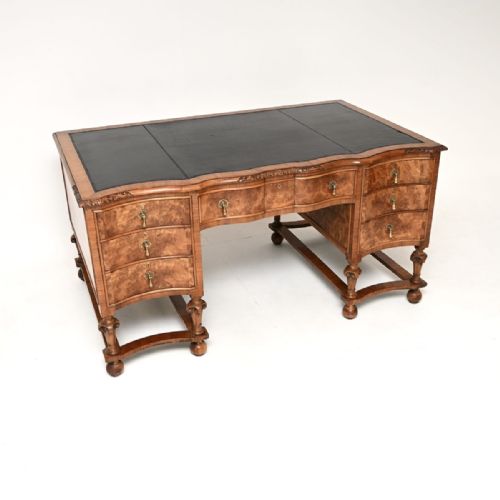
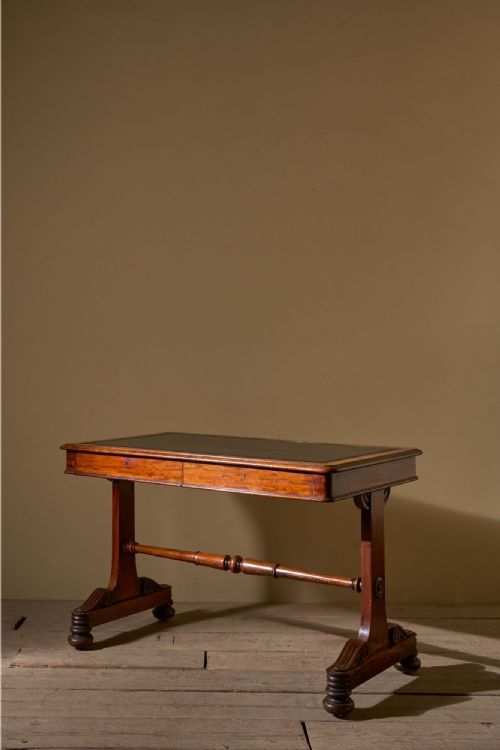
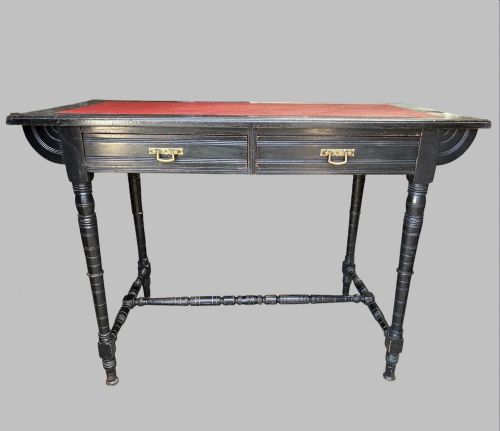
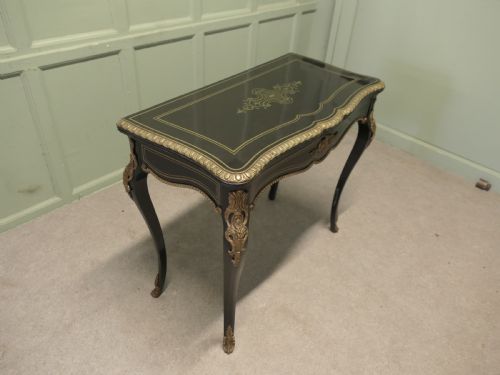
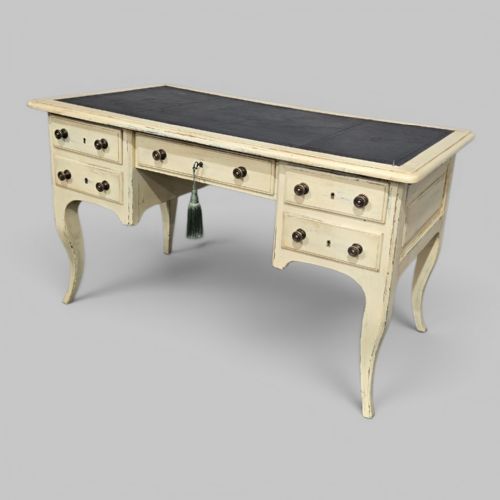
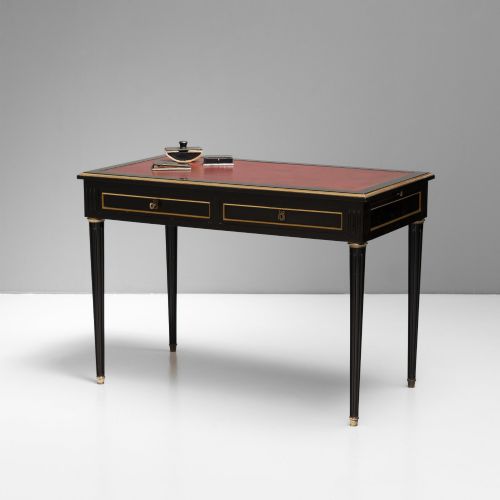
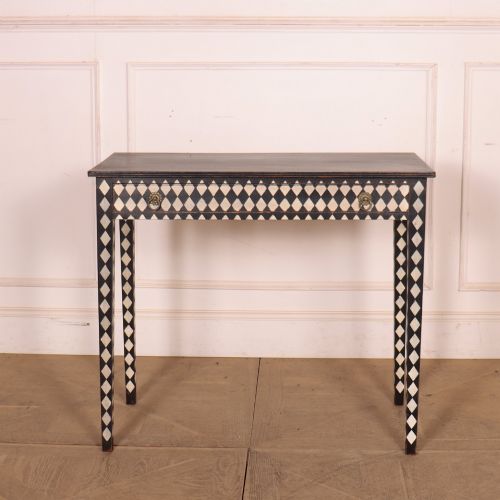
When you search for a black writing table, you encounter pieces designed for correspondence, study and administrative work, spanning formal bureau plats to compact Victorian side tables. The selection ranges from nineteenth-century ebonised French models with brass inlay to Art Deco variations and lacquered Chinoiserie forms.
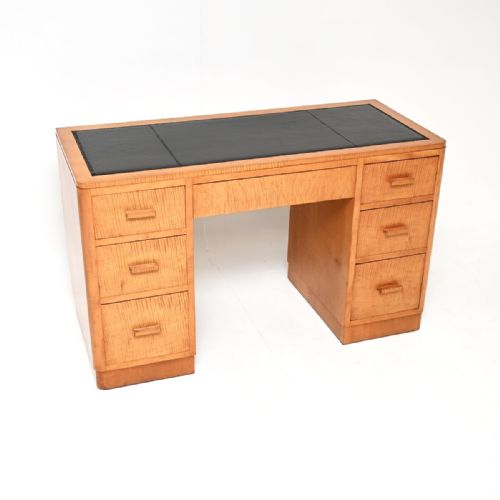
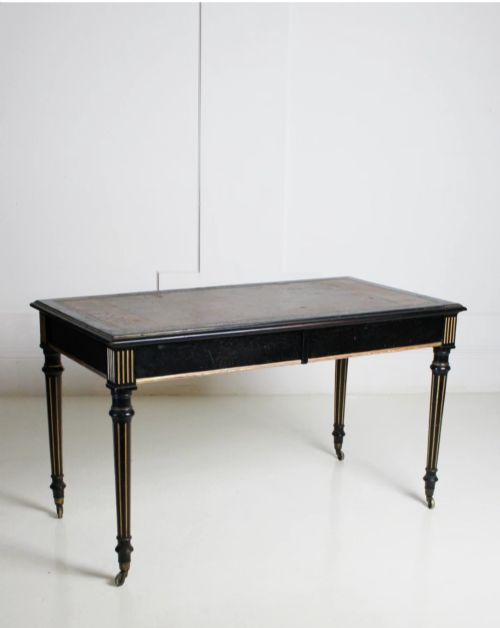
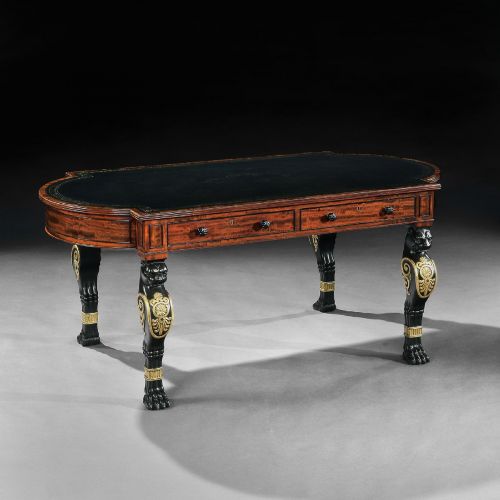
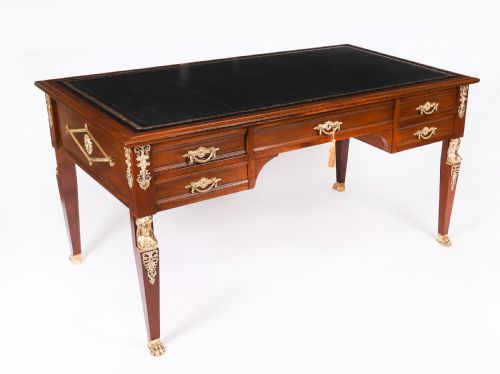
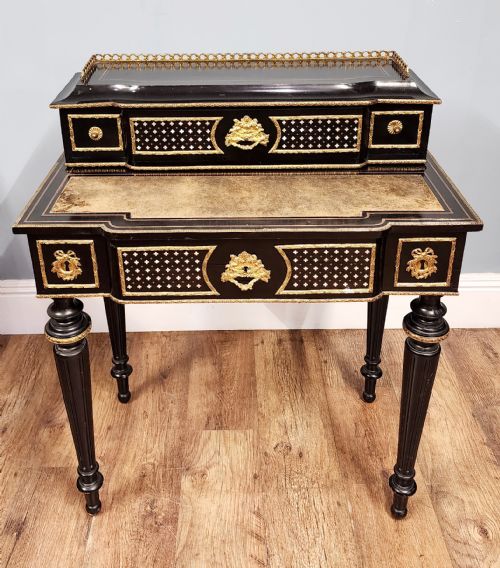
The most common versions on this page are nineteenth-century ebonised tables, often paired with gilt bronze mounts, alongside Victorian and later twentieth-century pedestal desks. Materials run from painted wood and ebonised mahogany to deep black lacquer, frequently inset with black or coloured leather writing surfaces.
How they were made
Maker's workshops built these tables using robust carcases of mahogany, walnut or oak, which were then ebonised, painted or finished with black lacquer to achieve a uniform dark tone. Surfaces were often fitted with inset leather panels for writing, surrounded by moulded timber or crossbanded borders.
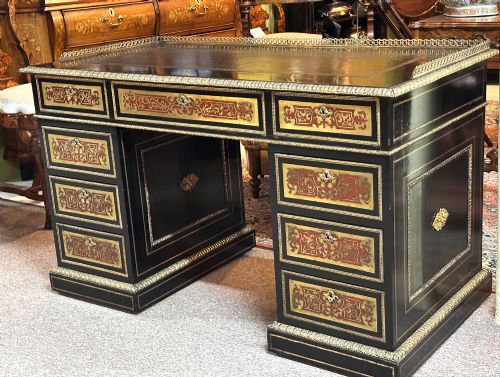
Decoration relied on applied brass inlays, ormolu mounts, gilt bronze details or intricate Boulle work, particularly on French nineteenth-century examples. Joinery followed traditional methods of the period, utilising dovetails for drawers and solid framing for stability.
A tiny eighteenth-century miniature bureau proves that even grand administrative furniture had to accommodate very small correspondence.
What varies in quality
Quality rests in the crispness of the ebonisation or lacquer finish, the depth and precision of the brass inlay or ormolu mounts, and the choice of secondary timbers. Finer pieces display careful hand-finishing, well-figured primary woods beneath the dark surface, and integrated hardware.
Construction standards differ between standard commercial furniture and pieces from established cabinet-makers. Superior tables maintain rigidity across the writing surface, smooth drawer operation, and intact decorative metalwork without replacement elements.
Maple and Co·Johnstone and Jeanes·Maison Millet·Paul Sormani
The Black Writing Table Glossary
- Ebonised
- Wood treated with stain, dye or polish to imitate genuine ebony. This dark finish was widely utilised during the Victorian and Aesthetic periods.
- Bureau Plat
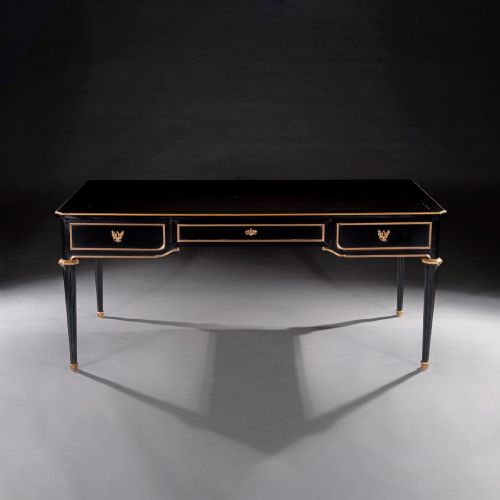
- A freestanding French writing table featuring a rectangular top and one or more drawers in the frieze. These pieces typically stand on slender cabriole or tapered legs.
- Ormolu
- Gilt bronze mounts applied to furniture for decoration. The technique involves treating bronze with a mixture of gold and mercury.
- Partners Desk
- A large double-sided desk designed for two people to work opposite one another. These pieces feature drawers and cupboards on both faces.
- Boulle Work
- A type of marquetry inlay utilising tortoiseshell and brass. Developed in France, it adorns high-status nineteenth-century tables.
Black Writing Table: Frequently Asked Questions
How do I use a black writing table today?
These tables function well as compact study desks, laptop stations or dressing surfaces in bedrooms. Their dark finishes allow them to anchor modern or traditional interiors.
Keep the writing surface clear to showcase the leather inlay or polished ebonised wood. Position them near natural light sources for practical daily tasks.
What is the difference between a bureau plat and a writing table?
A bureau plat specifically denotes a French freestanding writing table with a finished back, designed to sit in the centre of a room rather than against a wall. Standard writing tables may have simpler backs intended for perimeter placement.
Both forms provide a dedicated writing surface, but the bureau plat frequently carries more elaborate ormolu mounts and brass inlays.
How do I date an ebonised writing table?
Dating relies on examining the construction methods, secondary timbers inside the drawers, and decorative style markers. Victorian and nineteenth-century pieces often use mahogany or walnut beneath the ebonising, combined with characteristic brass hardware.
Art Deco examples from the 1930s exhibit geometric austerity, while earlier Georgian and Regency pieces show distinct classical proportions even when finished in dark tones.
Are leather inserts original?
Many nineteenth-century writing tables retain replacement leather tops, as the original material wore out through daily use. A replacement leather insert in a traditional gold-tooled style is standard for pieces of this age.
Inspect the surrounding timber rebate to see if the leather sits flush and matches the period aesthetic of the table.