

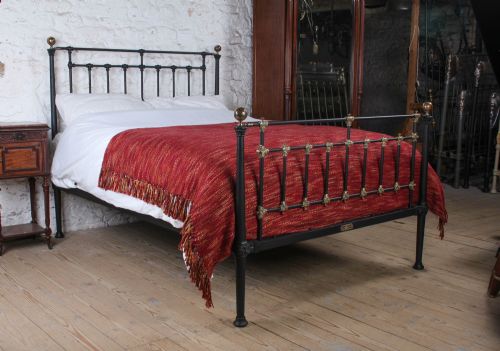
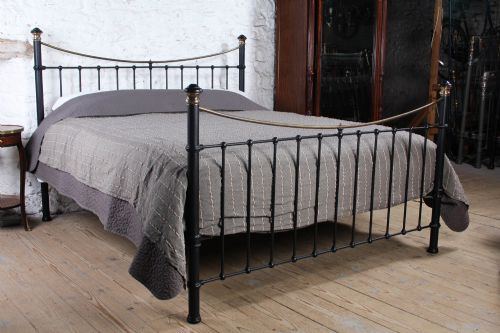

Black Metal Bedstead
A black metal bedstead anchors a bedroom with industrial strength and Victorian elegance, offering a sturdy frame that outlasts modern furniture.
Black Metal Bedstead
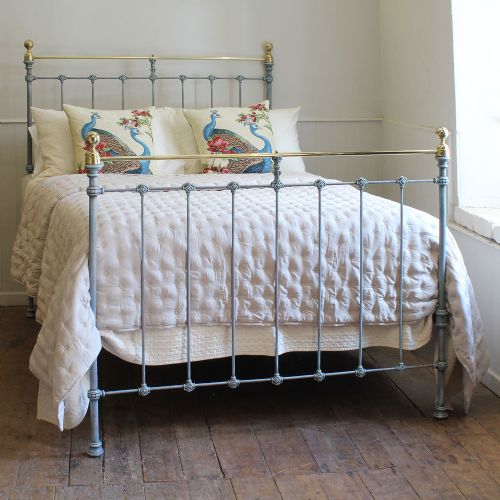
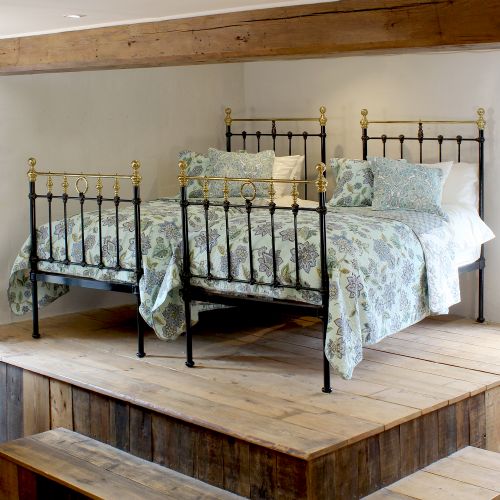
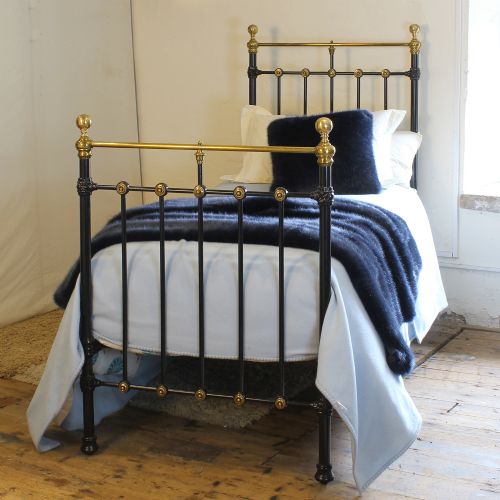
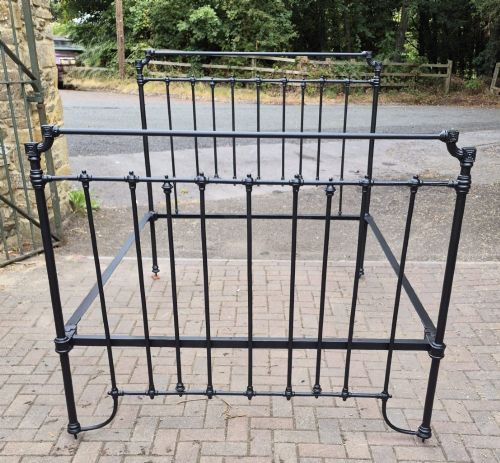
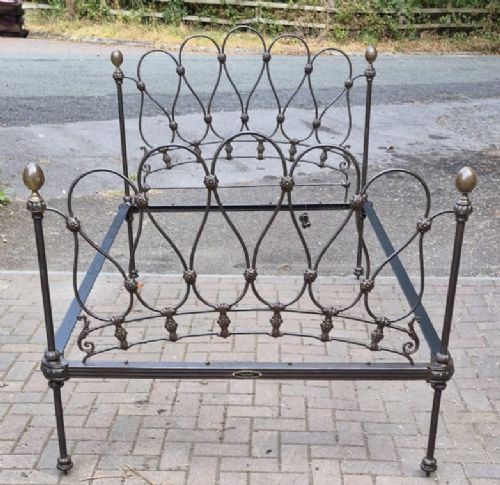
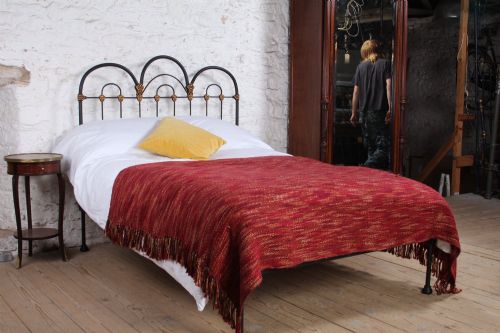
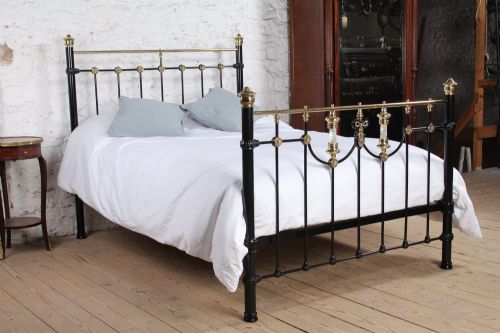
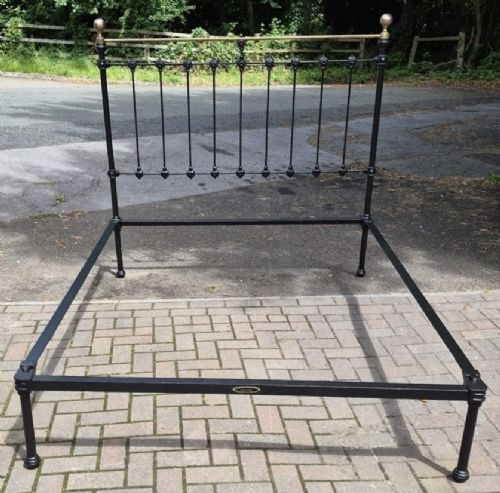
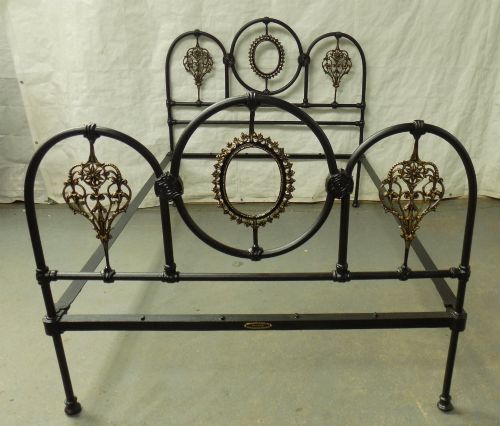
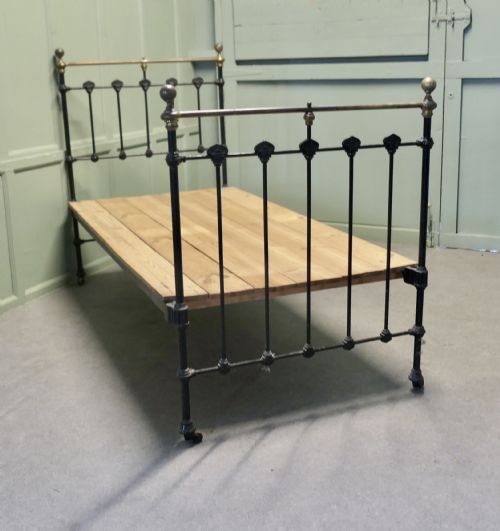
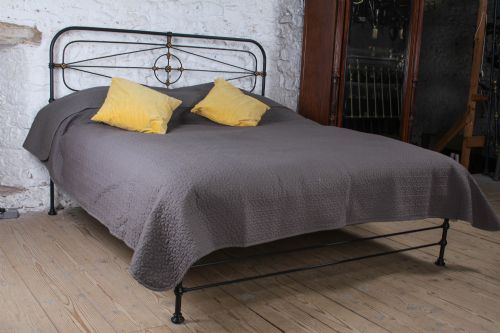
A black metal bedstead brings robust nineteenth and early twentieth century engineering into the modern bedroom. These frames combine dark iron structures with contrasting brass mounts, mother of pearl accents, and japanned lacquer finishes.
Buyers mostly encounter Victorian and Edwardian examples in king, super king, and double sizes. Many retain original maker marks and distinct architectural forms like dip rails and arched ends.
Materials and construction
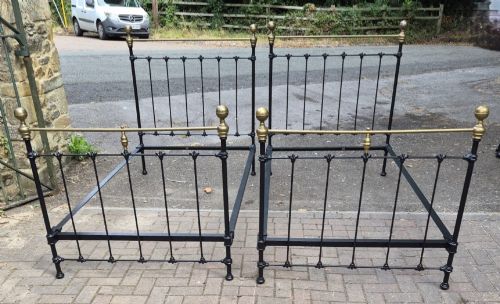
Manufacturers utilised cast iron for structural rigidity and ornate decorative junctions, while wrought iron formed the linear framework. Polished brass components such as finials and spindles provided a striking contrast to the dark iron body.
Specialised techniques included japanning to achieve a durable black lacquered surface on the sheet metal and iron components. Skilled founders cast intricate motifs directly into the bed ends, incorporating wood and mother of pearl details for added luxury.
Black Metal Bedstead Retail Price Guide 2026
Typical asking prices for black metal bedstead among the pieces listed under this phrase on Sellingantiques today, from the lower quarter to the upper quarter. They describe what is for sale here now, not the wider market.
Listings span the nineteenth and early twentieth centuries, featuring cast iron, wrought iron, and polished brass across Victorian and Edwardian styles.
Assessing quality and craftsmanship
Superior examples distinguish themselves through crisp casting detail in the ironwork and substantial brass components that retain their original threaded assembly bolts. Finer pieces often feature maker marks from renowned workshops, indicating higher grade materials and superior structural integrity.
The sophistication of the design dictates the tier of the piece, moving from plain single frames to ornate king size models with tapered posts and decorative spindles. Original surface finishes, such as untouched japanned lacquer, command greater appreciation than later repainted surfaces.
Winfield
The Black Metal Bedstead Glossary
- Dip rail
- A top rail on a bed end that curves downward in the centre. This configuration was common in Edwardian and late Victorian designs.
- Finial
- A decorative terminal ornament screwed onto the top of bed posts. These brass or iron elements often feature turned or cast ornamentation.
- Japanned lacquer
- A European imitation of East Asian lacquerwork used to create a glossy black protective coating on metal furniture.
- No end bed
- A bed frame lacking a high footboard, also known as a low end bed. This style suits rooms with limited space or restricted sightlines.
Black Metal Bedstead: Frequently Asked Questions
How do I fit a modern mattress?
Antique iron beds were built to nineteenth century dimensions, which differ slightly from standard modern mattress sizes. Custom mattress makers or specialist bed suppliers easily provide bespoke bases and mattresses to fit these historic frames.
Modern wooden slats or modern metal support systems can be integrated discreetly within the side rails to accommodate contemporary bedding without altering the historic frame.
Are these beds easy to assemble?
Most antique metal beds utilise a wedge and dovetail joint system on the side rails. These slots lock together firmly under the weight of the mattress without requiring complex tools.
Two people can easily assemble or dismantle the frame by hand in a matter of minutes, making relocation straightforward.
How do I clean the black finish?
Dust the frame regularly with a soft, dry cloth to prevent particulate buildup on the japanned lacquer surface. Avoid harsh chemical solvents that can strip the historic black finish.
A light application of microcrystalline wax protects the iron and brass components from atmospheric moisture and preserves the historic sheen.
How do I date a metal bed?
Dating relies on stylistic clues such as the presence of Art Nouveau motifs, heavy brass mounts, or simple straight rails. Victorian models often feature ornate cast iron detailing, whereas Edwardian versions tend to display cleaner lines like dip rails.
Maker marks stamped into the iron framework offer the most precise chronological indicator when traceable to specific nineteenth century factories.