
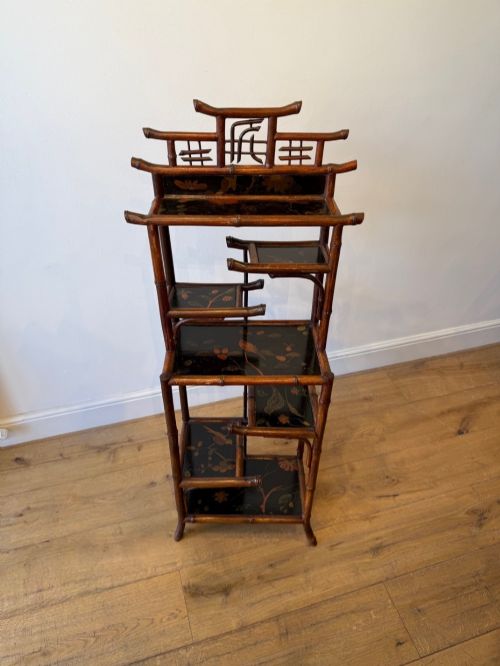
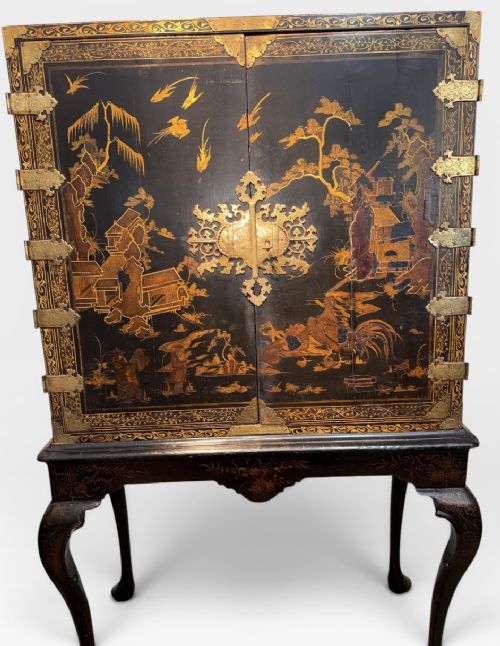
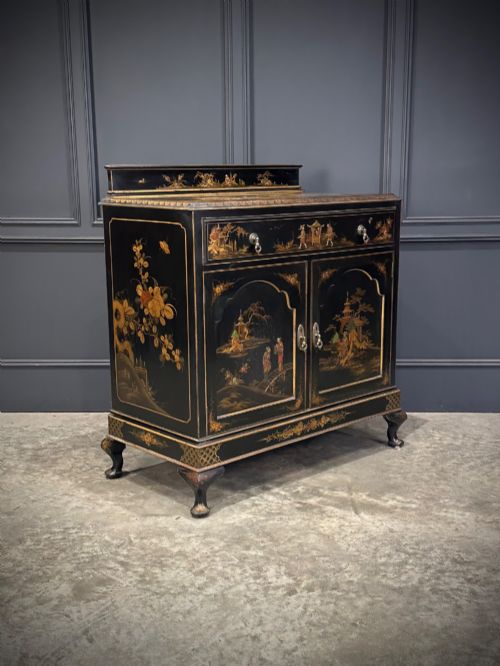
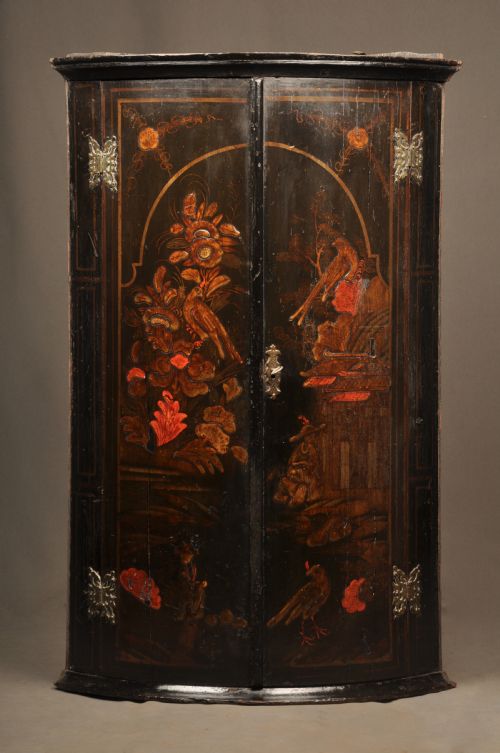



Black Japanned Cabinet
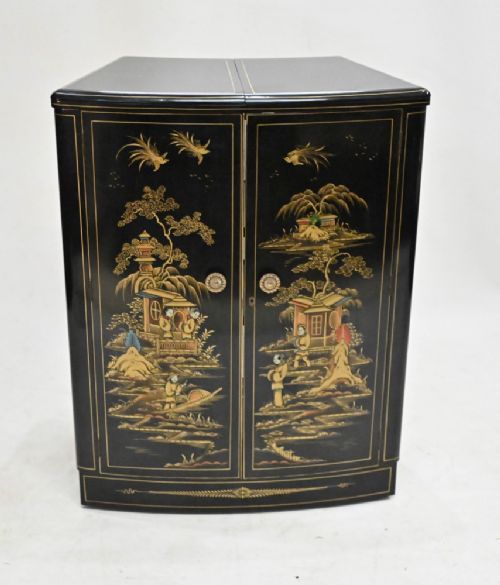
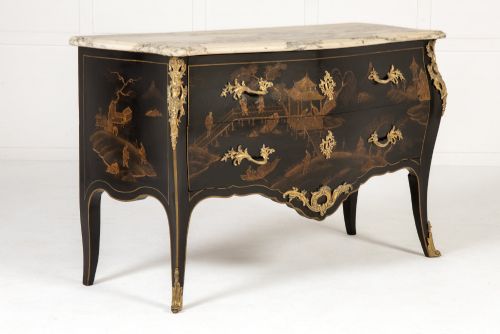
A black japanned cabinet brings deep dark lacquer and gilded narrative scenes into a room, offering both secretive storage and striking decorative presence.
Black Japanned Cabinet
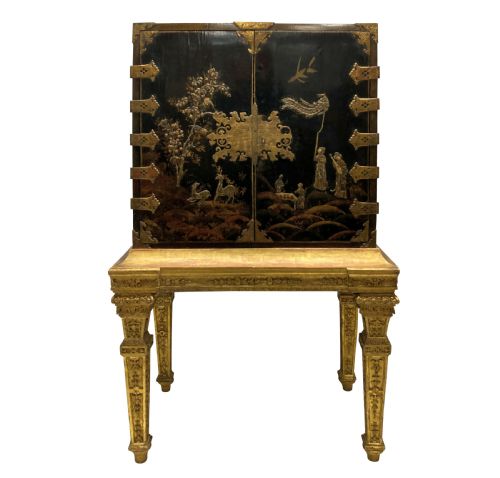
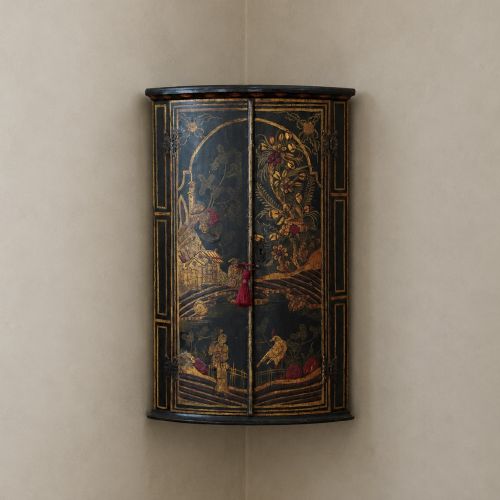
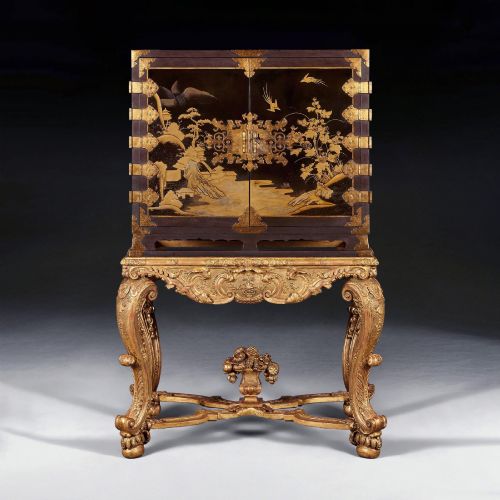
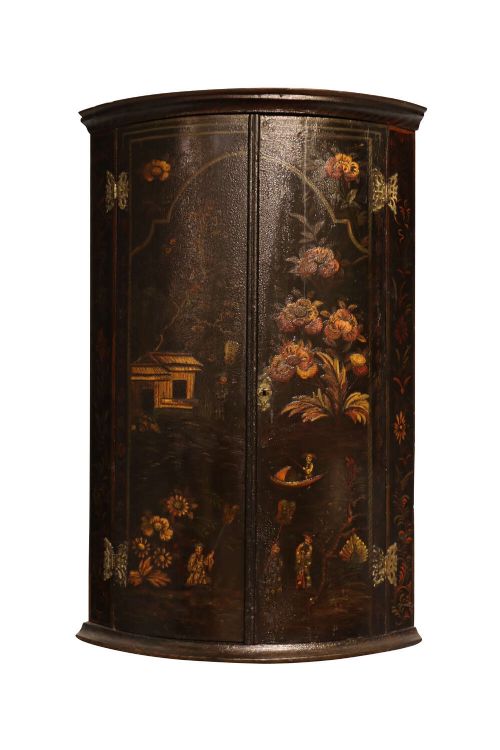
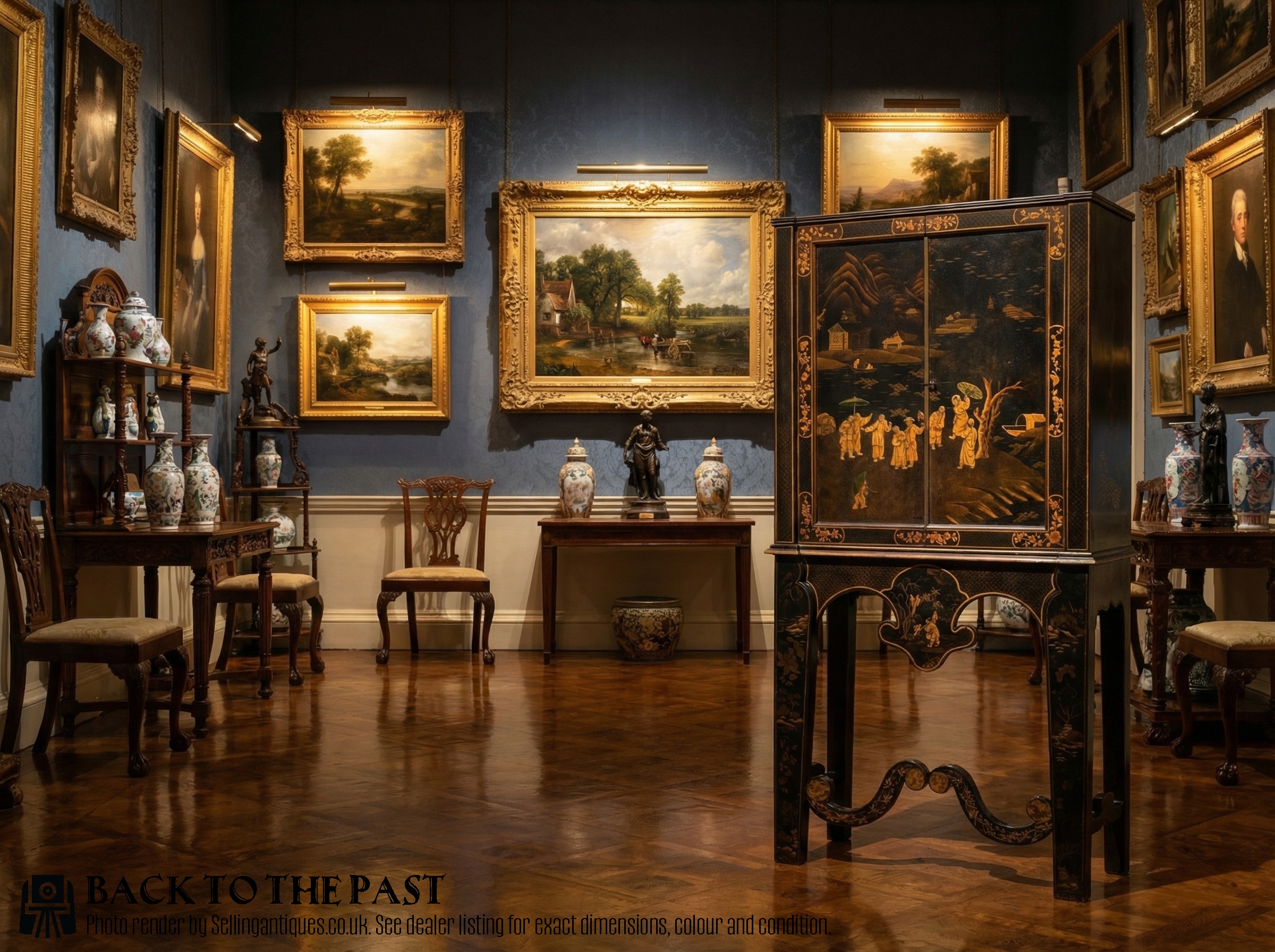
A black japanned cabinet is a storage piece finished in European lacquer to imitate Asian export wares, often taking the form of corner cupboards, side cabinets, and imposing pieces on stands.
The pieces span centuries of production, appearing in seventeenth-century William and Mary designs, eighteenth-century Queen Anne forms, and later revivals from the Edwardian era and the art deco period.
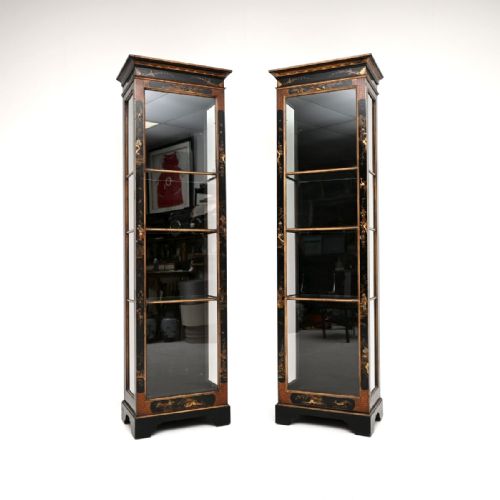
Buyers encounter corner cabinets and side cabinets most frequently, alongside tall bureau bookcases and elaborate display pieces decorated with figures, pagodas, and landscapes.
How they were made
Craftsmen built the carcases using woods such as pine and general timber before applying successive layers of dark lacquer to create a deep, glossy foundation.
Decorators built up the raised motifs using gesso beneath applications of gold leaf and gilt, producing the distinctive textured landscapes characteristic of chinoiserie.
Makers integrated brass hardware such as elaborate hinges, drop handles, and escutcheons to complement the dark surfaces and metallic highlights.
Listings feature black japanned cabinets across periods ranging from the seventeenth century through the Regency era to the nineteen-twenties.
What varies in quality
The refinement of the hand-drawn detail on the lacquer surface distinguishes exceptional examples from simpler production, particularly in the rendering of figures, birds, and botanical scenes.
Proportion and architectural integrity dictate value, with seventeenth and eighteenth-century examples retaining their original stands showing greater historical cohesion than later adaptations.
The depth and preservation of the original gilt and lacquer finish determine the visual impact, separating pieces with undisturbed surfaces from those with extensive modern repainting.
The Black Japanned Cabinet Glossary
- Japanning
- European imitation of East Asian lacquerwork, created by applying resin varnishes and metallic dust to furniture surfaces.
- Chinoiserie
- European artistic style reflecting Chinese motifs and decorative scenes, widely used in furniture decoration during the seventeenth and eighteenth centuries.
- Cabinet on stand
- A form comprising a enclosed cabinet resting upon a separate supporting frame with legs, often associated with seventeenth and eighteenth-century pieces.
- Escritoire
- A writing cabinet featuring a fall front or sloped lid that opens to reveal internal compartments and drawers.
Black Japanned Cabinet: Frequently Asked Questions
How do I place a black japanned cabinet in a modern room?
These dark, glossy pieces work well against neutral walls where the gilded chinoiserie decoration can catch the light without competing with surrounding patterns.
Allow the cabinet to stand as a focal point in a hallway, reception room, or study, using simple surrounding furniture to let the historical surface stand out.
What is the difference between a corner cupboard and a side cabinet?
Corner cupboards are designed to fit neatly into ninety-degree room angles, maximising space while offering enclosed shelving behind single or double doors.
Side cabinets stand flat against walls, often providing broader surfaces and varied internal configurations including drawers or open display sections.
How can I tell an eighteenth-century piece from a later revival?
Early pieces display genuine age in the crazing of the lacquer, hand-cut dovetails in internal drawer construction, and traditional timber framing appropriate to the period.
Revival pieces from the Edwardian era or the nineteen-twenties often use machine-cut elements and lack the deep patina accumulated through centuries of use.
Were these cabinets used for specific storage?
Original seventeenth and eighteenth-century examples often housed valuable collections such as medals, textiles, or imported porcelain behind locked doors.
Later iterations evolved to serve as drinks cabinets for cocktails, display spaces for decorative objects, or writing desks in domestic settings.