
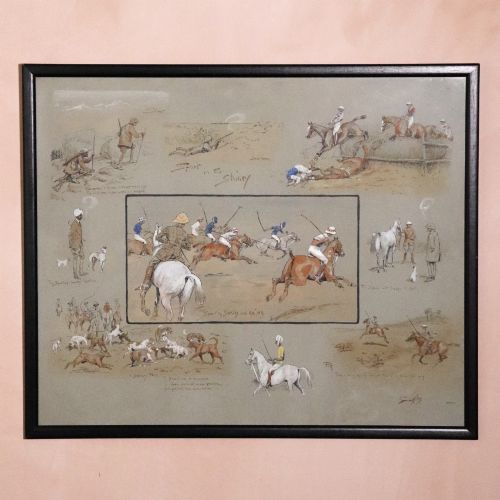


Black Framed Sporting Print
A black framed sporting print brings the energy of the hunt, the golf course and the racecourse directly to the wall.
Black Framed Sporting Print
A black framed sporting print encapsulates historic pursuits ranging from fox hunting and polo to golf and horse racing. Collectors seeking a black framed sporting print encounter works spanning the Georgian era through to the early twentieth century.
Victorian and Edwardian examples dominate the offerings, reflecting the golden age of British sporting art. These works capture spirited canine subjects, riders in full hunt attire and tense moments on the turf.
Materials and construction
The physical objects rely on traditional paper sheets bearing ink, watercolour paint or etching impressions. Skilled hands frequently applied hand colouring to monochrome engravings to heighten the visual drama of horses and hounds.
Protective glass fronts safeguard the fragile paper surfaces from dust and moisture over the decades. Simple wooden frames finished in black pigment complete the presentation, often complemented by interior gold leaf accents.
Even fox hunting scenes occasionally make room for a cheerful canine bystander.
Distinguishing quality
Quality rests upon the strength of the original impression and the finesse of any applied hand colouring. Crisp linework in an etching or engraving separates a master printing from a later, softer reproduction.
The integrity of the paper and the preservation of the pigments dictate longevity and visual impact. Period framing materials that retain their original finish add distinct authenticity to the piece.
Snaffles·Anne Goldthwaite·Herbert Dicksee·Abraham Cooper·James Dobie·W. Dendy Sadler·Charles Hunt·Francis Calcroft Turner
The Black Framed Sporting Print Glossary
- Engraving
- A printmaking method where an artist cuts lines into a metal plate to hold ink. This technique allows for remarkable detail in depictions of horses and riders.
- Etching
- A process using acid to bite lines into a metal plate before printing. It produces characteristic soft, expressive lines found in many collectible sporting works.
- Eglomise
- A technique involving the application of gold leaf and painting to the rear face of glass. This method creates a reflective, lustrous border often seen on antique prints.
- Watercolour
- A paint medium consisting of water-soluble pigments used directly on paper. Artists utilised this method for both finished paintings and for tinting monochrome prints.
- Sporting art
- A genre dedicated to depicting animals, hunting, shooting, fishing and equestrian sports. It holds a significant place in British artistic heritage from the eighteenth century onwards.
Black Framed Sporting Print: Frequently Asked Questions
How do I hang a heavy framed print securely?
Select a wall stud or utilise appropriate wall anchors capable of supporting the weight of the wood and glass. Ensure the hanging wire and fixings at the rear are secure before mounting the piece at eye level.
Keep the print away from direct sunlight to protect the paper and any watercolour pigments from fading over time. Maintain a stable indoor environment to prevent moisture damage to the wooden frame and backing.
What periods do these sporting artworks cover?
The available works span from the Georgian period through the Victorian and Edwardian eras into the early twentieth century. This timeline covers shifting styles in British and American sporting depiction.
Earlier examples often feature hand coloured engravings of hunts and racehorses, while twentieth-century works frequently showcase the distinct characterful prints of artists like Snaffles.
Are these prints originals or reproductions?
The collection includes original period prints, etchings, engravings and watercolours created during the lifetimes of the artists. Each listing details the specific medium and era associated with the artwork.
Buyers will also find occasional period-appropriate reproductions, such as eglomise pieces, which replicate classic subjects using traditional decorative techniques.
How should I clean the glass on my print?
Apply a mild glass cleaner to a soft cloth rather than spraying the liquid directly onto the frame. This prevents moisture from seeping past the wooden moulding and damaging the paper print inside.
Wipe the glass gently to remove dust and fingerprints while supporting the frame with your other hand. Avoid using harsh chemical solvents that could degrade the black finish on the wood.