


Charles Johnson Payne
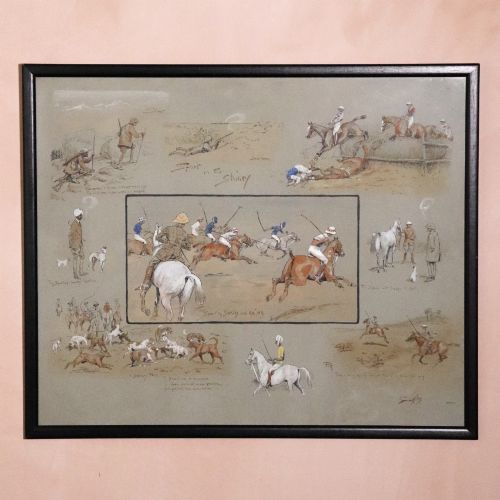
Charles Johnson Payne brings military life, fox hunting and horse racing vividly to life through works signed by the artist.
Charles Johnson Payne
When you search for charles johnson payne, you encounter framed prints and original watercolour paintings dating from the early twentieth century. These works depict hunting sequences, military subjects, and humorous sporting scenes.
Most pieces on offer fall into the categories of original prints and watercolour paintings from decades such as 1910, 1920, and 1930. Edwardian sporting art and British colonial themes dominate the selections currently seen.
What varies in quality
Quality separates through the distinction between mass-produced printed editions and unique original watercolour paintings. Hand-applied pigments and direct brushwork on paper command greater attention than standard mechanical prints.
The sophistication of the framing materials, such as solid oak frames with gilt accents, alongside the preservation of the paper support, marks the distinction between standard examples and superior survivals.
Charles Johnson Payne Retail Price Guide 2026
Typical asking prices for charles johnson payne among the pieces listed under this phrase on Sellingantiques today, from the lower quarter to the upper quarter. They describe what is for sale here now, not the wider market.
Listings span periods from 1900 to 1950, utilising paper, oak, glass, and watercolour.
The Charles Johnson Payne Glossary
- Watercolour
- A painting method where the paints are made of pigments suspended in a water-based solution. It provides translucent washes of colour on paper supports.
- Gouache
- An opaque water-based paint method that creates heavier, more solid blocks of colour than standard watercolour. Artists often combined it with watercolour for highlights.
- Edwardian Sporting Art
- Artwork created during the Edwardian period focusing on equestrian sports, hunting, and outdoor pursuits. These pieces reflect the leisure habits of British country houses.
- Framed Print
- A mechanical or hand-pulled impression on paper placed behind glass within a protective border. Oak frames frequently house these works.
Charles Johnson Payne: Frequently Asked Questions
What subjects do these works show?
The pieces depict traditional British subjects including fox hunting, horse racing, and military life in colonial outposts.
Scenes range from huntsmen in the field to humorous caricatures of military personnel and garrison life.
How should I frame these pieces?
Many examples arrive ready-framed in period oak frames that match the age of the paper and medium. Keeping them behind glass protects the delicate watercolour and gouache pigments from atmospheric dust and moisture.
Ensure framing materials are acid-free to prevent yellowing of the paper over time.
How do I date these works?
Dating relies on stylistic clues, framing types, and the active periods of the artist recorded across the early twentieth century. Edwardian and 1920s examples show distinct costume and sporting dress.
Printed dates on Christmas cards or limited editions provide precise chronological anchors.
Where were these pieces displayed?
Historically, these framed artworks hung in British country houses, officers' messes, and provincial clubs. They suited spaces dedicated to equestrian and military traditions.
Today, they suit studies, hallways, and living rooms with traditional decor.