


Vintage Horse Artwork
Vintage horse artwork brings the energy of the stable and the racecourse onto the wall through a range of oils, watercolours and prints.
Vintage Horse Artwork
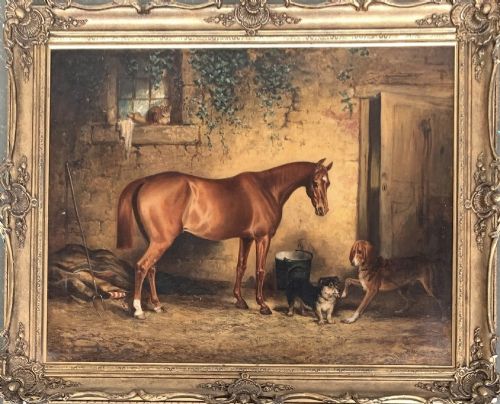
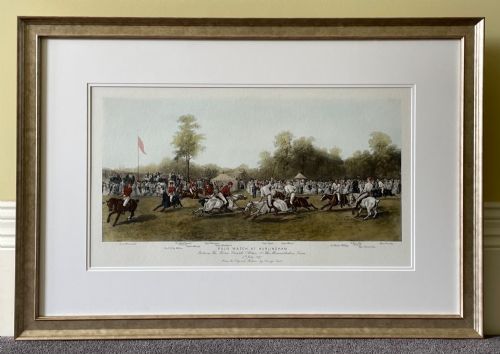
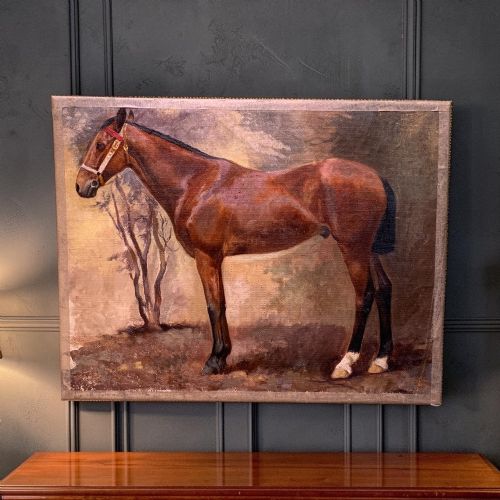
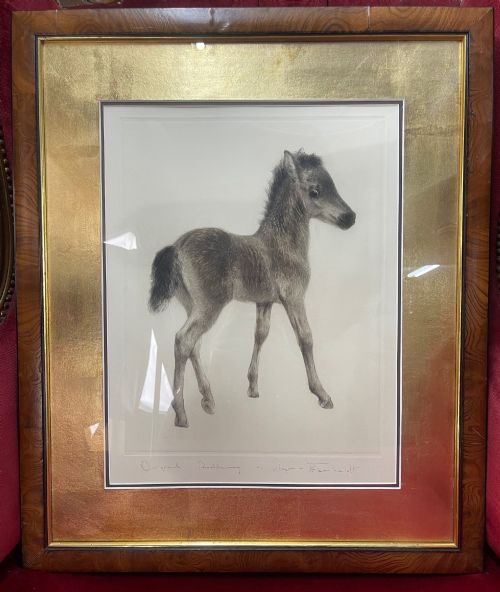
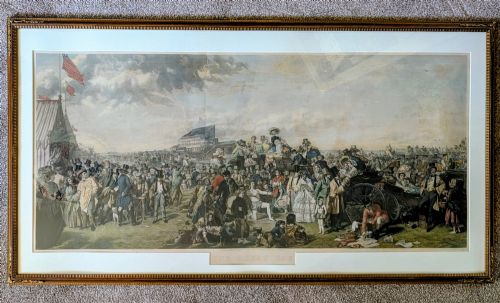
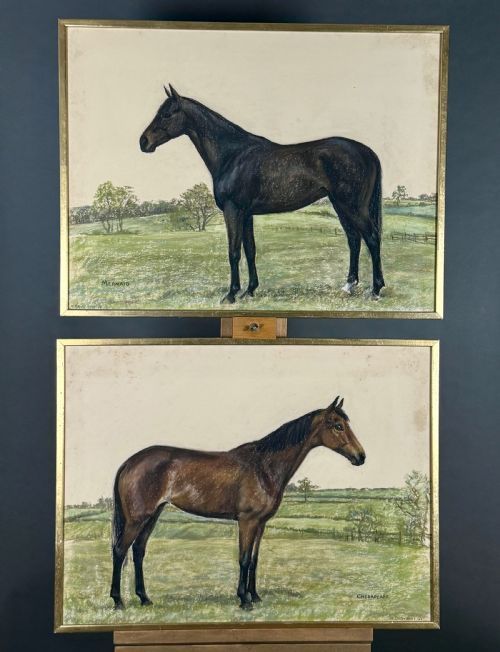
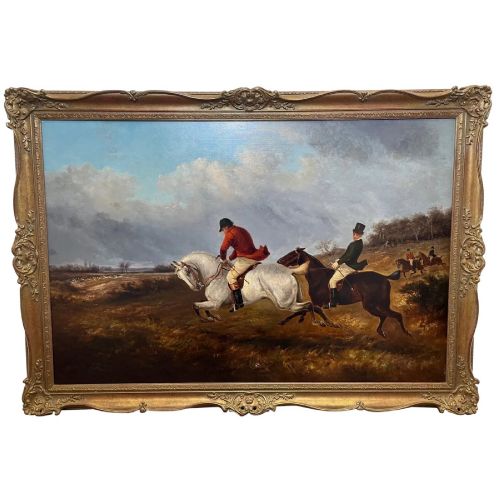
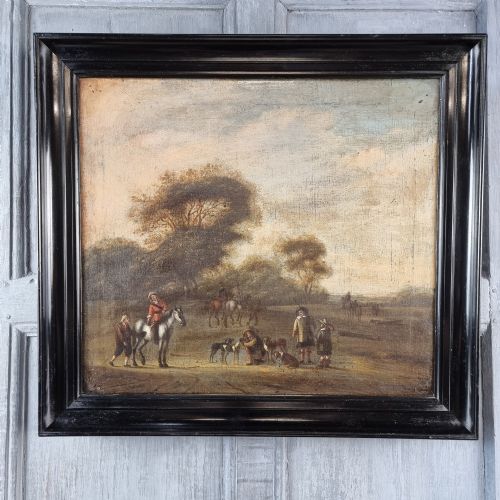
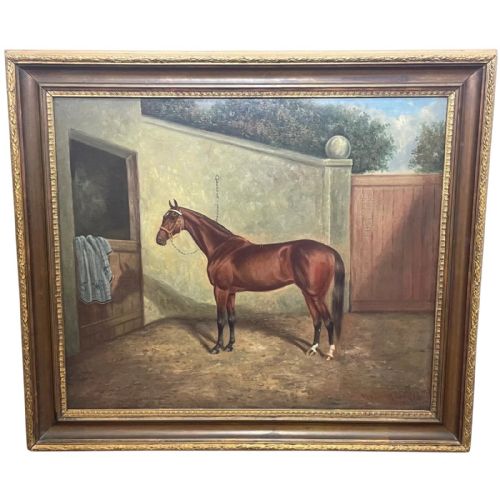
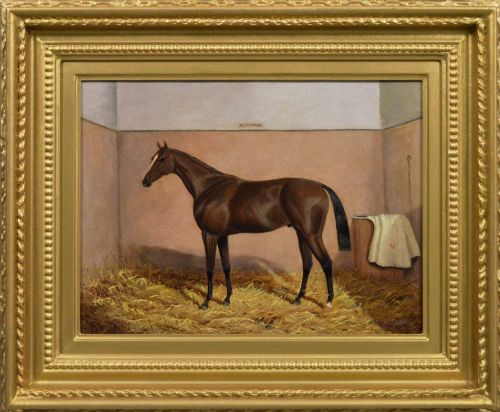
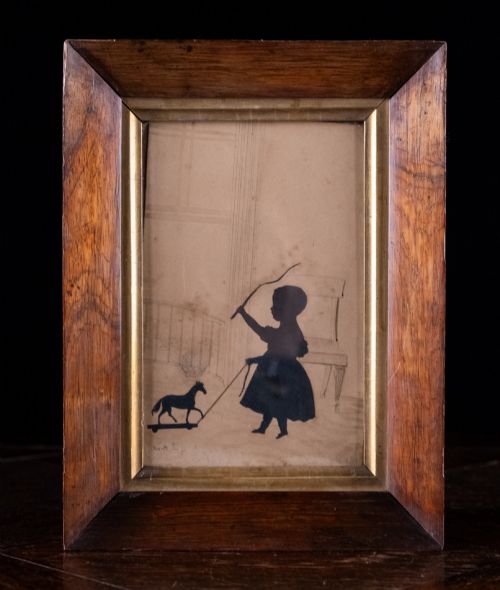
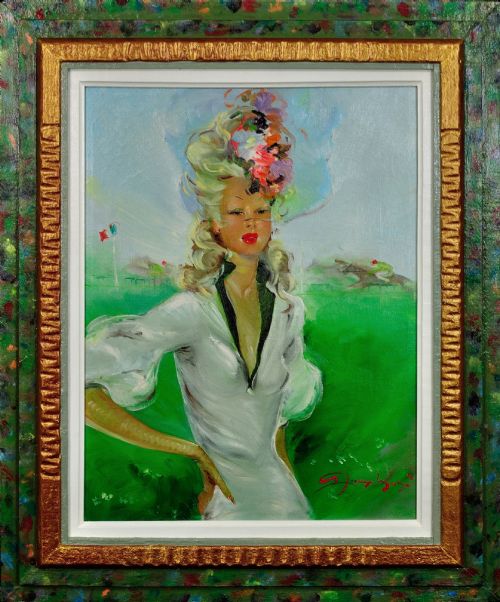
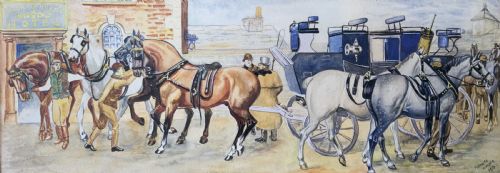
Vintage horse artwork encompasses oil paintings, watercolours, pastels and prints depicting equines in fields, stables and sporting settings. When exploring vintage horse artwork, buyers encounter pieces spanning from the nineteenth century through to the mid-twentieth century. The selection includes detailed portraits of named racehorses alongside rural scenes of ploughing and coaching.
Victorian sporting art and Edwardian studies sit alongside mid-century interpretations on canvas and paper. Works range from intimate pastel studies to large framed oil paintings executed on canvas or panel. Each piece records a distinct period of equestrian history through the eyes of contemporary painters and printmakers.
How They Were Made
Makers utilised traditional mediums including oil paint on canvas or panel, watercolour on paper, and drypoint print techniques. Canvases receive layers of pigment to build the musculature and coat sheen of the subject, whilst watercolours rely on fluid washes for atmospheric landscapes.
Framing often involves period wood mouldings, sometimes finished in giltwood to house the paper or canvas securely. Pastels are fixed behind protective glass to safeguard the delicate pigment layers from disturbance.
Listings feature works in oil, watercolour and pastel across the nineteenth and twentieth centuries.
What Varies in Quality
The anatomical accuracy of the horse and the deftness of brushwork separate accomplished pieces from simpler decorative works. Master painters capture the tension in a flank and the alertness of an ear with precision.
The integrity of the original support, whether canvas, paper or panel, influences the overall standard. Strong provenance and documented attribution to a known hand elevate the standing of a piece within the field.
Edward Fisher·Sir Joshua Reynolds·William Joseph Shayer Senior·Kurt Meyer-Eberhardt·William Powell Frith·Thomas Smythe·Frederick Albert Clark·Albert Clark·Augustin Edouart·Jean-Gabriel Domergue·Henry Barraud·Fred Fitzpatrick·Ernest Payne·Albert Ludovici Jnr·John Frederick Herring Snr·Vernon DeBeauvoir Ward·Philip Rideout·Edwin Henry Landseer·Dame Laura Knight·Paul Ehrenberg
The Vintage Horse Artwork Glossary
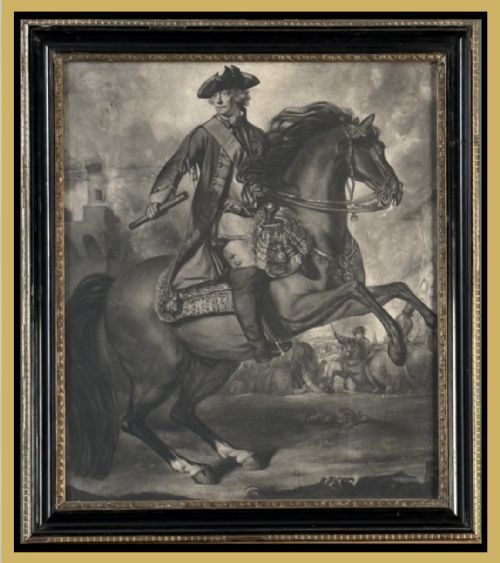
- Mezzotint
- A printmaking process of the intaglio family where the artist works from dark to light by roughening the copper plate. This technique allows for rich tonal gradations and subtle shadows.
- Drypoint
- A printmaking technique in which an image is scratched directly onto a metal plate with a sharp needle. The resulting burr holds ink to produce velvety lines.
- Giltwood
- Wood carved and surfaced with gold leaf or a gold-coloured metallic finish. It frequently frames formal portraits and landscape paintings from the nineteenth century.
- Equestrian
- Pertaining to horses, horse riding, or the representation of horses in art. This term groups together hunting scenes, racing portraits and stable studies.
Vintage Horse Artwork: Frequently Asked Questions
How do I date an old horse painting?
Examine the stretcher bars, canvas type, and framing materials for clues consistent with known manufacturing periods. Costume details on human figures and the style of the signature often narrow down the decade.
Compare the technique against documented works by the same hand or within the same artistic school. Pigment analysis and canvas stamps can provide further confirmation of the creation era.
What is the difference between an oil painting and a print?
Oil paintings feature applied layers of pigmented paste on canvas or panel with visible brush texture and depth. Prints are mechanical or hand-pulled reproductions on paper created from plates or blocks.
Magnification reveals the dot patterns of printed reproductions versus the layered pigment ridges of original painted works. Signatures on prints are often in pencil beneath the image rather than painted within the composition.
Where should I hang equestrian art?
Equestrian art suits studies, hallways and living spaces where traditional or rustic interior schemes prevail. Match the scale of the frame to the wall space to ensure the artwork commands the room.
Keep pieces away from direct sunlight and damp environments to protect paper supports, watercolours and oil paint. Proper placement preserves the condition of both the canvas and the original frame.
How do I identify a named racehorse in art?
Check the stretcher, frame or lower margin for handwritten inscriptions, titles or artist notes identifying the subject. Historical racing records and stud books often link named winners to specific portrait commissions.
Examine the Jockey Club archives for documentation matching the race name, date and depicted colours of the silks. Provenance records from estate sales sometimes preserve the identity of the animal.