
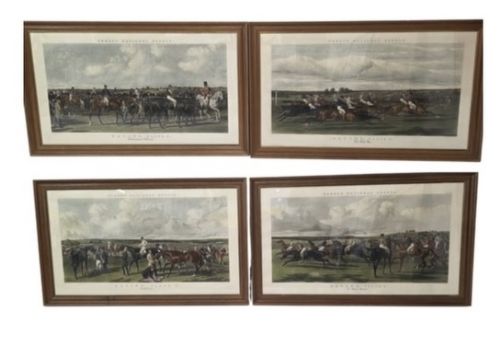
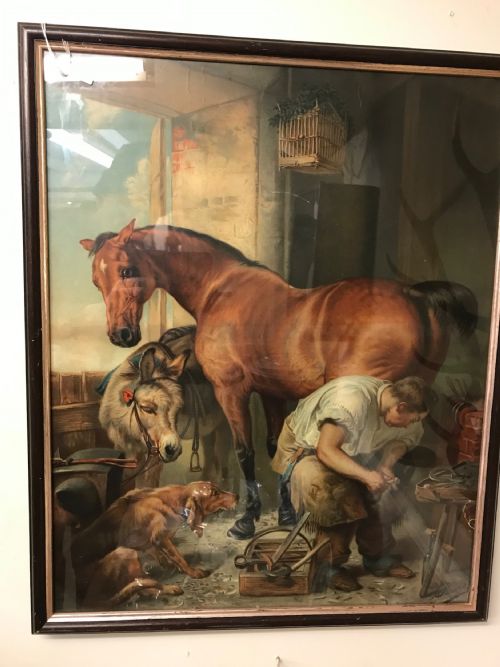
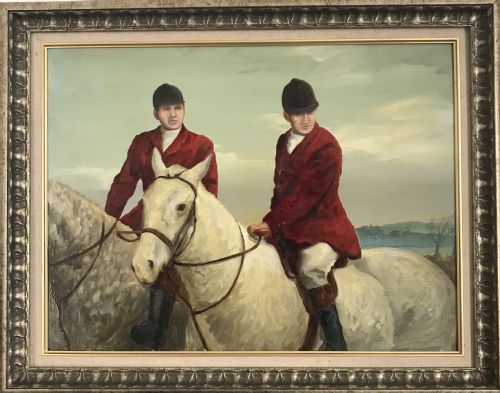
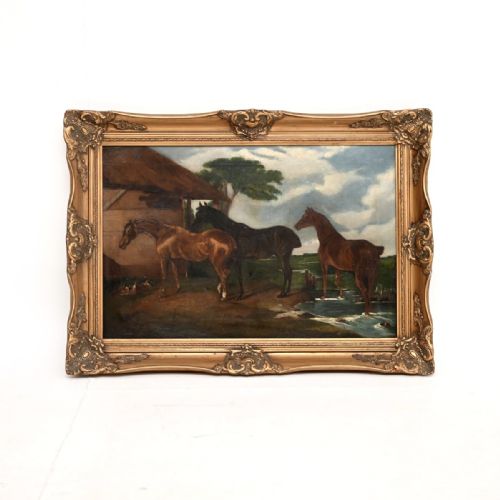
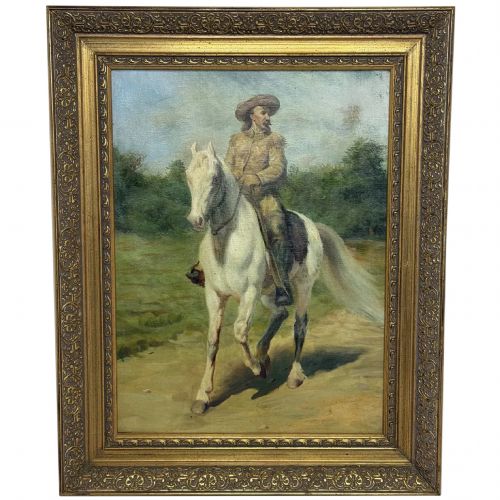


Framed Horse Wall Decor
Framed horse wall decor brings the enduring energy of the stables, the hunting field and the turf directly into your interior.
Framed Horse Wall Decor
Framed horse wall decor spans oil paintings, watercolours, pastels, chalk drawings, engravings, aquatints, and prints that capture horses and equestrian scenes. These works range from Georgian and Victorian sporting subjects to mid-century depictions of racing, hunting, and farmyard life.
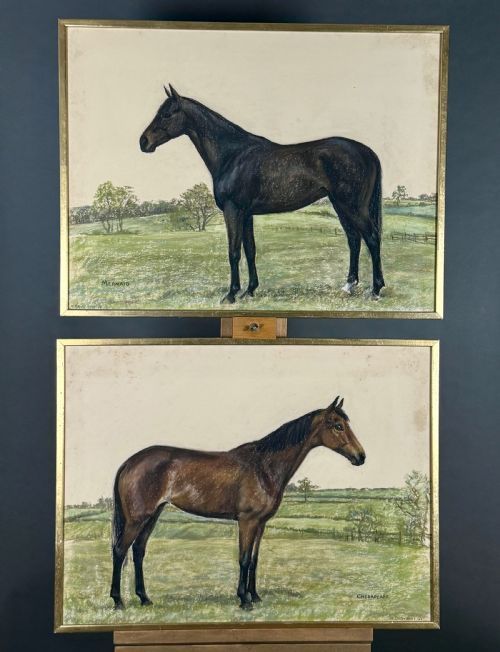
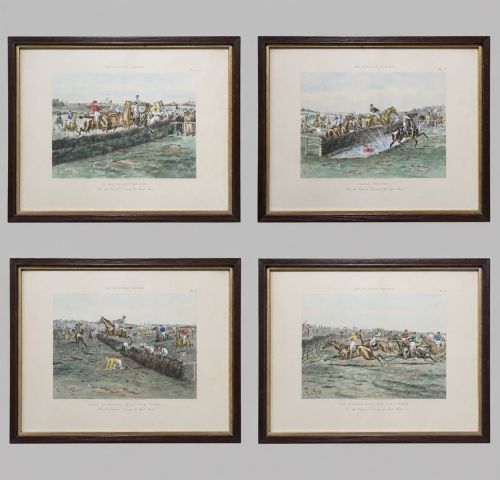
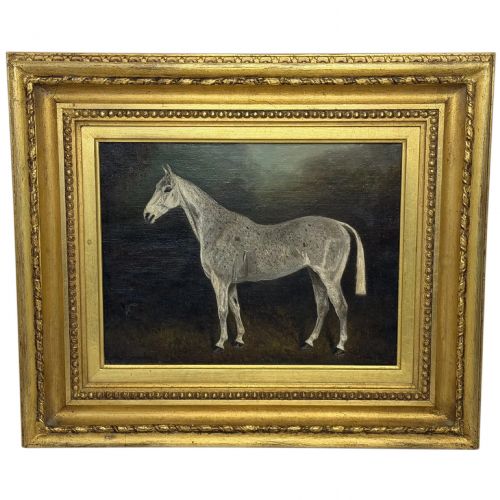
The most common examples on this page are oil paintings on canvas and panel, alongside framed prints and aquatints after artists like George Finch Mason. Many pieces celebrate specific horses, such as the grey mare Grisette or the racehorse Creeping Molly, framed in wood, gilt wood, or walnut.
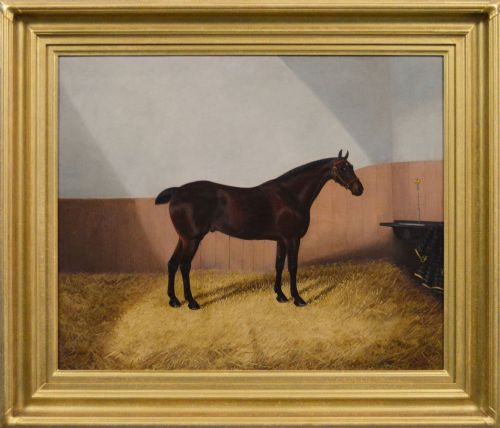
Subjects stretch across British sporting art, French provincial scenes, and farmyard studies, showing animals in stables, at the trough, or engaged in racing and hunting. Collectors will find single portraits, pairs, and sets of four or five sequential works recording the dynamism of the sport.
How They Were Made
Many of these pieces are executed in oil on canvas or pine panel, applying pigment to build depth in the coats and musculature of the animals. Others utilise pastel on paper, chalk, or watercolour to achieve a lighter, more immediate texture.
Printed works rely on engraving, aquatint, and early photographic reproduction techniques to duplicate original compositions for wider display. These prints and drawings are typically finished with traditional framing materials, including carved wood and gilt surrounds.
Listings feature works across oil, pastel, watercolour, and print, dated from the eighteenth century through the mid-twentieth century.
What Varies in Quality
Quality rests upon the artist's ability to render the correct anatomy, posture, and spirited expression of the animal. Finer works capture the tension in a hunter's legs or the play of light on a bay coat with precise brushwork rather than flat fills.
The preservation of the original support, whether canvas, paper, or pine panel, affects the piece. Original period frames that complement the age and subject of the artwork elevate the overall integrity of the piece.
George Finch Mason·Edwin Henry Landseer·Cecil Charles Windsor Aldin·Raimond Louis Lecourt·John Frederick Herring Jnr·Basil Nightingale·William Williams·Abraham Cooper·Charles Faulkner·Benjamin Cam Norton·Gilbert Scott Wright·John Atkinson·Herbert Royle·Rowland Henry Hill·Charles Johnson Payne Snaffles·George Goodwin Kilburne·H. Alken
The Framed Horse Wall Decor Glossary
- Aquatint
- An intaglio printmaking technique that produces areas of tone rather than lines, frequently utilised for sporting prints. This method allows the maker to mimic the soft washes of a watercolour sketch.
- Eglomise
- A process where cold gilding and painting are applied to the reverse face of glass to create a mirror-like or decorative panel. It yields a distinctive reflective surface behind the framed image.
- Grisette
- A term historically used in horse naming or coat descriptions, often denoting a grey mare. In these works, it identifies individual equine subjects.
- Sporting Art
- Genre of painting and printmaking dedicated to equestrian subjects, hunting, racing, and field sports. It requires an exact understanding of animal anatomy and sporting rules.
- Panel
- A rigid support base for paintings, usually made of wood such as pine, used before canvas became standard. Panels provide a stable, flat surface for detailed brushwork.
Framed Horse Wall Decor: Frequently Asked Questions
What periods do these horse artworks come from?
The selection includes works from the eighteenth, nineteenth, and twentieth centuries, spanning Georgian, Victorian, and Edwardian eras. Later mid-century modern interpretations also appear alongside antique pieces.
Each period brings its own characteristic palette and framing style, reflecting the shifting tastes in equestrian representation over the decades.
Are these works original paintings or prints?
You will find a mixture of both original oil paintings, watercolours, and pastels, alongside antique prints and aquatints. Each listing clearly specifies the medium used to create the image.
Originals offer unique brushwork, while the prints provide access to classic sporting imagery produced in historical print runs.
How do I hang and display framed horse art?
These pieces suit studies, hallways, and living spaces, particularly when paired with traditional or country-house interiors. Consider the weight of gilt wood or walnut frames when selecting wall fixings.
Keep them away from direct sunlight to protect paper supports, watercolours, and oil pigments from fading over time.
What subjects are featured besides single horse portraits?
Beyond individual portraits of bay and grey horses in stables, the works depict fox hunting, horse racing, farmyard scenes with livestock, and working horses at troughs. Some listings include multi-part sets recording hunting sequences or race days.
These narrative scenes document historical sporting events and rural working life.