


Antique Stable Scene Painting
An antique stable scene painting captures the quiet dignity of nineteenth-century horses and rural livestock framed in oil on canvas.
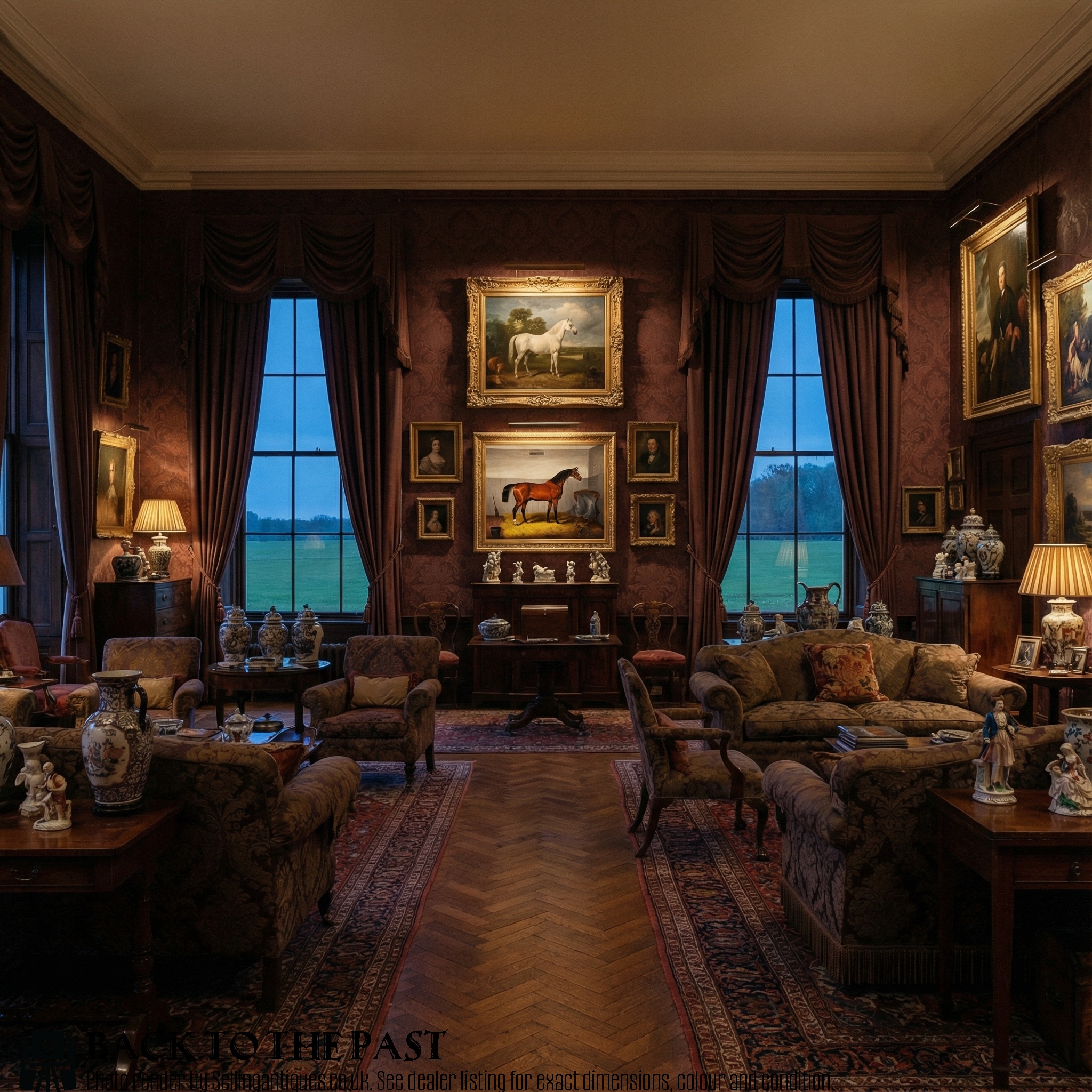
Antique Stable Scene Painting
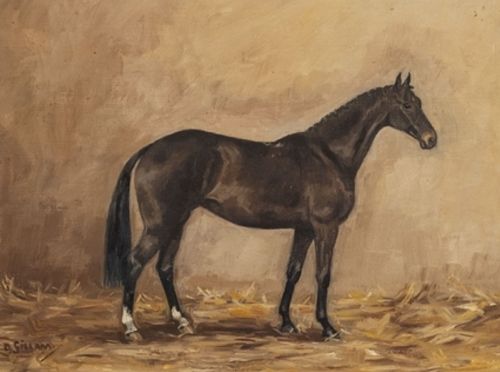
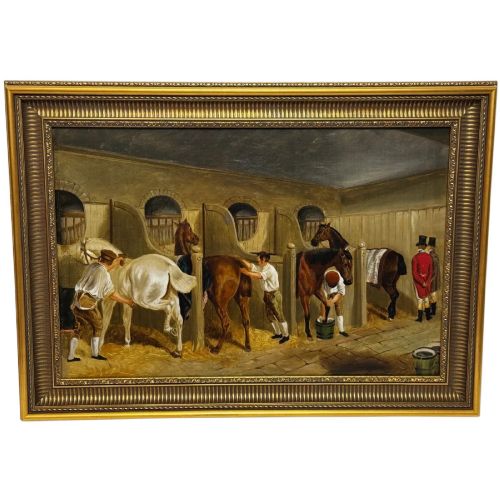
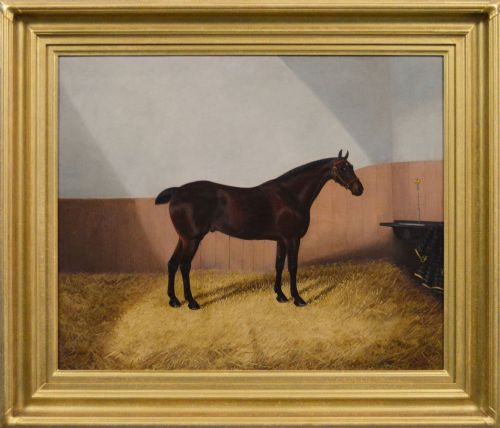
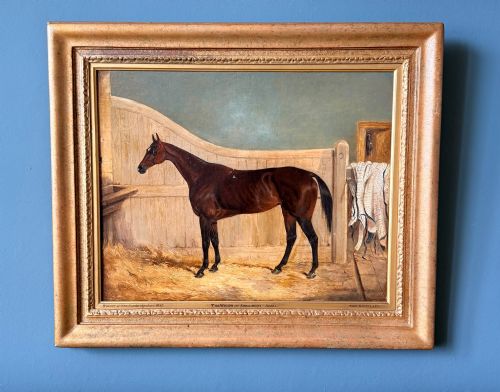
An antique stable scene painting focuses primarily on horses, hunters, and cattle rendered in oil on canvas during the nineteenth and early twentieth centuries. These works frequently depict named animals such as prize winners or bay hunters standing quietly within their stalls, often accompanied by stable terriers.
The pieces available here span Victorian sporting art, Edwardian studies, and English folk art, reflecting both polished academic portraiture and naive rural traditions. Victorian canvases dominate the selection, showing either solitary animal studies or specific local hunt stables from the era.
Buyers seeking an antique stable scene painting will encounter framed works utilising gilt wood and plaster frames that complement the deep earth tones of the oil paint. Subjects range from individual portraits by named regional artists to larger naive representations of cattle.
Materials and construction
These works are executed in oil paint upon woven canvas stretched over wooden supports, capturing the sheen of animal coats and the dark timber interiors of traditional barns. Artists built up layers of pigment to render the muscular form of horses and the textures of straw bedding.
The paintings are typically housed in heavy gilt wood or giltwood frames, often finished with ornamental plaster mouldings that reflect nineteenth-century framing practices. The combination of oil on canvas and gilded wood creates a rich, warm presentation suited to traditional interiors.
Antique Stable Scene Painting Retail Price Guide 2026
Typical asking prices for stable scene painting among the pieces listed under this phrase on Sellingantiques today, from the lower quarter to the upper quarter. They describe what is for sale here now, not the wider market.
Listings span the nineteenth and early twentieth centuries, featuring Victorian sporting art alongside English folk art and Edwardian animal portraiture.
Assessing quality in equine art
Quality in these works rests upon the anatomical precision of the animal and the artist's ability to render light within a confined stable interior. Superior pieces display careful attention to bone structure, musculature, and the intelligent expression of the horse.
The integration of the subject within its environment also defines the upper tier of works, where the artist balances the dark background of the stable with the luminous highlights on the animal's coat. Additionally, the originality and condition of the period gilt frame contribute substantially to the overall integrity of the piece.
Albert Clark·Thomas Walker Bretland·Edward Lloyd of Ellesmere·George E Sharpe·Samuel Spode·Edwin Frederic Holt·Alfred Moginie Bryant
The Antique Stable Scene Painting Glossary
- Oil on Canvas
- A painting medium where pigments suspended in drying oil are applied to a stretched fabric support. This technique allowed artists to achieve deep, rich colours and subtle tonal gradations.
- Giltwood
- Wood that has been carved and covered with a thin layer of gold leaf or metal foil. It provides a bright, reflective border that complements dark oil paintings.
- Victorian Sporting Art
- Artwork created during the reign of Queen Victoria that focuses on horses, hounds, shooting, and rural sports. These pieces often record specific prize animals and named hunt stables.
- English Folk Art
- Decorative or fine art produced by self-taught or provincial artists working outside academic traditions. These works prioritize direct visual expression over strict proportion.
- Bay
- A horse coat colour characterised by a reddish-brown body with black points on the mane, tail, and lower legs. It is one of the most frequently rendered equine colours in nineteenth-century portraiture.
Antique Stable Scene Painting: Frequently Asked Questions
What subjects appear in these paintings?
These works primarily depict horses, hunters, and cattle housed within nineteenth-century agricultural or hunting stables. Many pieces serve as portraits of specific named animals, sometimes accompanied by working terriers.
Other compositions record prize-winning livestock or scenes connected to regional hunt stables from the Victorian and Edwardian periods.
How should I hang an oil painting?
Hang these works on sturdy walls away from direct sunlight and strong sources of artificial heat to protect the canvas and oil paint. Ensure the weight is supported securely, particularly when dealing with heavy giltwood frames.
Keep the room at a stable relative humidity to prevent the canvas and wooden stretcher frames from warping over time.
How do I identify the period?
Dating relies on stylistic clues within the painting, the costume of any human figures, and the construction methods of the canvas stretcher and frame. Nineteenth-century works often employ specific earth pigments and framing styles characteristic of the Victorian era.
Inscribed signatures, dates, or titles written on the reverse of the canvas or frame also provide direct evidence of the painting's origin.
What is the difference between naive and academic works?
Academic sporting art of the nineteenth century prioritizes correct anatomical proportions, subtle lighting effects, and realistic veterinary detail. Painters such as Albert Clark and Samuel Spode worked within this trained tradition.
Naive works, by contrast, emphasise bold outlines and direct character over strict perspective, reflecting the vernacular traditions of English folk art.