
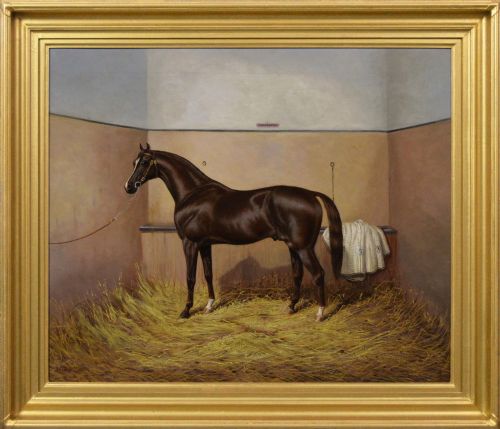
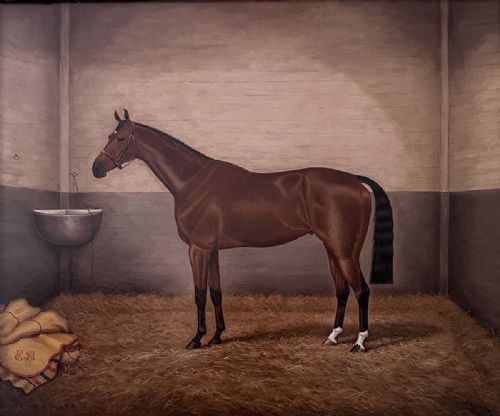


Antique Racehorse Painting
An antique racehorse painting captures the speed and lineage of famous thoroughbreds in oil on canvas.
Antique Racehorse Painting
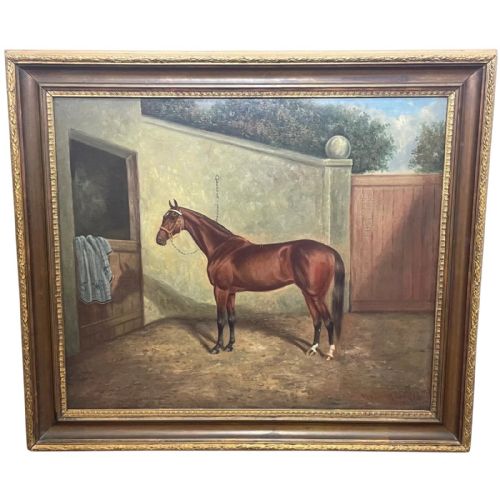
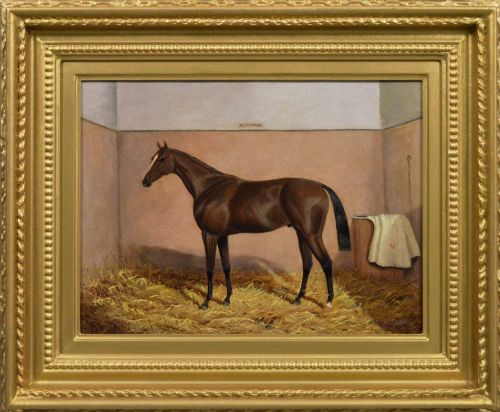
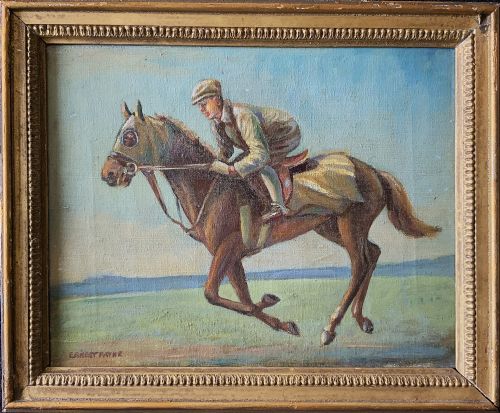
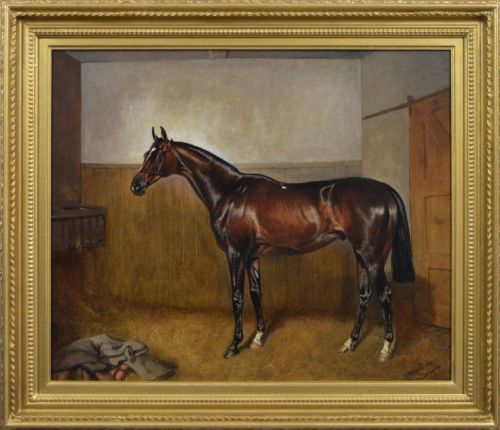
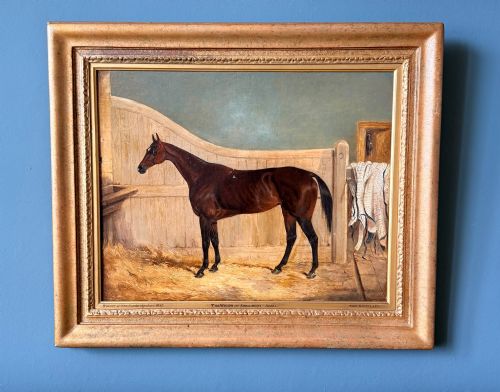
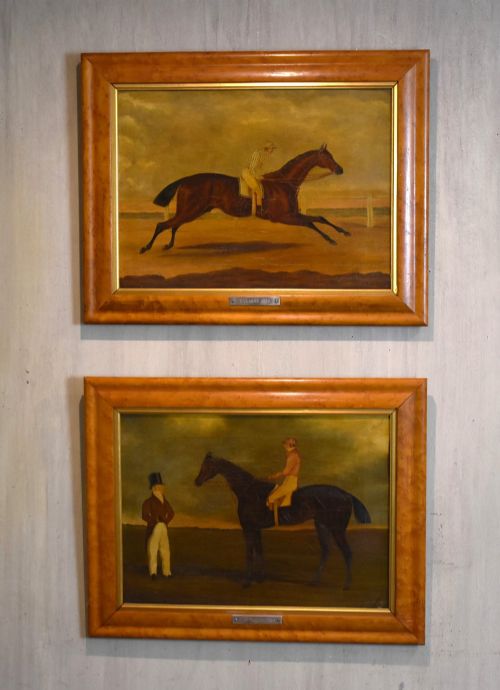
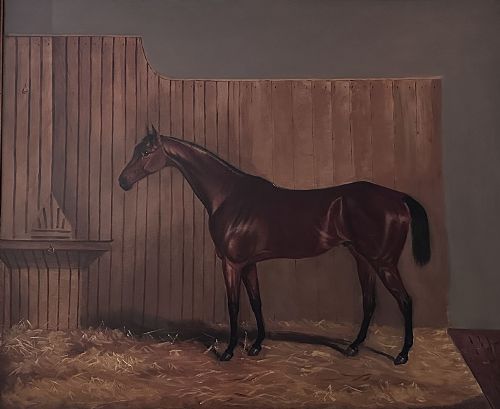
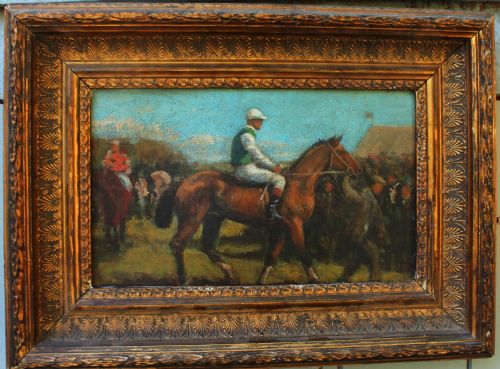
An antique racehorse painting depicts notable thoroughbreds, famous winners, and dramatic scenes from the turf across the nineteenth and early twentieth centuries. These works range from detailed portraits of named champions with their jockeys up to atmospheric paddock studies and racing scenes.
Most examples encountered on this page date from the Victorian and Edwardian eras, executed in oil on canvas and often retained in their original giltwood frames. The subjects frequently record specific historical victories, such as the Epsom Derby or Newmarket events, capturing the equine anatomy and sporting fashion of the period.
Materials and Technique
The primary medium recorded in these works is oil paint applied to canvas or wood panels, utilising rich pigments to render the musculature and glossy coats of the horses. Artists worked with fluid brushstrokes and fine glazes to capture the light on silk jockey silks and the texture of stable backgrounds.
Framing forms an integral part of the physical object, with heavy gesso and giltwood frames housing the canvases. Certain pieces employ specialised techniques such as eglomise glass reproduction or detailed oil studies executed directly on panel.
Listings feature works spanning the nineteenth century through the Edwardian period, utilising oil on canvas and glass.
Distinctions in Quality
Superior examples of an antique racehorse painting are defined by the anatomical precision of the horse and the accurate depiction of the jockey, trainer, or owning colours. Master painters convey the distinct conformation and individual expression of celebrated animals rather than relying on generic equine templates.
The handling of light, depth in the landscape or stable interior, and the preservation of the original canvas and giltwood frame elevate the standing of a piece. Works associated with documented sporting artists command attention through superior composition and confident brushwork.
Albert Clark·Ernest Payne·John Alfred Wheeler·Thomas Walker Bretland·John Frederick Herring Snr·Alfred Munnings·Abraham Cooper·Samuel Spode·Alfred Wheeler·John Atkinson·Isaac Cullin·Walter Herbert Wheeler·John Parker Davis·Frank Giggs·Thomas Henry Brentnall·R F Henderson
The Antique Racehorse Painting Glossary
- Eglomise
- Glass gilding technique where gold or silver leaf is applied to the rear face of glass. This method creates a reflective, decorative border or complete image surface.
- Giltwood
- Wood carved and covered with a thin layer of gold leaf or gold paint. Frames finished in this manner are standard for period sporting art.
- Jockey up
- A term indicating that the rider is mounted upon the horse in the composition. Often noted in titles alongside the specific jockey's name.
- Paddock study
- An observational painting focusing on horses gathered before a race. These works emphasise atmosphere and anticipation prior to the start.
Antique Racehorse Painting: Frequently Asked Questions
What is an antique racehorse painting?
These works are oil paintings on canvas or wood depicting thoroughbred horses, often named winners of historical races with their jockeys.
They record the rich history of British and international turf sports during the nineteenth and early twentieth centuries.
How do I identify the subject?
Many canvases include inscriptions on the surface or stretcher bars naming the horse, the race, the owner, and the jockey.
Studying the racing colours and historical records helps connect the portrait to specific events like the Epsom Derby.
Where should I hang these?
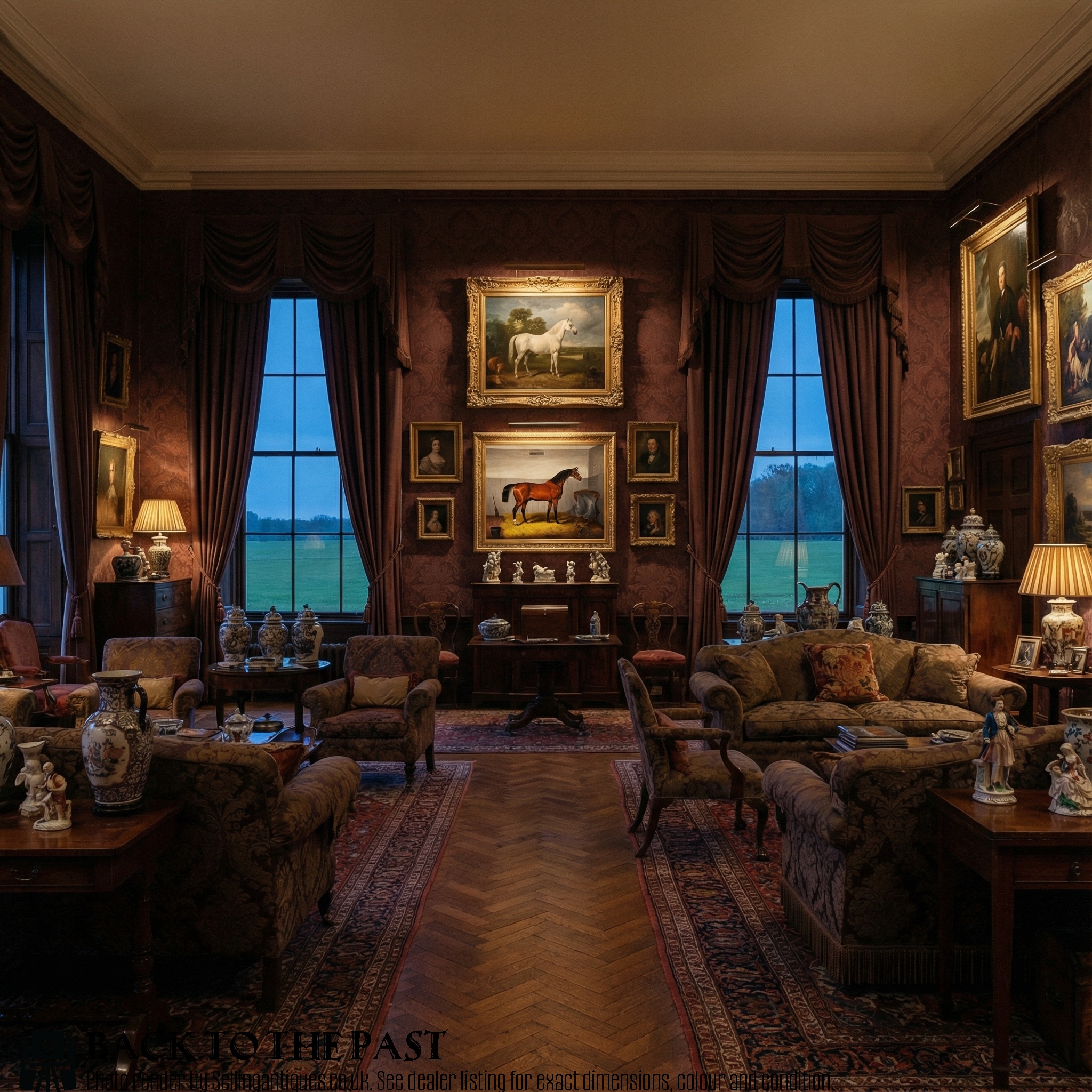
These works suit traditional studies, libraries, or living spaces with sufficient wall space for framed canvases.
Keep them away from direct sunlight and damp conditions to protect the oil paint and giltwood frames.
Who painted these works?
Specialist equine and sporting artists painted these scenes, ranging from named professionals to regional Victorian and Edwardian painters.
Many captured the leading thoroughbreds of their day for owners, trainers, and patrons of the turf.