


Paper Equestrian Wall Art
Paper equestrian wall art brings the energy of the turf and the hunting field directly to the wall through historic prints, watercolours and drawings.
Paper Equestrian Wall Art
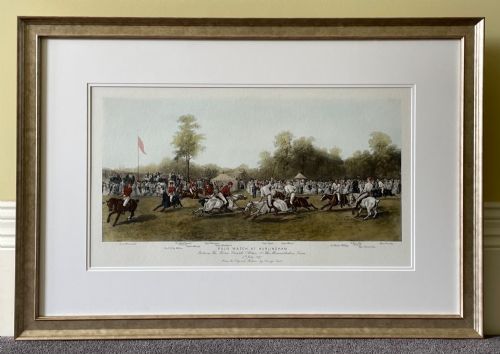
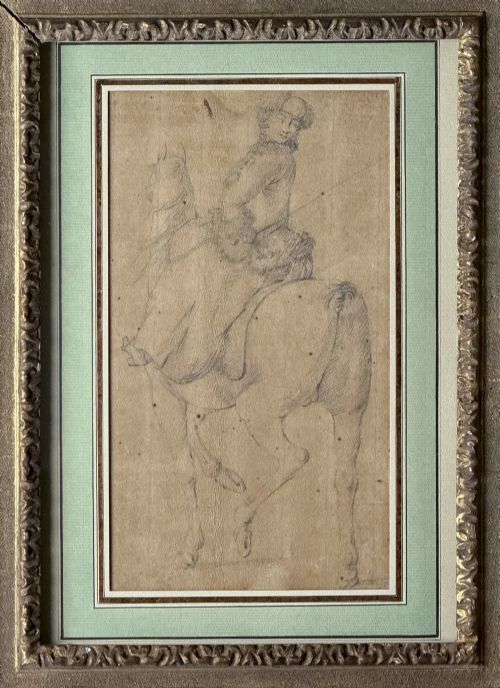
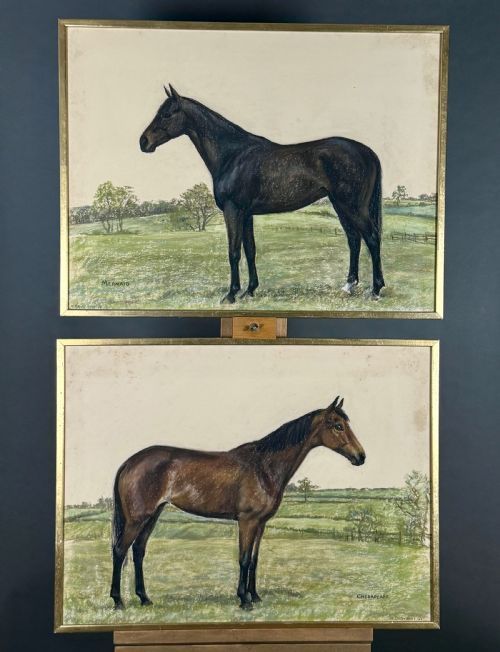
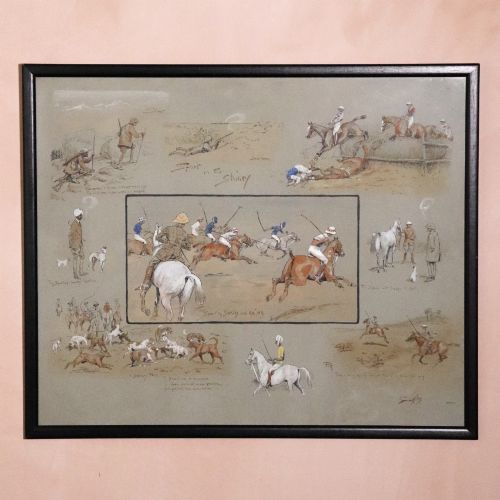
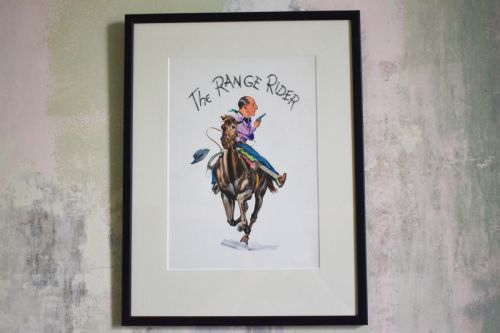
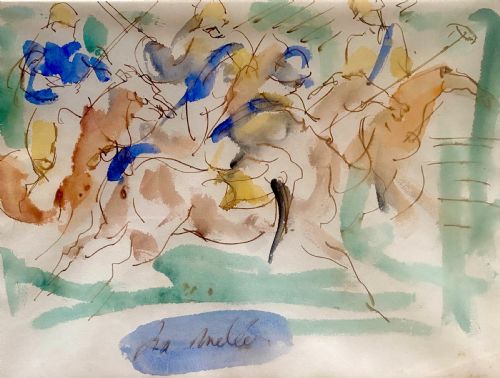
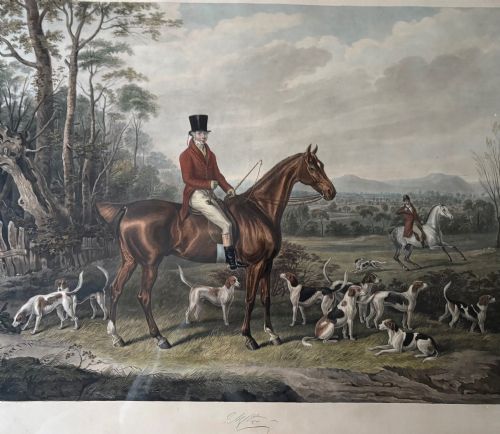
Paper equestrian wall art encompasses framed watercolours, lithographs, engravings and pastel drawings that depict horses, racing, polo and hunting scenes. These works range from early eighteenth-century Northern European school studies to mid-twentieth-century watercolours and prints.
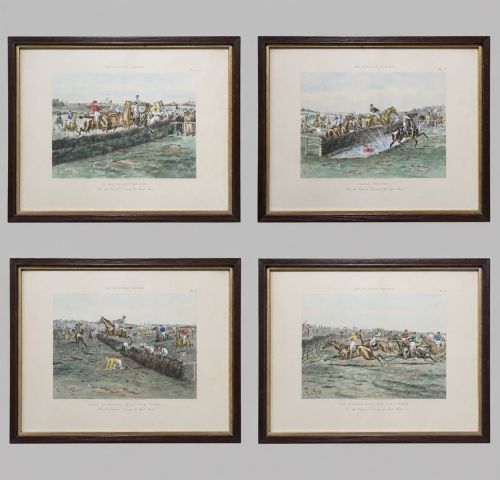
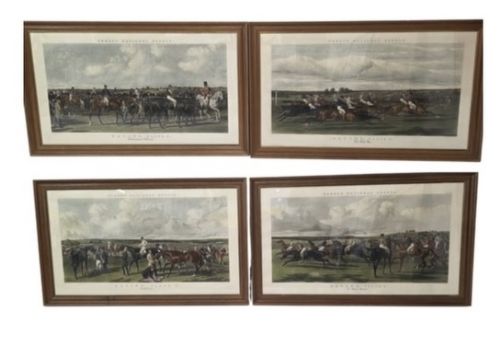
Buyers most frequently encounter nineteenth-century hand-coloured engravings, lithographs and original sporting prints within this category. Matched sets of four hunting or racing prints and individual framed watercolours appear regularly across the selection.
The subjects span formal portraits of renowned racehorses like Creeping Molly alongside dynamic scenes of the hunt, polo matches and coaching meets. Works extend across British, French and Northern European traditions, utilising paper supports framed under glass.
How they were made
Artists and printmakers utilised paper as the primary support, applying ink, watercolour, pastel, chalk and charcoal to capture the musculature and movement of horses. Hand-colouring frequently enhanced printed engravings and lithographs after the initial impression.
Framing typically involved wood and gilt wood moulding to protect the delicate paper surfaces beneath glass. Drawings often relied on coloured paper or tinted grounds to heighten the effect of white chalk and pastel strokes.
Listings feature works across the nineteenth and twentieth centuries, spanning Victorian sporting prints, Edwardian watercolours and mid-century pastels on paper.
What varies in quality
Quality rests upon the sureness of the draftsmanship and the fidelity with which the artist captures the anatomy and gait of the horse. Master sporting artists render movement with anatomical precision, whereas weaker examples lack proportion and life.
The clarity of the impression in prints and engravings dictates distinction, as worn plates yield blurred lines. Original watercolours and pastels derive their standing from hand execution and the preservation of pigment vibrancy beneath glass.
George Finch Mason·Snaffles·Anne Goldthwaite·Michael Lyne·Alken·Helena Maguire·John Sanderson Wells·William J Hodgson·Johan Noah Bemmel·Sam Howitt·J F Herring·Frank Dadd
The Paper Equestrian Wall Art Glossary
- Aquatint
- A printmaking technique that produces tonal areas resembling watercolour washes. It was frequently utilised for sporting prints to render atmospheric landscapes behind horses.
- Lithograph
- A planographic printing method based on the repulsion of oil and water. It allowed artists to draw directly onto the stone to produce nuanced tonal prints.
- Hand-coloured
- A print finished by hand with watercolour or wash after the initial impression. This process added vibrant hues to monochrome engravings of hunting and racing scenes.
- Pastel
- A dry medium composed of powdered pigment and a binder. Artists applied these coloured sticks to paper or coloured grounds to achieve soft textures.
- Sporting Art
- A genre dedicated to depicting animals, field sports, racing and rural pursuits. British practitioners developed distinct traditions in documenting horses and hounds.
Paper Equestrian Wall Art: Frequently Asked Questions
How should I hang paper equestrian art?
Keep framed pieces away from direct sunlight to prevent the fading of watercolours, inks and tinted papers. Hang them at eye level in dry rooms where humidity fluctuations remain minimal.
Ensure that the glass protects the paper surface without touching it directly, utilising mounts or spacers to maintain an air gap.
Are sets of four prints common?
Publishers frequently issued sporting prints in matching sets of four to document sequences of a hunt or race. These groups were designed to be framed together as a uniform wall display.
Finding a complete, undivided set increases the historical cohesion of the grouping on the wall.
How do I distinguish an original drawing from a print?
Examine the surface under magnification to check for the continuous brushstrokes or chalk marks characteristic of original hand-executed drawings. Prints reveal dot patterns, plate marks or flat ink layers deposited mechanically.
Watercolours and pastels present physical texture upon the paper that sits above the surface plane.
What subjects feature most often?
Fox hunting, horse racing, polo matches and coaching scenes dominate the visual record. Artists also portrayed individual named racehorses alongside informal rural studies of horses and grooms.
These subjects reflect the central role of equestrian pursuits in nineteenth-century social and sporting life.