


Black Framed Horse Print
A black framed horse print brings the energy of the stable and the field directly onto your wall, secured behind glass in a dark moulding.
Black Framed Horse Print
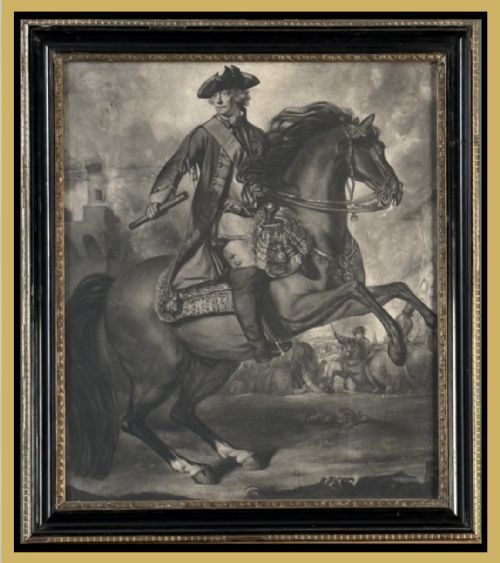
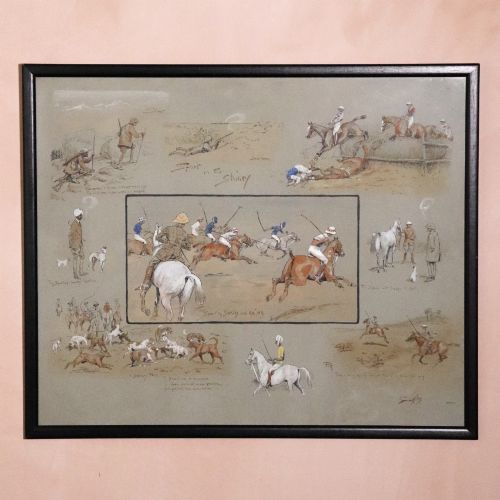
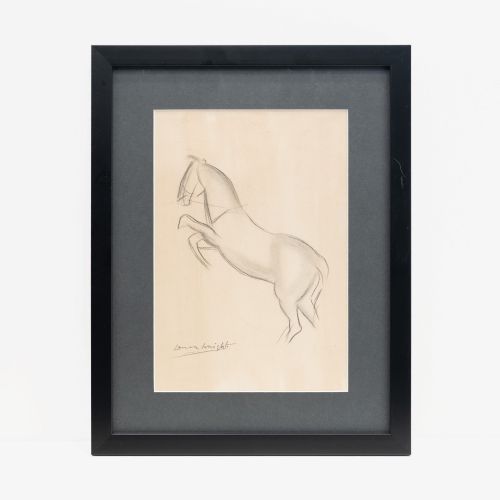
A black framed horse print encompasses a variety of equestrian subjects, ranging from early hunting scenes and racing portraits to modern etchings and watercolours. When you search for a black framed horse print, you encounter pieces spanning from the eighteenth century through the Victorian and Edwardian eras into the twentieth century. These works appear as engravings, etchings, mezzotints, photographic prints, and original watercolours or oils.
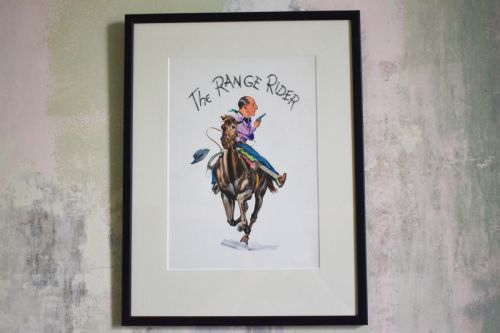
The selection on this page relies heavily on early twentieth-century sporting art, particularly works by artists such as Snaffles, alongside historical engravings and twentieth-century modernist interpretations. Subjects stretch from formal racehorse portraits and point-to-point steeplechases to lively hunting vignettes and satirical cartoons. Each framed piece places the artwork within a dark boundary that focuses the eye entirely upon the equine subject.
The physical forms vary from single framed prints and etching plates to sets of photographic prints and hand-coloured engravings. Origin periods include Georgian, Victorian, and Edwardian styles, as well as British colonial and twentieth-century modern British movements. Buyers often select these works to anchor a study, library, or hallway with traditional equestrian character.
Materials and construction
These works are executed on paper, card, or canvas utilising ink, graphite, watercolour, and oil paint, often finished with hand-colouring or gilt accents. Etchings and engravings involve incisions made on metal plates before transfer to paper, while mezzotints use textured copper plates to produce rich tonal gradations. Photographic processes and modern print techniques also represent the image production methods recorded in the evidence.
The supporting structures typically combine wood frames with protective glass panels, occasionally incorporating eglomise glass decoration where designs are reverse-painted or gilded. Brass rubbings and canvas paintings utilise alternative textile and wooden panel substrates. The framing materials provide both structural support and visual containment for the delicate paper or canvas within.
Materials recorded across the archive include oil, watercolour, graphite, ink, and gilt alongside traditional wood framing.
Judging the range
Distinction across these pieces rests upon the fidelity of the printing technique, the clarity of the plate mark, and the hand of the artist. Original etchings and signed prints by established sporting artists carry a different visual weight compared to later photographic reproductions or decorative eglomise panels. The subtlety of hand-colouring applied to nineteenth-century engravings also separates standard decorative plates from finer artistic examples.
The integrity of the medium itself defines the lower and upper bounds of the selection. Works executed directly in watercolour, oil paint, or original graphite demonstrate unique painterly decisions that mass-produced prints lack. Furthermore, the preservation of the paper ground against foxing and toning influences how successfully the artwork reads within its dark frame.
Edward Fisher·Sir Joshua Reynolds·Snaffles·Dame Laura Knight·Herbert Dicksee·Anne Goldthwaite·Gabriel Dauchot·Abraham Cooper·John Atkinson
The Black Framed Horse Print Glossary
- Mezzotint
- A printmaking process of the intaglio family where the plate is roughened to achieve rich dark tones and subtle gradations of light. This technique allows for deep shadows that suit moody portraits and dramatic equine scenes.
- Etching
- A method where lines are bitten into a metal plate with acid to hold the ink that forms the printed image. Artists prize this process for its freedom of line and capacity for fine detail.
- Eglomise
- A technique involving the application of gold or silver leaf and painting to the reverse side of glass. It creates a reflective, decorative border often seen in specialised framing.
- Brass rubbing
- The practice of taking an impression from an engraved brass plaque by placing paper over it and rubbing with wax or graphite. This method captures historical line work in a striking metallic monochrome.
- Engraving
- A technique where an artist cuts lines directly into a hard plate using a sharp tool called a burin. The resulting prints exhibit precise, crisp lines that withstand numerous impressions.
Black Framed Horse Print: Frequently Asked Questions
How do I hang a heavy framed print?
Ensure your wall fixings match the weight of the wood frame and glass, utilising appropriate wall plugs and screws rather than picture hooks alone.
Position the centre of the print at eye level to give the equestrian subject proper prominence in the room.
Are these prints original period pieces?
The selection includes genuine period engravings, etchings, and watercolours dating from the eighteenth century through the twentieth century. Specific creation dates are recorded for each individual listing.
Some items are noted as later reproductions, such as eglomise decorative pieces, allowing buyers to choose between historical originals and interpretive works.
How should I clean the glass?
Apply a mild glass cleaner to a soft cloth rather than directly onto the frame surface to prevent moisture seeping beneath the moulding. Wipe gently across the glass pane.
Take care to avoid spraying liquid near the edges where it might contact older paper or vulnerable frame joints.
What rooms suit equestrian art best?
Traditional spaces such as studies, libraries, and hallways naturally complement the hunting and racing subjects found in these sporting artworks. The dark wood frames anchor traditional interior palettes.
Modern rooms can also benefit from the graphic lines of twentieth-century etchings and bold racing scenes, adding a distinct focal point to minimalist walls.