



Edwardian Equestrian Artwork
Edwardian equestrian artwork captures the spirit of the hunt, the paddock, and the coaching road through the skilled hands of British sporting artists.
Edwardian Equestrian Artwork
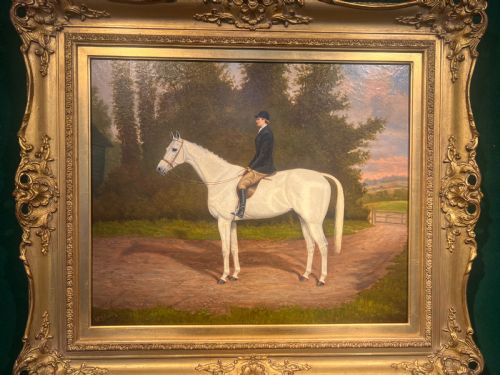
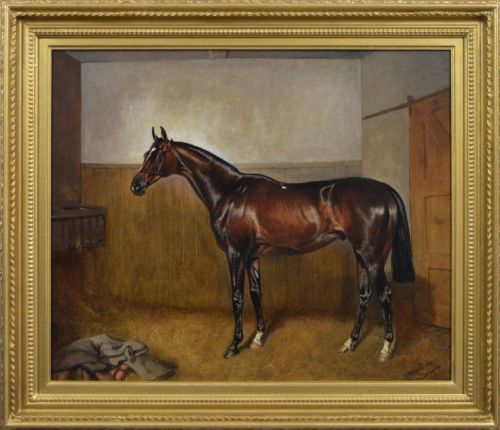
When you search for edwardian equestrian artwork, you encounter a specialised field of British sporting art that records horses, hounds, and rural coaching scenes. The pieces on this page span oil paintings, watercolours, chalk drawings, and original prints produced during the Edwardian era and surrounding decades.
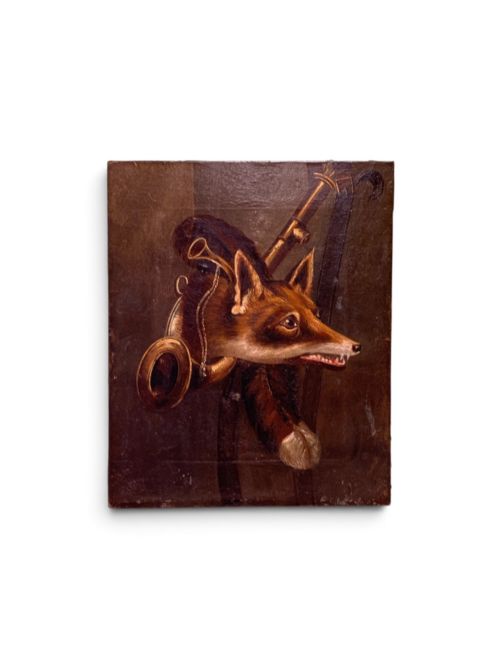
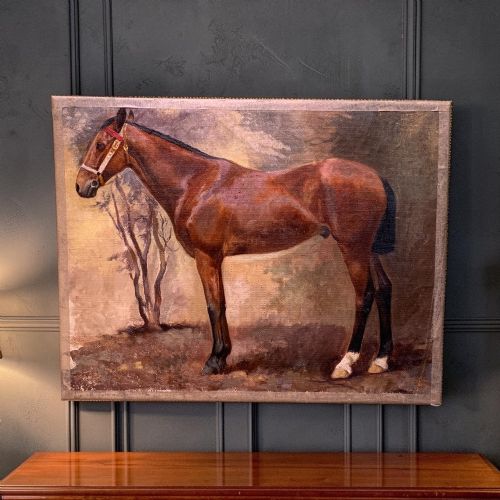
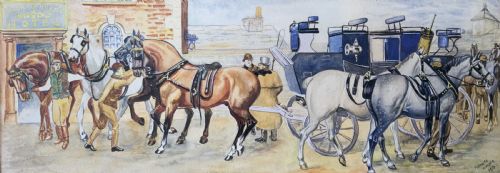
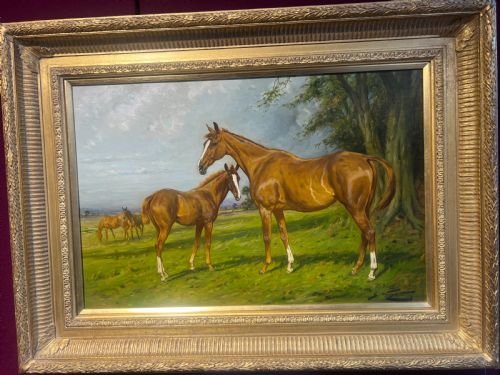
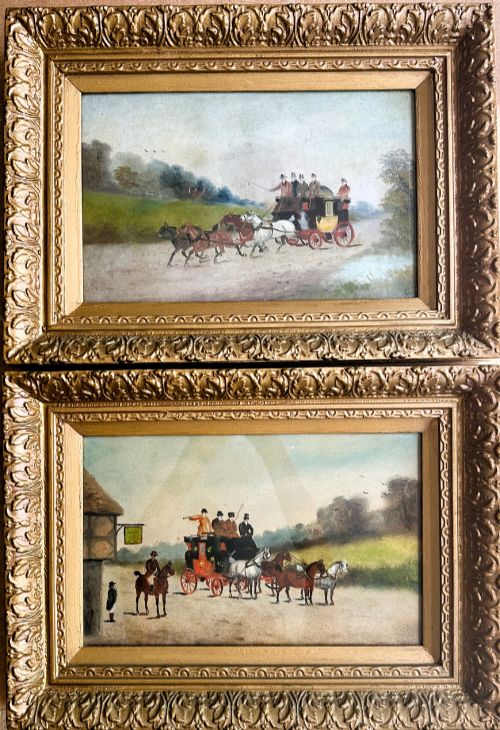
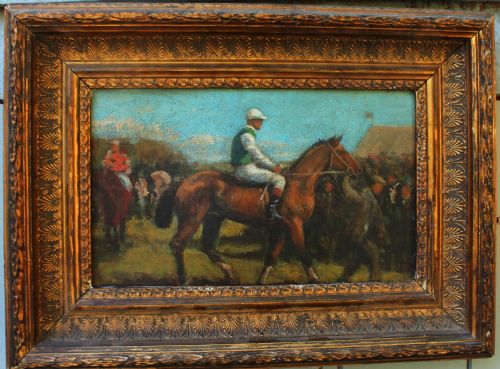
You are most likely to meet framed oil paintings and watercolours depicting racehorses with jockeys, coaching scenes on oak frames, and hunting subjects. These works celebrate thoroughbreds, heavy horses, and country life through direct observation by period painters and illustrators.
The subjects range from individual portraits of champion horses like Persimmon and Diamond Jubilee to dynamic hunting sequences and road scenes. They reflect a society deeply connected to the horse for transport, sport, and leisure.
Materials and Techniques
Artists of this period primarily utilised oil paint on canvas or board, alongside delicate watercolour and chalk on paper. Canvases are frequently housed within period wooden frames, including giltwood and oak surrounds that complement the traditional subject matter.
Printmakers employed etching and lithography to create works such as the framed Vanity Fair double prints and original coloured prints. These graphic techniques allowed popular sporting scenes and caricatures to reach a wider audience while retaining sharp detail.
Several hunting scenes feature remarkably determined dogs tumbling cheerfully over hedges alongside galloping horses.
Distinctions in Quality
The distinction between ordinary and exceptional works rests upon the artist's anatomical command of the horse and the vitality of the composition. Master painters such as Alfred Munnings, John Alfred Wheeler, and Charles Johnson Payne captured movement and light with a surety that elevates their pieces above standard decorative sporting art.
Condition of the medium and the originality of the framing also determine a piece's standing. Intact oil paint surfaces free from heavy retouched areas, alongside well-preserved watercolours protected under glass, represent the upper echelon of surviving works.
John Alfred Wheeler·Philip Henry Rideout·Cecil Charles Windsor Aldin·John Sanderson Wells·Charles Johnson Payne Snaffles
The Edwardian Equestrian Artwork Glossary
- Sporting Art
- A genre of painting and illustration dedicated to equestrian subjects, hunting, racing, and shooting. It relies on accurate depiction of animals and rural pursuits.
- Chalk Drawing
- A work executed primarily with dry chalk sticks on tinted or white paper, capturing rapid preparatory lines or finished tonal studies.
- Etching
- A printmaking process where lines are bitten into a metal plate with acid before being inked and pressed onto paper to produce fine, linear imagery.
- Giltwood
- Wood carved and coated with a thin layer of gold leaf or gold paint, frequently utilised for ornate nineteenth and early twentieth-century picture frames.
- Watercolour
- A paint consisting of pigment suspended in a water-based solution, applied to paper to achieve translucent washes and delicate tonal shifts.
Edwardian Equestrian Artwork: Frequently Asked Questions
What subjects feature in these artworks?
These pieces primarily depict racehorses with jockeys, hunting hounds, coaching teams on winter roads, and rural horse fairs. They record the central role of horses in British sport and daily transport.
Artists focused closely on the conformation of specific champions, named mounts, and energetic field sports enjoyed across the countryside during the early twentieth century.
How do I identify an original print from a reproduction?
Original prints from this era, such as those by Snaffles, often feature hand-coloured details, publisher stamps, and distinct plate marks pressed into the paper. Examining the surface under magnification reveals the characteristic ink distribution of period printing methods rather than modern dot patterns.
Furthermore, framing materials, backing papers, and the age of the paper stock offer reliable clues to confirm the production period.
Where were these pieces displayed historically?
Sporting artwork traditionally hung in country houses, estate libraries, club rooms, and stables. They served as tributes to prized livestock, victorious racehorses, and memorable hunting seasons.
Today, they transition easily into domestic interiors, bringing historical character and a strong sense of rural British tradition to studies, hallways, and living rooms.
How do I care for antique watercolours and oils?
Oil paintings benefit from stable indoor humidity and shelter from direct sunlight to protect the canvas and varnish. Dust should be removed gently from the surface without applying moisture or cleaning agents.
Watercolours and prints require protection behind glass with acid-free mounts to prevent fading of the pigments and paper degradation caused by ultraviolet light.