






Antique British Horse Drawing
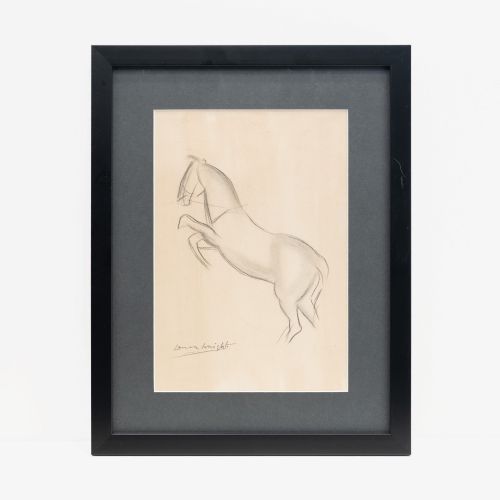
These antique british horse drawing works capture equine subjects across centuries in pencil, chalk, and watercolour on paper.
Antique British Horse Drawing
An antique british horse drawing brings the movement and character of horses into an interior through skilled draughtsmanship on paper. These works capture everything from working carriage horses to elegant equestrians in town and country settings.
The pieces on this page span the nineteenth century into the early twentieth century, encompassing Victorian and Edwardian periods. Buyers encounter framed chalk drawings, watercolours, and pastels created by British artists of various schools.
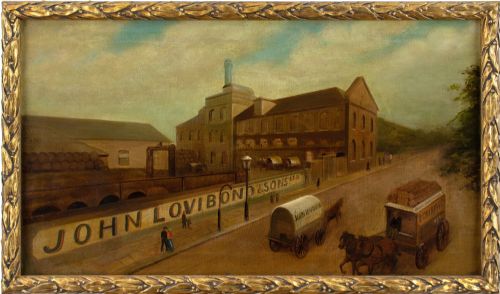
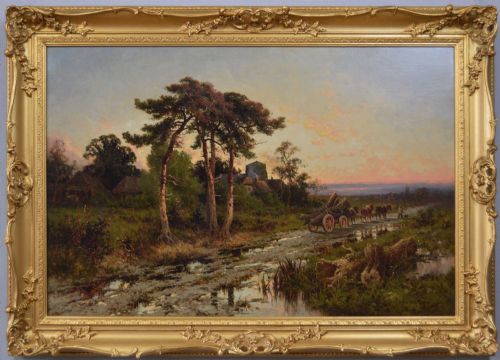
While many depict horses directly in harness or in motion, others place animals within broader landscapes, street scenes, and coaching environments. The framing often utilises walnut or giltwood to complement the delicate media on paper.
Assessing quality and execution
The strength of a drawing rests in the confidence of the line and the anatomical accuracy of the horse. Stronger examples convey weight, movement, and posture with minimal strokes, whereas weaker pieces lack structural conviction.
Condition of the paper and the preservation of the pigments dictate the overall desirability. Works retaining crisp contrast and original framing elements command greater appreciation among collectors.
Several horses depicted here likely spent their mornings pulling heavy brewery drays before posing for illustrators.
Cecil Charles Windsor Aldin·William Manners·Charles James Lauder·Snaffles·Fred Lawson·John Baragwanath King
The Antique British Horse Drawing Glossary
- Chalk drawing
- A work executed primarily using dry chalk or similar compressed pigment sticks on paper. It allows artists to achieve rich tonal gradations and sharp contour lines simultaneously.
- Watercolour
- A painting method where coloured pigments are suspended in a water-soluble vehicle, applied here to paper supports. It produces translucent washes and delicate atmospheric effects.
- Giltwood
- Wood carved and coated with a thin layer of gold leaf or gold-coloured metallic finish. It provides a traditional reflective border for framed works on paper.
- English School
- A classification for art produced by British-born or UK-based artists working within established national traditions. It groups together painters and draughtsmen who shared stylistic influences of their era.
Antique British Horse Drawing: Frequently Asked Questions
How do I care for antique paper drawings?
Keep works on paper away from direct sunlight to prevent fading of watercolours and chalks. Maintain stable indoor humidity to protect both the paper support and the original framing.
Ensure that framing utilises acid-free mounts so the paper does not discolour over time. Professional framing behind protective glass safeguards the delicate media from airborne pollutants.
What subjects appear in these drawings?
The works depict horses in various historical contexts, including carriage driving, coaching scenes, and urban street settings. Many pieces capture working animals alongside leisure riding.
Artists frequently set these equine subjects within detailed landscapes or recognizable townscapes. This provides a clear window into nineteenth and early twentieth-century British transport and daily life.
How do I distinguish nineteenth-century works?
Examine the paper quality, framing materials, and stylistic signatures typical of the Victorian and Edwardian eras. Faded inscriptions or period framing often provide clues to the exact date.
Subject matter can also help date a piece, as coaching and horse-drawn transport declined with the rise of the motor car. Victorian and Edwardian artists recorded these traditional scenes from direct observation.
Are these drawings original works of art?
The listings comprise original hand-drawn and painted pieces rather than modern mechanical reproductions. Each work is a unique creation by the artist's hand using historical media.
Signatures, studio notes, or attribution versos on the back often confirm the authenticity of these period pieces. Paper texture and pigment application further verify their status as original art.