


Antique Fox Hunting Art
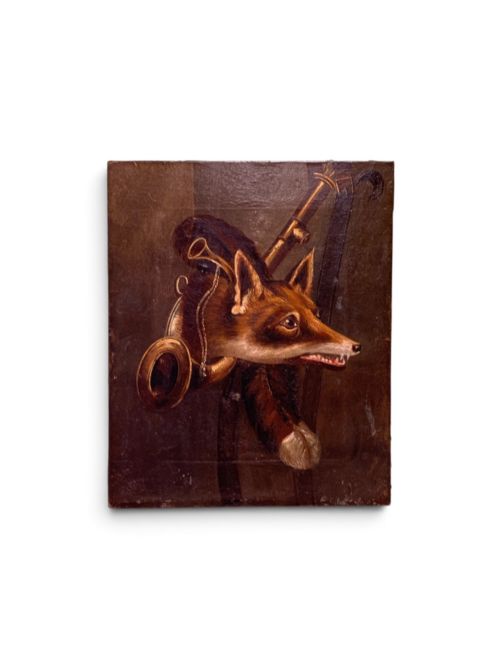
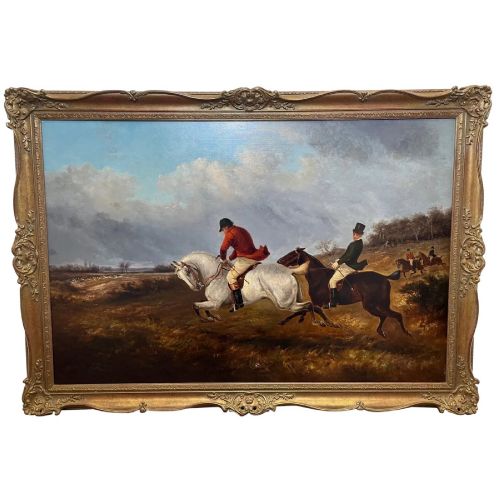
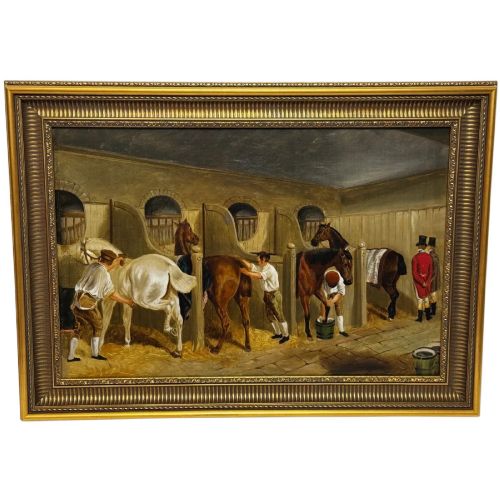
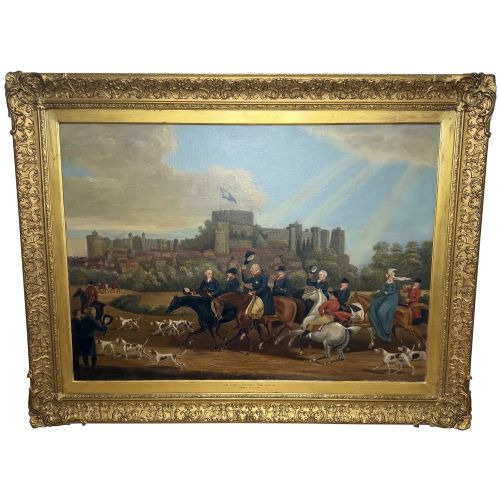
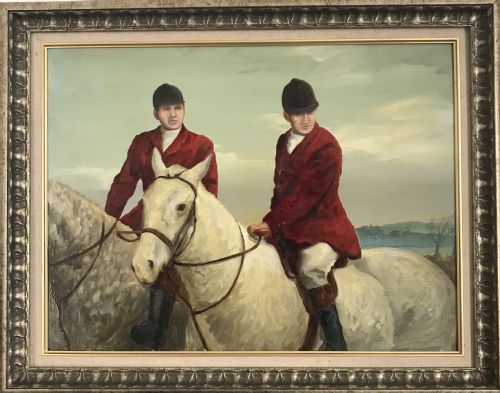
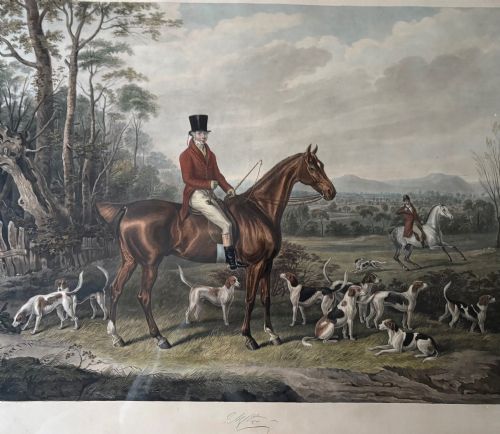
Antique fox hunting art captures the drama of the chase through oil paintings, watercolours, and hand-coloured prints depicting horses, hounds, and riders across the British countryside.
Antique Fox Hunting Art
These works comprise oil paintings on canvas or wood, delicate watercolours, and early engravings that document equestrian pursuits from the Georgian, Victorian, and Edwardian eras. Collectors encounter framed prints alongside substantial oils depicting iconic meets, full cries, and the distinct topography of historic hunts.
The material spans paper, glass, and wood, often mounted in period giltwood frames that complement the rich red coats and muted rural landscapes. Subjects range from sweeping panoramic views of packs in winter snow to intimate portraits of hounds and named huntsmen.
Pieces frequently reference notable packs such as the Quorn, Belvoir, and Berkeley, anchoring the visual record in genuine topographical and social history. The selection balances larger statement canvases with framed sets of prints intended for study and display.
Materials and Technique
Artists relied primarily on oil paint applied to canvas or wood panels, utilising rich pigments to render the gloss of horse coats and the crisp detail of hunting pinks against winter backdrops. Watercolours on paper offer a lighter, more immediate impression of movement, often finished with subtle ink or pencil underdrawing.
Printmakers employed engraving and aquatint techniques on paper, frequently hand-colouring the impressions with washes to enhance the vibrancy of the scene before framing them behind glass in gilt wood or Hogarth moulding.
Antique Fox Hunting Art Retail Price Guide 2026
Typical asking prices for fox hunting art among the pieces listed under this phrase on Sellingantiques today, from the lower quarter to the upper quarter. They describe what is for sale here now, not the wider market.
Listings feature oil on canvas, watercolour, and paper, spanning periods from the Georgian era through the 1960s.
Evaluating Quality
The distinction between ordinary and exceptional works rests upon the artist's command of equine and canine anatomy during rapid motion. Superior pieces convey tension and energy in the stride of the horses and the focused drive of the hounds, rather than stiffly posed figures.
Execution of the surrounding landscape and atmosphere elevates a composition, distinguishing works by accomplished sporting painters from standard commercial output. Original framing and distinct provenance further separate archival pieces of consequence from later reproductions.
Thomas Smythe·John Arthur Lomax·Basil Nightingale·Philip Henry Rideout·George Armfield·Charles Faulkner·Fannie Moody·John Sanderson Wells·Charles Clifford Turner·Thomas Ivester Lloyd·Charles Johnson Payne Snaffles·Heywood Hardy·Guillaume Urban Régamey·George Goodwin Kilburne·William J Hodgson·H Alken·Charles Hunt·Francis Calcroft Turner·George Morland·E Bell
The Antique Fox Hunting Art Glossary
- Aquatint
- A printmaking technique that produces tonal areas resembling watercolour washes, frequently used in nineteenth-century sporting prints. It allows for subtle gradations of shadow and light across countryside scenes.
- Giltwood
- Wood carved and covered with a thin layer of gold leaf, commonly utilised for nineteenth-century picture frames. This finish adds reflective warmth to oil paintings and watercolours.
- Sporting Art
- A genre dedicated to the depiction of rural sports, equestrian subjects, and animals, flourishing in Britain throughout the Georgian and Victorian periods. It serves as both fine art and a historical record of field sports.
- Full Cry
- A hunting term describing the moment when the entire pack of hounds speaks together in pursuit of the quarry. In art, this translates to dynamic compositions showing maximum movement and speed.
Antique Fox Hunting Art: Frequently Asked Questions
What periods do these pieces date from?
The selections span from the Georgian era through the Victorian period and into the Edwardian age, reflecting shifts in sporting culture and print technology.
Earlier pieces often exhibit folk art sensibilities or detailed hand-coloured engravings, while later Edwardian works demonstrate looser brushwork in watercolours and oils.
How were hunting prints originally displayed?
Prints were commonly issued in sets documenting a sequence of the chase, such as the meet, the find, the run, and the kill, designed to be hung together in a sequence.
They were protected behind glass and framed in gilt wood or dark moulding to suit the wood-panelled libraries and halls of country houses.
Are the signatures on these works original?
Many oil paintings and watercolours bear the signatures or initials of recognised sporting artists, sometimes accompanied by dates that help verify the period of execution.
Signed prints typically feature the artist's signature in pencil beneath the image area, marking them as distinct from unsigned mass-market reproductions.
How do I care for antique paper prints?
Paper and watercolours require protection from direct sunlight to prevent the fading of hand-applied watercolours and the yellowing of the backing sheet.
Displaying them away from moisture sources and checking that the framing seals remain intact will preserve the delicate pigments over time.