


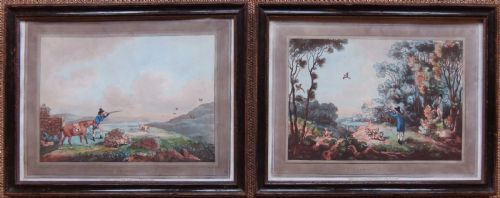
British Sporting Art Print
A british sporting art print captures the field, track, and hunt through historical prints, watercolours, and oils.
British Sporting Art Print
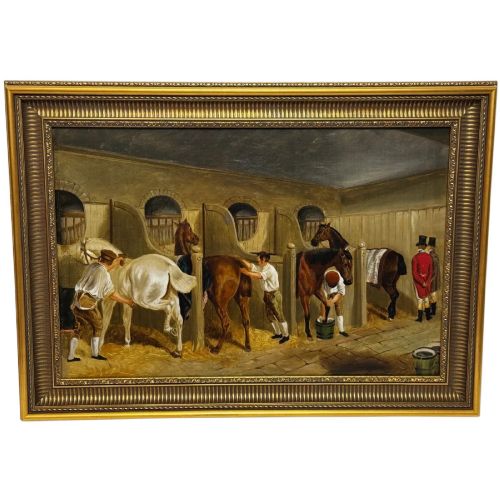
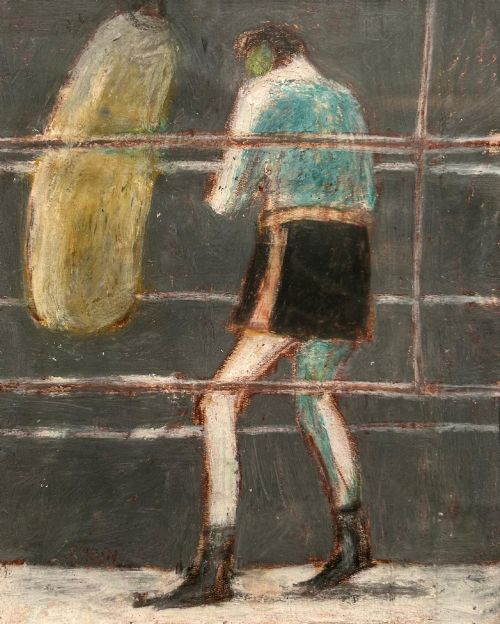
A british sporting art print captures equine pursuits, hounds, racing, and shooting scenes across various centuries. Buyers encounter framed prints, lithographs, and engravings alongside original watercolours and oil paintings.
The selection ranges from nineteenth-century lithographs and Victorian hunting engravings to early twentieth-century works and mid-century modern pieces. These works reflect British field sports, country house traditions, and colonial subjects.
Framed prints and original watercolours dominate the offerings, often presented in wood, gilt wood, or oak frames. Collectors find individual plates as well as paired prints and complete hunting sequences.
How They Were Made
Artists and printmakers utilised traditional mediums including paper, oil on canvas, gouache, and watercolour. Lithography and chromolithography allowed producers to replicate detailed sporting scenes for wider circulation.
Engravings provided sharp line work for multi-plate hunting sequences and field sports documentation. Finished artworks were typically housed in wood, oak, or gilt wood frames under glass for protection.
Common framing materials across the collection include oak, gilt wood, and standard timber mouldings.
What Varies in Quality
Quality rests upon the directness of the artist's hand, whether in an original watercolour, a signed print, or a standard lithograph. Masterful handling of horse anatomy, hound movement, and rider posture distinguishes the finest works.
The preservation of the paper surface, the vibrancy of the pigments or printing inks, and the appropriateness of the framing contribute to the overall standard of the piece.
Samuel Rabin·C. H. Weigall·John Rattenbury Skeaping·John Atkinson·Charles Johnson Payne Snaffles·Sam Howitt·Frank Algernon Stewart·Archibald Thorburn
The British Sporting Art Print Glossary
- Lithograph
- A print produced by printing from a flat stone or metal plate treated so that ink adheres only to the design. This technique allowed artists to reproduce detailed illustrative works.
- Chromolithograph
- A coloured print produced using multiple lithographic stones, one for each colour. This method created rich, multi-toned hues on paper.
- Engraving
- An image incised into a metal plate, which is then inked and pressed onto paper. It yields fine, precise lines suited to detailed sporting subjects.
- Gouache
- An opaque watercolour medium containing pigment mixed with a binding agent. It provides solid, flat areas of colour within works on paper.
British Sporting Art Print: Frequently Asked Questions
What subjects appear in these prints?
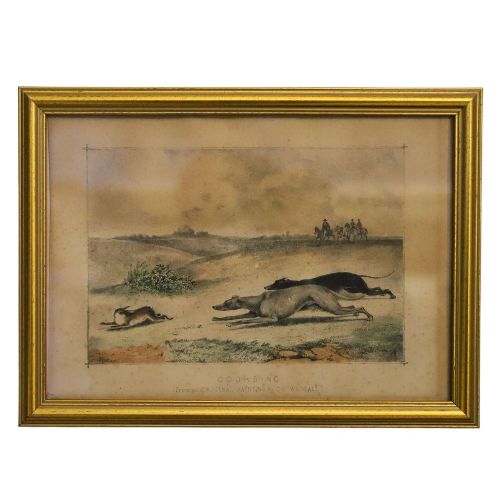
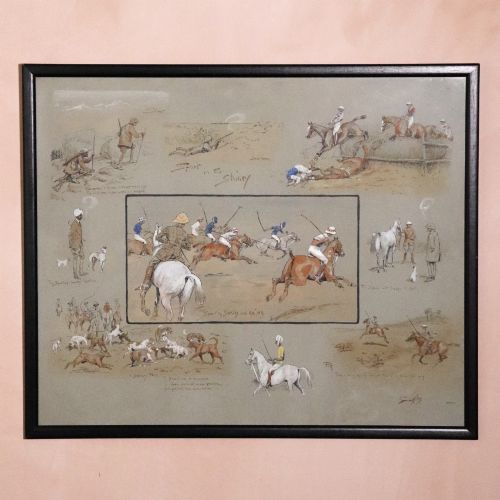
The works depict traditional pursuits including horse racing, fox hunting, hare coursing, shooting, and polo. Scenes range from local point-to-point races to colonial field sports.
Artists also recorded wildlife, working dogs, and rural characters associated with the British countryside.
Are these works original?
The selection includes both original hand-painted watercolours and oils alongside period lithographs, engravings, and chromolithographs. Many prints bear signature marks from the artist.
Each listing specifies whether the artwork is an original painting, a watercolour, or a period print edition.
How should I frame these pieces?
Many items arrive ready to hang in period wood, oak, or gilt wood frames under glass. Preserving the existing framing maintains the historical context of the artwork.
If reframing, utilise conservation-grade materials to protect paper and watercolour surfaces from light and moisture damage.
How do I date a sporting print?
Dating relies on stylistic clues, print techniques, artist life dates, and paper characteristics. Nineteenth-century engravings differ noticeably in line quality from Edwardian and mid-century modern pieces.
Signatures, publisher details, and framing styles often provide additional chronological markers for the work.