



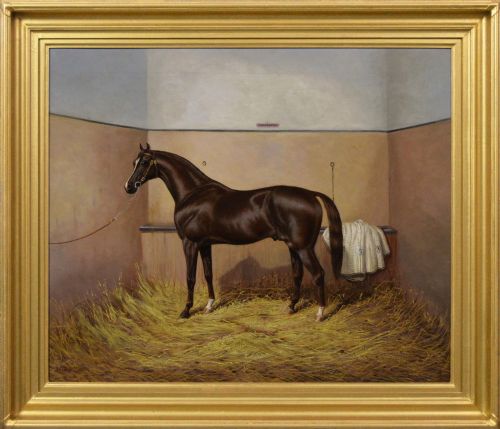


Brown Horse Sporting Artwork
Brown horse sporting artwork captures the enduring partnership between human and equine through centuries of painting, drawing and printmaking.
Brown Horse Sporting Artwork
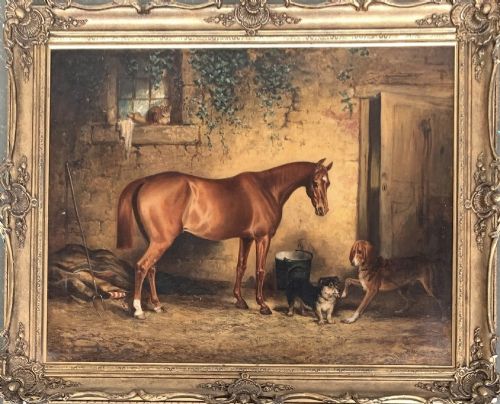
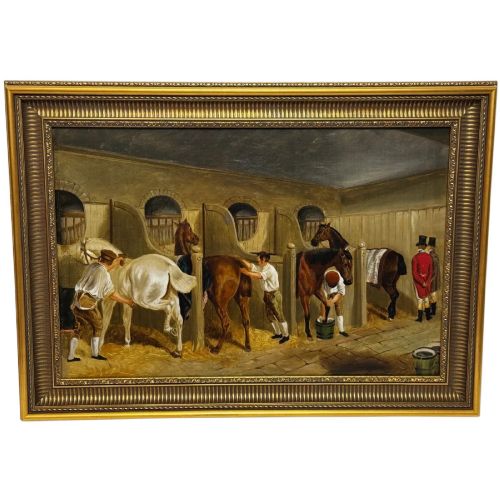
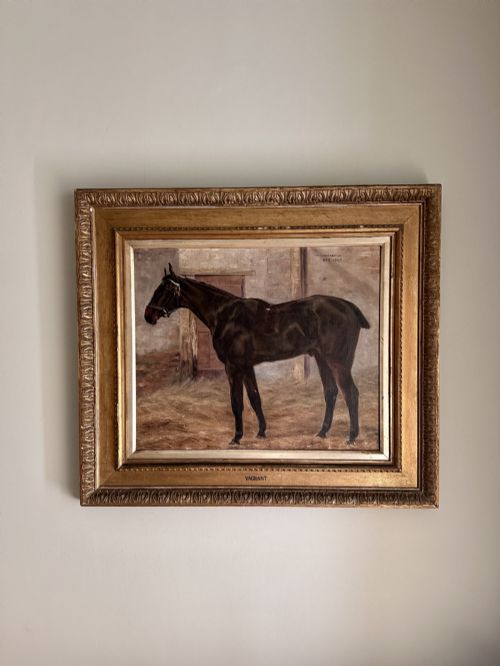
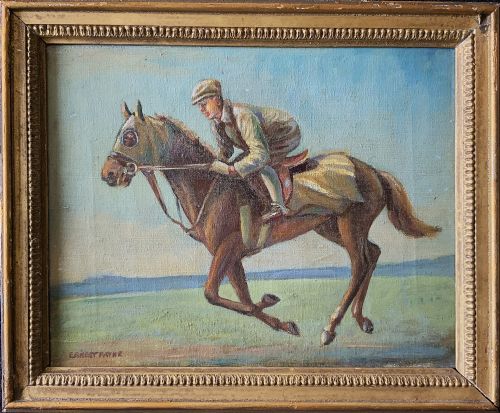
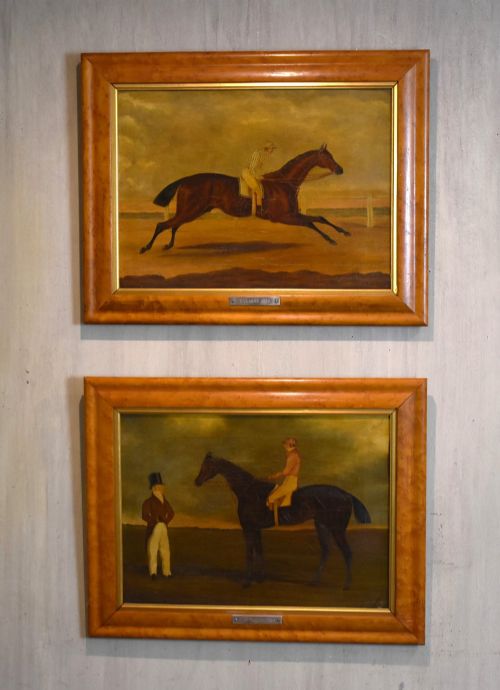
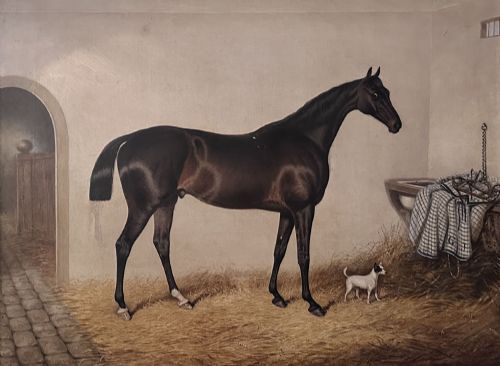
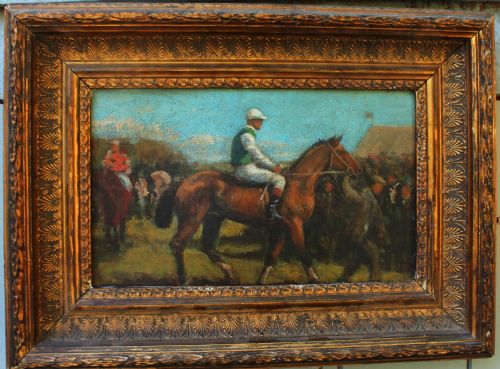
Brown horse sporting artwork encompasses a variety of visual media dedicated to equines, from detailed oil portraits of individual hunters to lively racing scenes. These works document specific animals, notable races and countryside pursuits across generations of artistic interpretation.
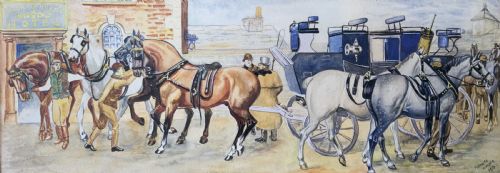
The pieces appearing on this page span the nineteenth and twentieth centuries, taking the form of oil paintings on canvas or panel, watercolours, pastels and framed prints. Victorian and Edwardian examples predominate alongside mid-century interpretations.
Subjects range from titled racehorses with their jockeys to quiet stable portraits and dynamic hunting scenes. Each piece reflects the prevailing aesthetic of its period, whether academic realism or more expressive modern line work.
How they were made
Artists typically employed oil paint on stretched canvas or wooden panels to capture the sheen of a horse coat and the play of light in a landscape. Watercolours and gouache on paper offer a lighter touch, often utilised for rapid studies and preparatory sketches.
Framing materials form an integral part of the physical object, with giltwood, oak and walnut frames providing period context and structural support. Prints utilise techniques such as aquatint and lithography to reproduce original compositions for a wider audience.
The selection includes works dated from the eighteenth century through to the mid-twentieth century, employing canvas, paper, wood and panel.
What varies in quality
The success of a piece rests heavily on the artist's anatomical understanding of the horse, where accurate bone structure and muscle tension distinguish masterwork from routine output. Subtle handling of light across the musculature elevates a portrait from a mere record to a compelling study.
Provenance and documentation heavily influence the standing of a work, particularly when named horses, recognised riders or historic estates are involved. The preservation of the original medium, whether unblemished canvas or vibrant watercolour pigment, further separates examples.
Henry Barraud·Fred Fitzpatrick·Ernest Payne·John Frederick Herring Snr·John Ferneley Senior·Alfred Munnings·John Rattenbury Skeaping·Albert Clark·George E Sharpe·Samuel Spode·Clifton Tomson·Alfred Wheeler·Alfred Grenfell Haigh·Charles Clifford Turner·Charles Bilger Spalding·William Williams
The Brown Horse Sporting Artwork Glossary
- Aquatint
- A intaglio printmaking technique that produces tonal areas resembling watercolour washes. It was frequently used in sporting prints to render atmospheric skies and landscape backgrounds.
- Gouache
- An opaque water-based paint that dries to a matte finish. Artists used it to add highlights and solid colour blocks to paper works.
- Giltwood
- Wood carved and coated with gold leaf or a gold-coloured metallic finish. It is common on nineteenth-century frames designed to complement oil paintings.
- Provenance
- The documented history of ownership of an artwork from its creation to the present day. Detailed provenance often connects a depicted horse to specific owners or historic races.
Brown Horse Sporting Artwork: Frequently Asked Questions
What is the difference between an oil study and a finished portrait?
An oil study is typically executed quickly to capture the posture, lighting or movement of a horse before a larger commission. These works display looser brushwork and immediate energy.
Finished portraits present a more polished, formal depiction of the animal, often set within a carefully composed landscape or stable interior designed to showcase its conformation.
How should I hang and care for paper pieces?
Watercolours, pastels and prints on paper are sensitive to ultraviolet light and require conservation-grade framing with UV-filtering glass. Direct sunlight will cause pigments and paper fibres to fade over time.
Display these works in rooms with stable humidity and temperature levels to prevent paper buckling, foxing spots or degradation of the underlying support.
Are prints from this era considered original works?
Period prints encompass both reproductions after major painters and original graphic works produced directly by the artist. Aquatints and signed artist proofs hold distinct collectible status from later mechanical reproductions.
Examining the paper type, plate marks and publishing details helps determine whether a print is a contemporary period impression or a later edition.