


Equestrian Wall Decor Print
These equestrian wall decor print pieces capture sporting art and racing history, offering a refined focal point for country houses and traditional studies.
Equestrian Wall Decor Print
An equestrian wall decor print brings historic racing scenes, hunts and portraits of horses into domestic spaces. Collectors searching this phrase encounter everything from framed Victorian lithographs to mid-century French oils and Georgian engravings.
The selection ranges from individual framed prints and watercolours to sets of aquatints and sequences of hunting scenes. These works document the enduring appeal of equine subjects across multiple centuries and artistic movements.
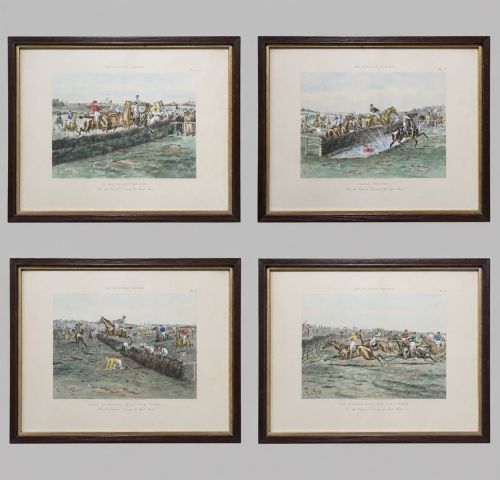
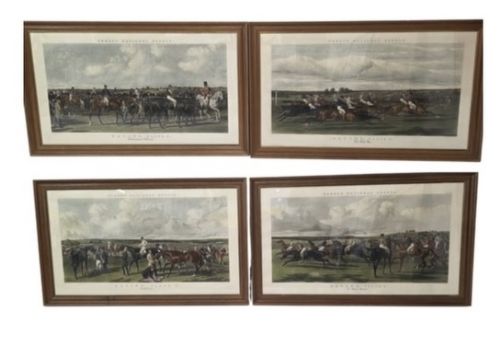
Victorian examples and 19th-century British sporting works dominate the field, alongside early 20th-century prints and mid-century canvases. Buyers frequently find framed sets that depict specific races, hunts or famous jockeys.
How they were made
Traditional printmaking methods form the backbone of these pieces, utilising ink on paper alongside hand-coloured engravings and aquatints. Many works combine detailed line work with watercolour washes or pigment to achieve depth.
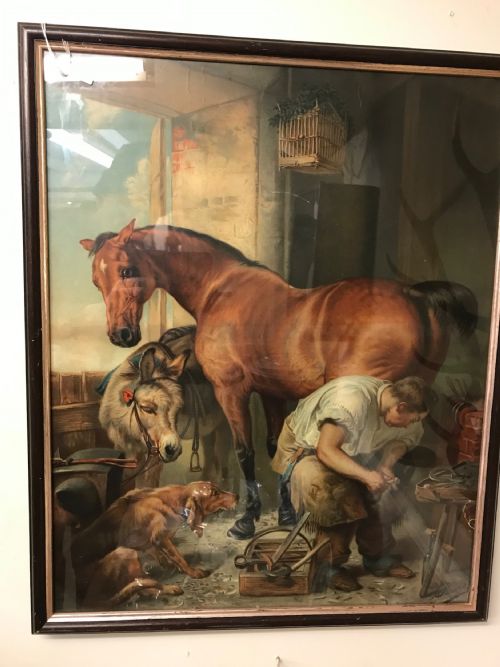
Original paintings utilise oil on canvas applied over wooden stretchers, often preserved within period gilt wood frames and protected beneath glass. Eglomise techniques and brass rubbings further diversify the physical construction of these wall displays.
Listings span from Georgian engravings dated 1753 through Victorian sporting art to mid-century French expressionist canvases.
What varies in quality
The fidelity of the ink impression and the preservation of the paper support distinguish superior prints from faded examples. Hand-colouring depth and the crispness of the original plate marks indicate higher artistic execution.
Framing adds considerable distinction, with period gilt wood surrounds and protective glass housing maintaining the integrity of the artwork. Complete sets preserved together hold greater coherence than dispersed individual sheets.
George Finch Mason·Edwin Henry Landseer·Gabriel Dauchot·Abraham Cooper·Charles Faulkner·John Atkinson·Charles Johnson Payne Snaffles·H. Alken·Edward Lloyd
The Equestrian Wall Decor Print Glossary
- Aquatint
- An intaglio printmaking technique that produces tones resembling watercolour washes. It was frequently utilised for sporting prints to render atmospheric racing scenes.
- Eglomise
- A process of applying cold gilding and painting to the rear face of glass. This creates a mirrored, reflective finish surrounding the central image.
- Sporting Art
- Genre of fine art that depicts horses, racing, hunting and hounds. British artists specialised in recording equine anatomy and sporting events.
- Brass Rubbing
- The technique of taking an impression from an engraved brass plaque by rubbing pigment over paper. Examples on this page record ancient equine subjects.
- Engraving
- A printmaking process where an artist cuts lines directly into a metal plate with a burin. The resulting incisions hold the ink for the printing press.
Equestrian Wall Decor Print: Frequently Asked Questions
How should I hang equestrian prints?
Hang these framed works at eye level in well-lit rooms away from direct sunlight to protect the paper and ink from fading. Grouping sets together in a traditional hallway or study preserves their visual narrative.
Ensure adequate spacing between frames to let individual watercolours and engravings breathe on the wall.
Are these works original antique prints?
The selection includes genuine 18th-century, Georgian and 19th-century engravings alongside early 20th-century lithographs and original paintings. Each listing specifies the period of execution and the medium used.
Checking the description confirms whether an item is a period impression or a later commemorative print.
How do I care for antique paper art?
Protect framed paper pieces from damp environments and extreme temperature fluctuations to prevent foxing and paper degradation. Acid-free backing boards and proper glazing shield the artwork from atmospheric pollutants.
Dust the wooden and gilt frames gently with a dry cloth without applying cleaning chemicals near the glass edge.
What subjects are common in equestrian art?
Common subjects include horse racing scenes, steeplechases, point-to-point events, hunting meets and individual portraits of celebrated racehorses and jockeys. Many pieces capture specific historical races or famous sporting moments.
Artists often focused on the dynamic movement of the animals and the vibrant red coats of the riders.