





Dark Framed Sports Print
A dark framed sports print brings nineteenth and early twentieth-century racing, shooting and hunting into a room with direct character.
Dark Framed Sports Print
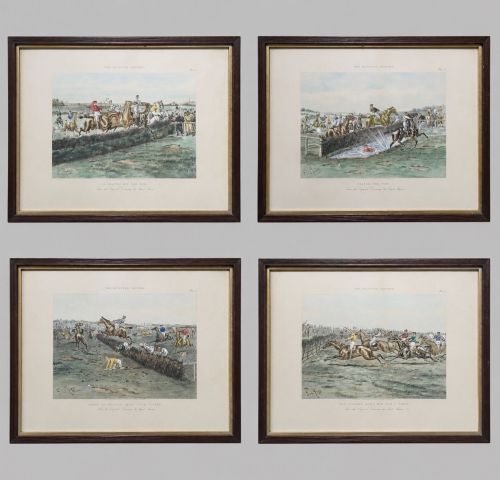
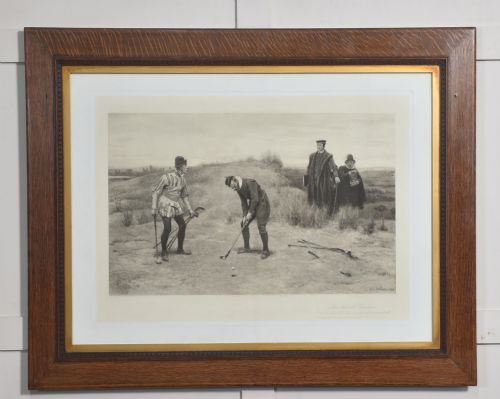
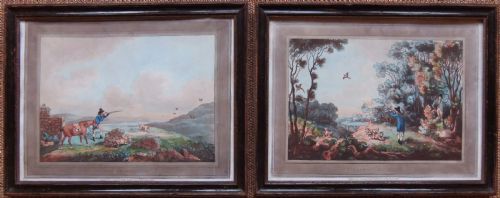
A dark framed sports print captures traditional pursuits like horse racing, hunting and shooting across the nineteenth and early twentieth centuries. These pieces encompass aquatints, engravings, original watercolours and photographs set behind glass.
The objects on this page range from nineteenth-century Victorian works to early twentieth-century British sporting art. Collectors encounter individual pieces, pairs and complete sets documenting equestrian and field sports.
The formats span framed prints, wall art and watercolour paintings, united by their dark framing and distinct sporting subjects. Each item reflects the visual record of British sporting culture from the 1800s to the 1930s.
How they were made
The physical construction relies on paper prints, watercolours or photographs enclosed under glass and secured within wooden frames. Oak and other dark woods provide the primary framing material, sometimes complemented by gold leaf or gilt details.
Techniques range from traditional engraving and aquatint printing to hand-applied watercolour paint and photographic development. Craftsmen finished these works using eglomise reproduction methods and embossed printing techniques on paper.
Dark Framed Sports Print Retail Price Guide 2026
Typical asking prices for dark framed sports print among the pieces listed under this phrase on Sellingantiques today, from the lower quarter to the upper quarter. They describe what is for sale here now, not the wider market.
Periods represented span from 1800 through the Victorian era to 1930.
What varies in quality
Quality rests upon the execution of the artwork itself, distinguishing original watercolours by named artists from later mass-produced prints. The precision of the engraving or aquatint lines and the vibrancy of the remaining paint determine visual impact.
The condition of the paper, the integrity of the glass and the preservation of the original wood or gilt framing contribute to overall worth. Works attributed to established sporting artists demonstrate superior draughtsmanship compared to anonymous pieces.
George Finch Mason·J. C. Dollman·Abraham Cooper·Charles Johnson Payne Snaffles·H. Alken·Sam. Howitt
The Dark Framed Sports Print Glossary
- Aquatint
- A variant of etching that produces areas of tone rather than lines, allowing for rich washes of shadow in sporting scenes. This technique was widely used for reproducing watercolour paintings in the nineteenth century.
- Eglomise
- A process of applying cold gilding and painting to the rear face of glass, creating a reflective and finished border. It often appears on decorative framing and reproduction panels from the early twentieth century.
- Engraving
- A printmaking method where an artist cuts a design directly into a metal plate using a sharp tool. The resulting lines hold ink to produce crisp, highly detailed prints.
- Victorian Sporting Art
- Artwork depicting horses, hounds, shooting and racing produced during the reign of Queen Victoria. These pieces focus heavily on accuracy of animal anatomy and field conditions.
Dark Framed Sports Print: Frequently Asked Questions
What periods do these prints cover?
The pieces span from the early nineteenth century through the Victorian era up to the 1930s. They capture changing artistic styles in British sporting representation.
Most works cluster around the Victorian period and the early twentieth century, reflecting the peak of traditional sporting art production.
Are these works original?
The selection includes original watercolours and photographs alongside period engravings and aquatints. Some listings feature eglomise reproductions of earlier compositions.
Each description specifies whether the item is an original painting, a period print or a later reproduction.
How should I hang dark framed art?
These framed pieces suit studies, libraries and traditional hallways where dark wood tones complement period interiors. Ensure they are placed away from direct sunlight to protect the paper and watercolour pigments.
The substantial dark frames and glass require secure wall fixings to support their weight safely.
What subjects do the prints show?
The imagery focuses predominantly on equestrian pursuits, horse racing, shooting parties and hunting scenes. Famous races and field sports form the core narrative of the artwork.
Figures include huntsmen on horseback, trainers and handlers captured in active sporting environments.