



Black Forest Style Carving
These black forest style carving pieces bring rustic charm and wildlife subjects into domestic spaces through detailed timber work.

Black Forest Style Carving
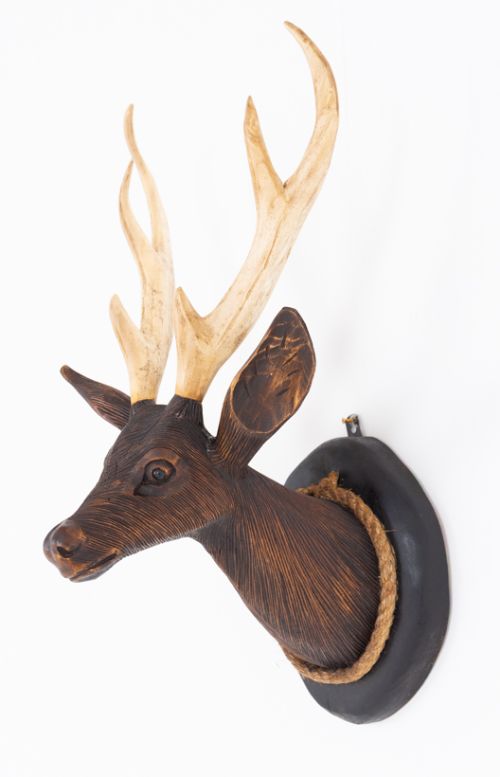
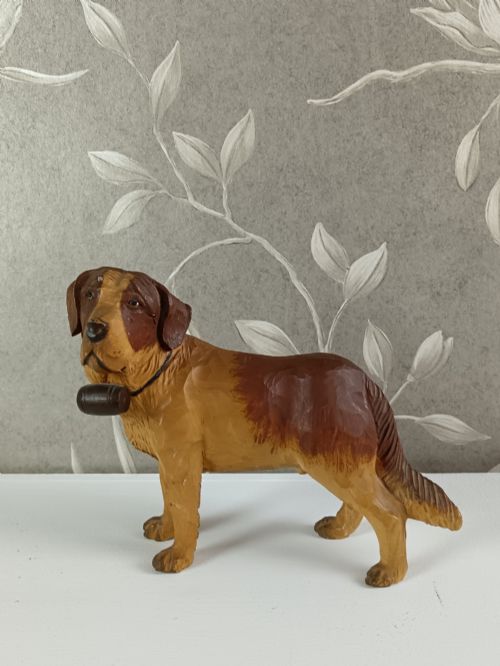
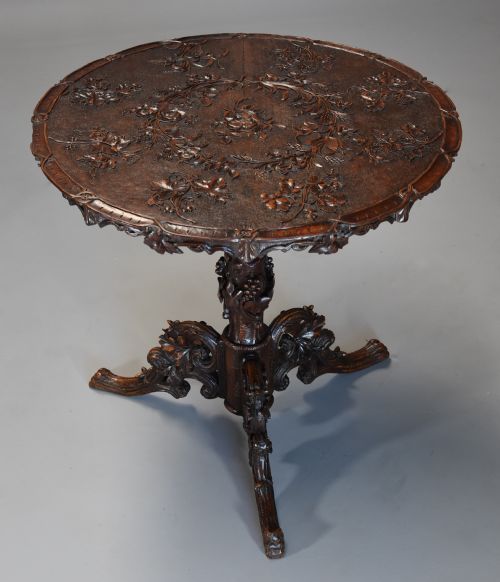
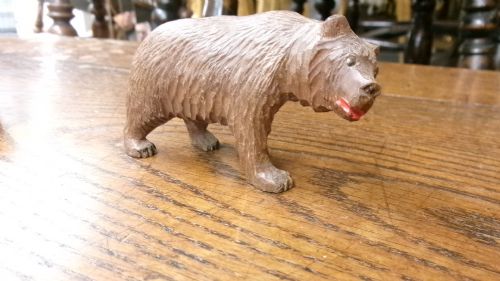
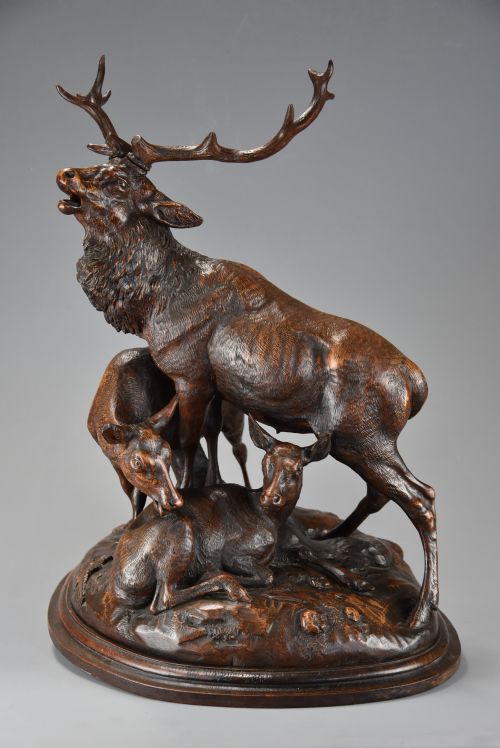
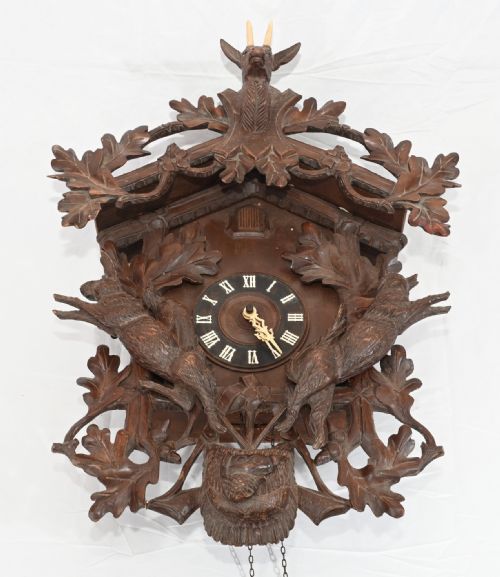
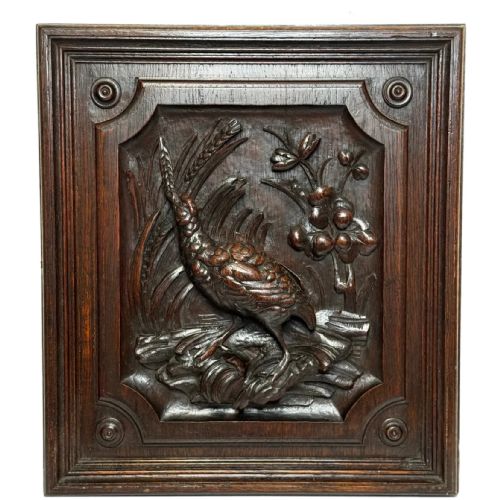
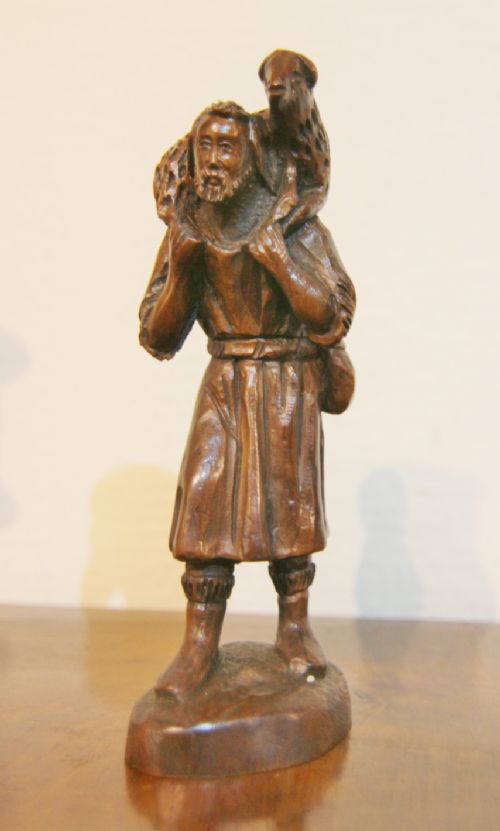
Black forest style carving encompasses decorative objects, wall clocks, furniture, and sculptures rooted in nineteenth century Swiss and German traditions. The forms frequently depict animals such as bears, stags, dogs, and birds, alongside rustic human figures and woodland motifs. Collectors encounter these works across various periods including Victorian and Edwardian eras, reflecting enduring popularity for alpine themes.
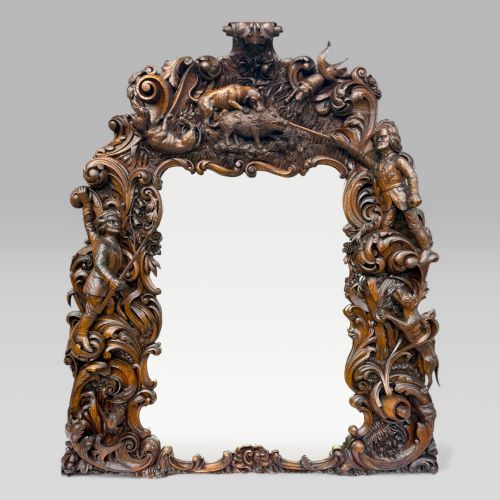
The objects serve both decorative and functional roles within homes, ranging from large overmantle wall mirrors and centre tables to small desk accessories, bookends, and ink stands. Many pieces incorporate natural elements like antlers or horns alongside carved timber. This diverse category bridges fine sculpture and folk art, offering robust items suited to traditional and eclectic interiors.
Materials and Techniques
Makers utilised various timbers including walnut, oak, and linden wood, selecting woods that allowed for deep relief work and fine detailing. Hand carving tools shaped fur, feathers, and foliage with precision, bringing natural subjects to life. Selected pieces feature marquetry inlay, painted accents, or mounted glass and brass components to complete the design.
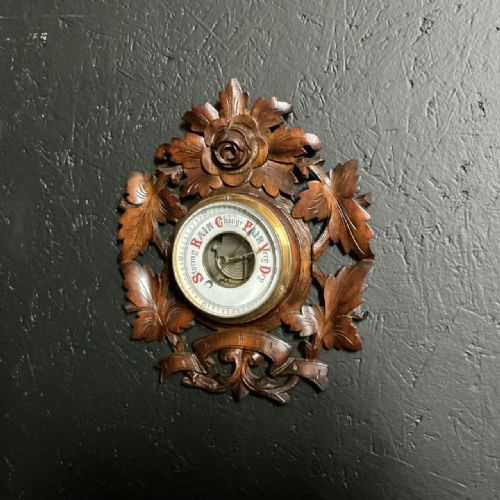
The construction often integrated structural elements like solid wood panels, carved shields, and mounted horns with functional mechanisms such as clock movements and barometer dials. Craftsmen balanced robust joinery with delicate surface carving, ensuring utilitarian objects like chairs, tables, and clocks remained durable while displaying intricate ornamentation.
The available selection includes functional domestic objects such as cuckoo clocks, barometers, armchairs, and centre tables alongside purely decorative sculptures.
Assessing Quality and Execution
The distinction between ordinary and superior pieces rests upon the depth and vitality of the carving. Master carvers captured musculature, fur texture, and realistic expressions in animals like bears and stags with anatomical accuracy and sensitivity. Softer, more mechanical carving lacks the spirited character seen in finer nineteenth century examples.
Proportion and composition also dictate the calibre of an object, particularly in complex figural groups and large furniture items. Harmonious integration of decorative motifs into functional forms, such as wall mirrors and clock cases, demonstrates superior workshop capability and design coherence.
The Black Forest Style Carving Glossary
- Linden wood
- A pale, fine-grained timber frequently chosen by carvers for its uniform texture and ease of handling during intricate work. This wood allowed artisans to achieve smooth surfaces and crisp edges without splintering.
- Marquetry
- A decorative technique where thin pieces of wood veneer are fitted together to form geometric or pictorial patterns on furniture surfaces. It adds visual complexity to panels and chairs.
- Overmantle
- A large mirror or panel designed to hang directly above a fireplace mantelpiece. These pieces often feature elaborate carved frames celebrating hunting or wildlife themes.
- Aneroid barometer
- A weather-measuring instrument that uses a small, flexible metal box to detect atmospheric pressure changes without liquid. These dials were frequently housed within carved wooden frames.
Black Forest Style Carving: Frequently Asked Questions
What subjects do these carvings feature?
The pieces predominantly depict woodland animals, including bears, stags, dogs, and birds, often arranged in naturalistic scenes or serving practical functions.
Human figures such as shepherds, hunters, and alpine characters also appear alongside foliate and heraldic motifs.
How do I care for carved wood?
Keep wooden objects away from direct heat sources and strong sunlight to prevent the timber from drying out or splitting over time.
Dust gently with a soft, dry cloth and avoid applying modern polishes that can build up on the carved surfaces.
Where were these pieces made?
The tradition originated primarily in the mountainous regions of Switzerland and Germany during the nineteenth century, spreading to wider European workshops.
Similar folk art traditions also influenced makers in other regions who adopted the characteristic alpine aesthetic.
How do I date an antique piece?
Dating relies on examining the timber, construction methods, tool marks, and integrated hardware such as clock movements or glass dials.
Stylistic cues and regional workshop signatures also help place an object within the nineteenth or early twentieth century.