



Wooden Deer Head Mount
A wooden deer head mount brings raw natural majesty indoors, combining rustic antler trophy forms with skilled woodworking from the nineteenth and twentieth centuries.
Wooden Deer Head Mount
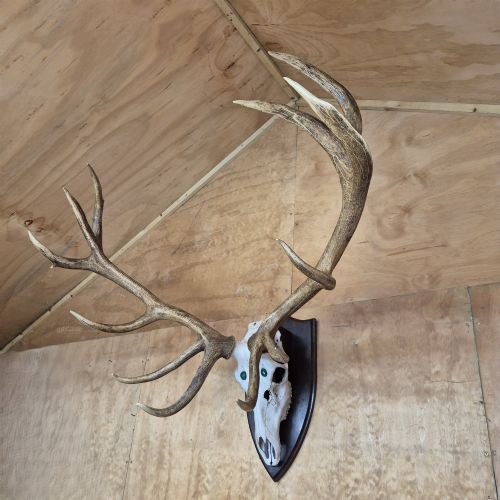
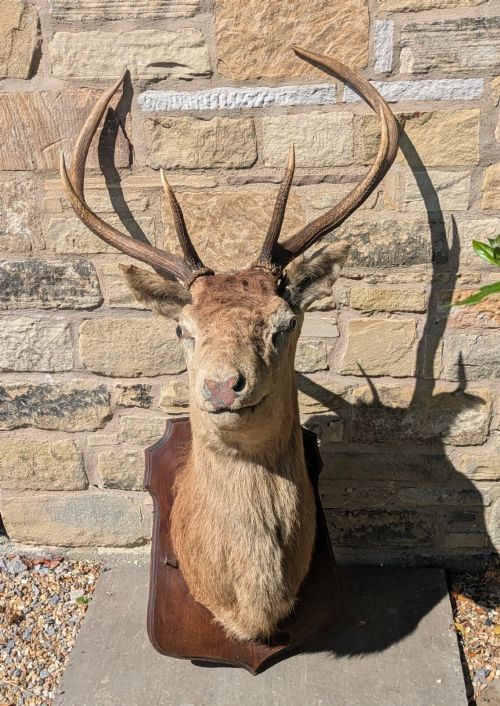
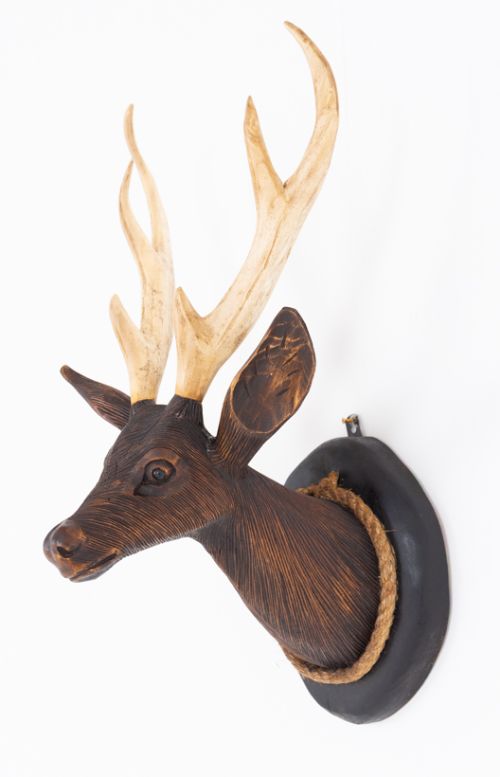
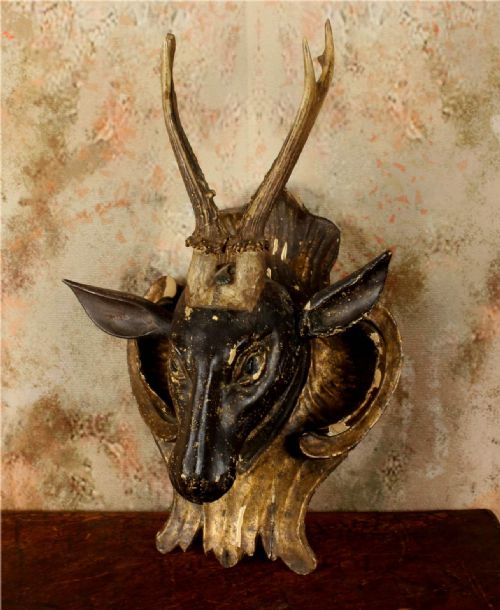
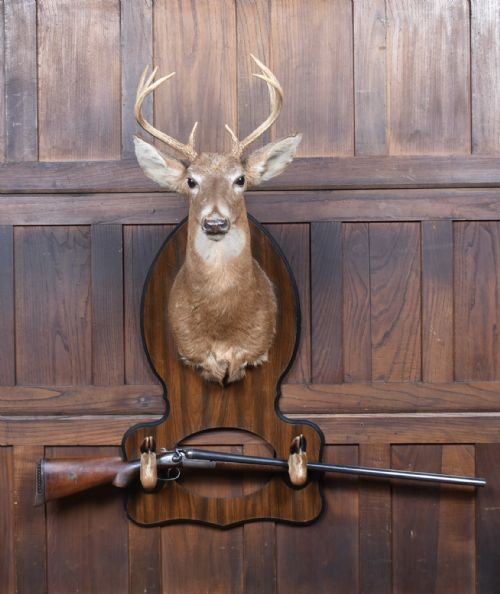
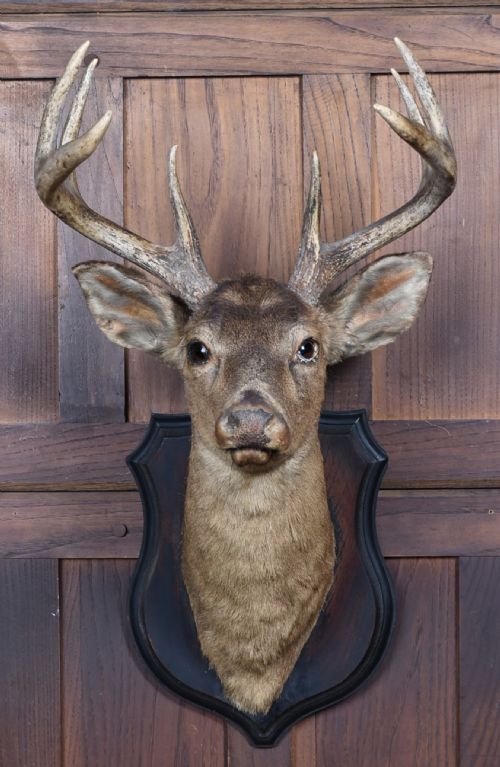
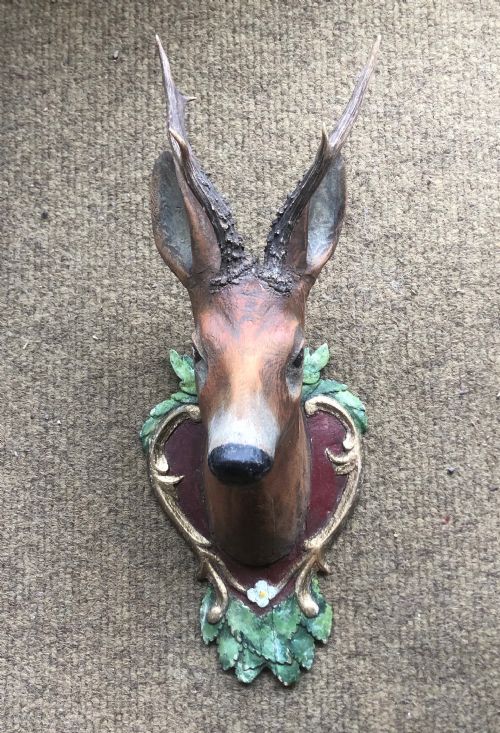
A wooden deer head mount takes several forms across the centuries, ranging from carved wall sculptures to mounted natural antlers on wooden shields. When searching for a wooden deer head mount, buyers encounter Victorian taxidermy stags, Black Forest carvings, and folk art interpretations.
The objects span from the early nineteenth century through the 1930s, reflecting various cultural approaches to rural display. Pieces often combine genuine bone and antler with carved wood, oak shields, and painted surfaces.
Highland lodge and traditional sporting styles dominate the selection, though folk art and Black Forest pieces offer distinct continental variations. Buyers frequently find red deer, roe deer, and whitetail specimens presented as wall decor and taxidermy mounts.
How they were made
Makers shaped these mounts using carved wood and oak, frequently pairing actual animal parts like bone and antler with taxidermy hide. Artisans carved wooden shields and backing plates to support heavy antlers, securing them with traditional joinery and fixings.
Surface treatment involved applied paint and natural finishes to enhance the grain of the carved wood and the texture of the taxidermy hide. Glass components occasionally feature in pieces such as inkstands, whilst glass eyes were commonly fitted to taxidermy heads for realism.
What varies in quality
The distinction between ordinary workshop pieces and exceptional works lies in the depth of the folk art execution and the preservation of the taxidermy hide. Superior mounts maintain balanced proportions between the wooden shield and the mounted trophy.
The Wooden Deer Head Mount Glossary
- Black Forest style
- A nineteenth-century carving tradition originating in Switzerland and Germany known for highly naturalistic renderings of woodland animals and foliage. These carvings often feature deep, dark patination and intricate detailing.
- Taxidermy mount
- The art of preparing and preserving an animal's skin and mounting it onto a form or wooden shield for display. Historic mounts incorporate original bone and hide elements.
- Folk art
- Utilitarian or decorative objects created by self-taught or non-professional artisans working within traditional community styles. These pieces rely on regional materials and personal interpretation.
- Highland lodge
- An interior aesthetic inspired by Scottish sporting estates, featuring mounted antlers, taxidermy, and heavy wooden furniture. This style emphasises rustic outdoor pursuits.
- Shield
- The shaped wooden plaque or board used as a backing base to mount animal antlers or heads onto a wall. Shields are frequently carved from oak or pine.
Wooden Deer Head Mount: Frequently Asked Questions
How do I hang a heavy wooden deer head mount securely?
These mounts require robust wall fixings due to the combined weight of dense carved wood, bone, and natural antlers. Secure the piece directly into wall studs or use heavy-duty masonry anchors depending on your wall construction.
Ensure the hanging wire or bracket on the back of the wooden shield is firmly attached before mounting. Professional installation is recommended for particularly large stags and multi-point antler sets.
What periods do these deer mounts come from?
The available pieces primarily date from the nineteenth century up through the 1930s. You will encounter Victorian sporting pieces alongside earlier folk art interpretations from around 1800.
Mid-to-late nineteenth-century examples often reflect Highland lodge and Black Forest traditions. Twentieth-century pieces continue these rural aesthetics with twentieth-century taxidermy methods.
How do I care for taxidermy hide and carved wood?
Keep wooden deer head mounts away from direct sunlight and strong heat sources to prevent the wood from splitting and the hide from drying out. Dust the carved wood and antlers gently with a soft, dry brush.
Avoid using liquid cleaners or polishes on taxidermy hide or painted wooden surfaces. Maintaining a stable indoor humidity level preserves both the organic and wooden elements.
What is the difference between taxidermy mounts and carved wooden heads?
Taxidermy mounts utilise actual animal hide, bone, and natural antlers fitted over a sculpted form to create a realistic likeness. These pieces capture the genuine texture of the animal.
Carved wooden heads are entirely hand-carved from timber by artisans, sometimes incorporating real antlers into the wooden structure. Folk art and Black Forest pieces often favour this purely sculptural approach.