

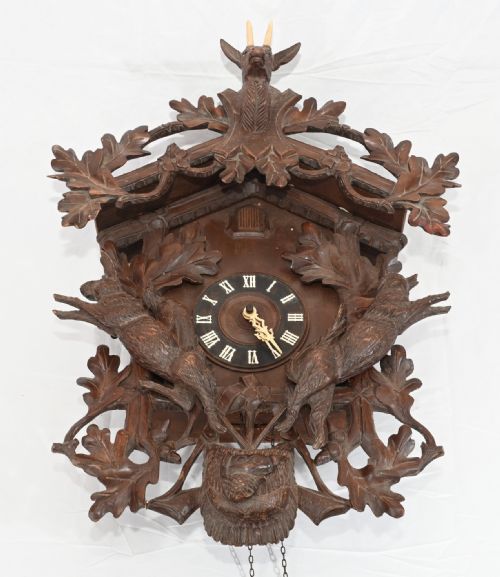


Carved Black Forest Stag
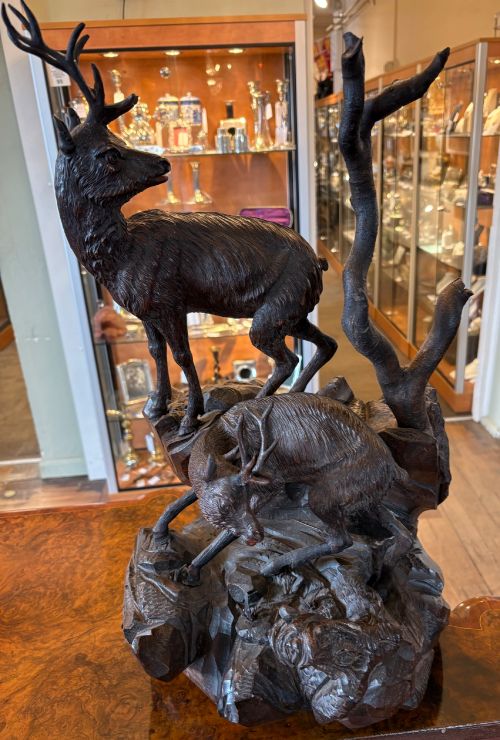
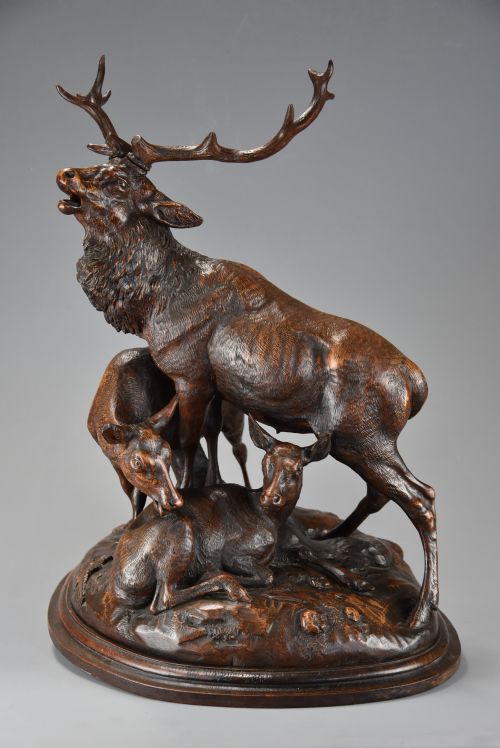
These carved black forest stag pieces bring woodland life straight inside, offering the heavy presence of nineteenth-century Swiss and German animal carving.
Carved Black Forest Stag
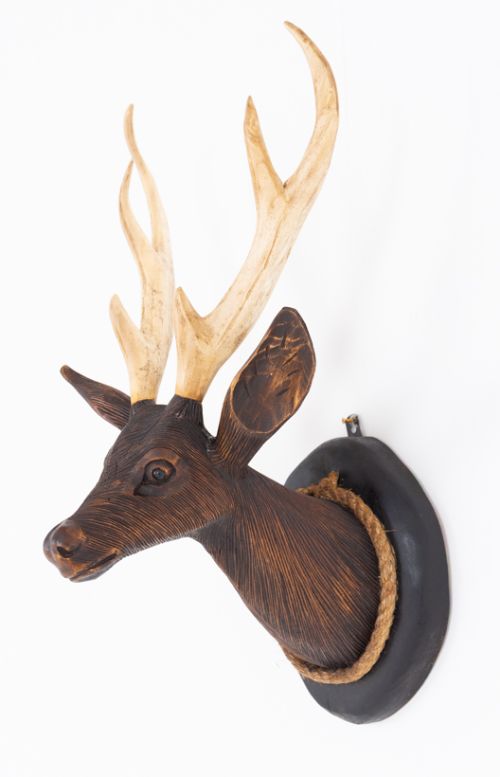
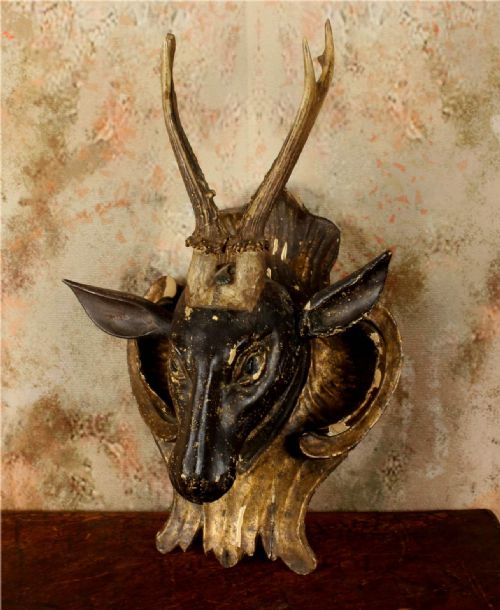
When you search for carved black forest stag, you encounter a distinct genre of nineteenth-century European woodcarving that captures red deer and stags in bold relief and three-dimensional sculpture. These items range from wall-mounted trophy heads with real or wooden antlers to elaborate cuckoo clocks, occasional tables, and deep game plaques.
The objects on this page lean heavily toward nineteenth-century origins, alongside a few pieces from the early and mid twentieth century. You will frequently find wall sculptures and mounted stag skulls designed to dominate a room with deep, expressive modelling.
Forms span from domestic utility items like stamp boxes and ink pots to large architectural pediment panels and musical cuckoo clocks. Each piece reflects the nineteenth-century fascination with alpine wildlife and romantic hunting culture.
How they were made
Carvers worked primarily in walnut, lime wood, and general carved wood, utilising the grain to emphasise the dense musculature and fur texture of the animals. Woods like linden allowed for crisp, deep undercut details in foliage and hair.
Many sculptural heads and wall plaques incorporate natural elements such as real bone and antler to heighten the realism of the trophies. Metal components appear in mechanisms for clocks and functional hardware on boxes and tables.
Materials in these listings include walnut, lime wood, bone, metal, and rope alongside standard carved wood.
What varies in quality
The integration of natural materials with the carved wooden shield or panel dictates the overall success of the piece. Superior carving maintains crisp edges in the surrounding oak leaf and foliage ornamentation without losing the focal animal's proportions.
The Carved Black Forest Stag Glossary
- Pediment panel
- A decorative carved wooden board designed to sit above a doorway, furniture piece, or wall display. These panels often depict game trophies or forest scenes in high relief.
- Game plaque
- A wall-mounted wooden carving or panel featuring animals, game birds, or hunting motifs. They frequently served as decorative trophies in country houses and shooting lodges.
- Lime wood
- A pale, fine-grained timber favoured by European carvers for its uniform texture. It permits intricate, smooth undercutting without splintering.
- Cuckoo clock
- A weight-driven or spring-driven timepiece featuring mechanical automation that sounds on the hour. Black Forest examples incorporate elaborate stag carvings and vine leaf ornamentation.
Carved Black Forest Stag: Frequently Asked Questions
How do I hang a heavy stag head?
Wall-mounted stag sculptures and trophy mounts require secure fixing directly into masonry or solid wooden studs using heavy-duty picture hooks or concealed wall brackets. The substantial weight of the carved wood and natural antlers demands proper structural support rather than standard plaster fixings.
Ensure the hanging wire or integrated metal mounting plate on the back of the shield is checked for stability before installation. Positioning the piece at a natural viewing height allows the projection of the antlers and head to sit safely away from high-traffic walkways.
Are the antlers real on these pieces?
Many carved black forest stag pieces feature genuine natural antlers mounted onto hand-carved wooden skull shields or backing panels. Other examples are carved entirely from solid wood, capturing the points and texture through skilled hand-tool work.
Descriptions will typically distinguish between carved wooden antlers and natural bone or horn additions. Both variations represent traditional production methods from the nineteenth-century carving workshops.
How should I clean carved wood?
Dust carved wooden surfaces gently using a soft, dry bristle brush or a clean microfibre cloth to lift dirt from deep recesses and undercut foliage. Avoid using liquid cleaners, polishes, or wet cloths, which can damage historic wood finishes and dry out the timber.
Keep pieces away from direct sunlight and sudden temperature changes, such as proximity to radiators, to prevent the wood from splitting. A stable indoor climate preserves the original patina and prevents the natural materials from warping.
What defines the Black Forest style?
The Black Forest style encompasses nineteenth-century woodcarvings originating primarily from the mountainous regions of central Europe, characterised by realistic depictions of wildlife and rustic foliage. Artisans utilised deep relief and naturalistic forms to create domestic items that celebrated alpine hunting culture.
Common motifs include stags, bears, owls, and trailing oak or vine leaves applied to clocks, furniture, and wall decor. This distinct aesthetic merges sculpture with functional household objects.