
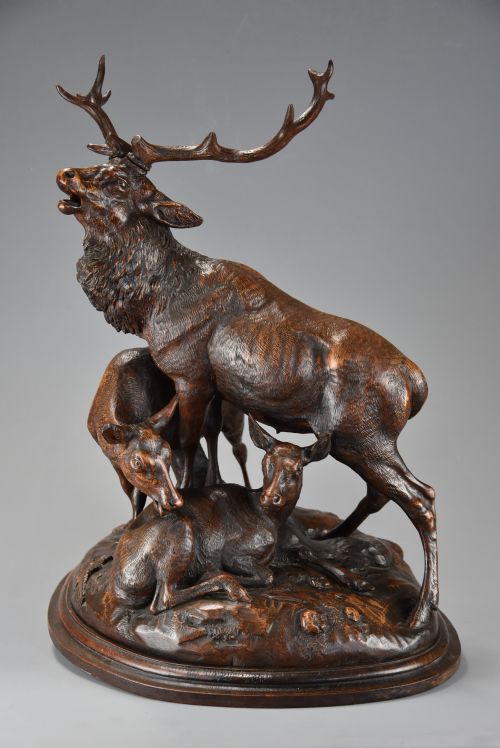


Black Forest Deer Carving
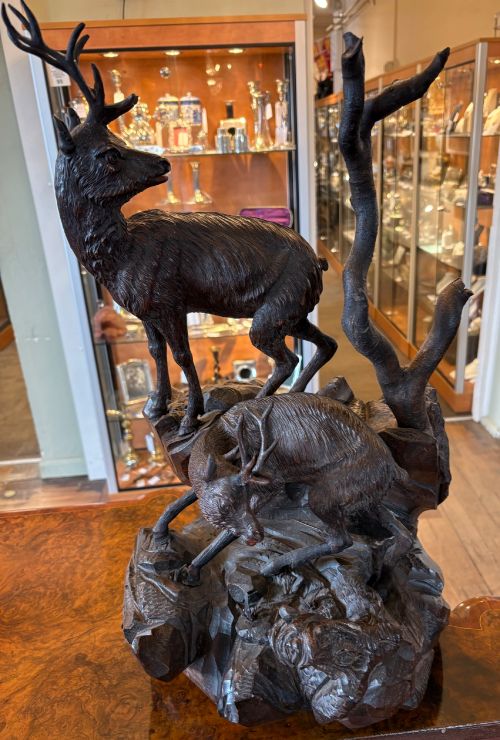
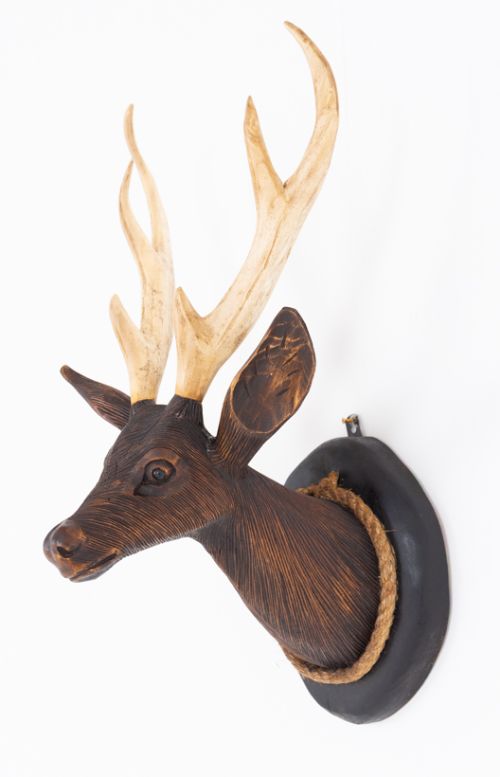
These black forest deer carving examples bring sculptural rustic charm to an interior through meticulous hand-carved wood and authentic natural antler.
Black Forest Deer Carving
A black forest deer carving captures the dramatic appeal of European woodland wildlife through detailed woodworking and taxidermy mounts. These pieces range from substantial studies of red deer and pairs of fawns to elaborate wall-hanging hat and coat stands.
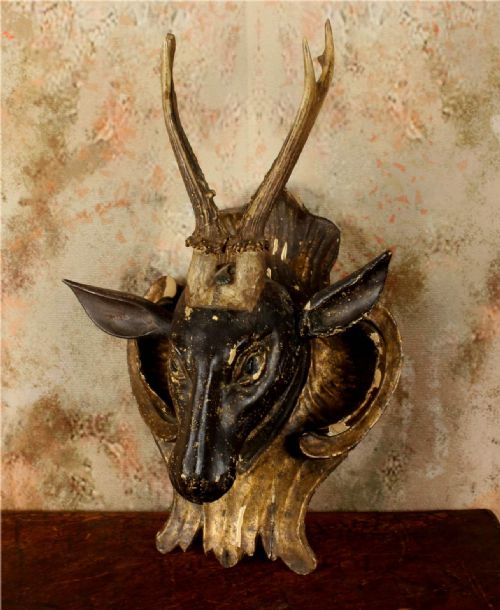
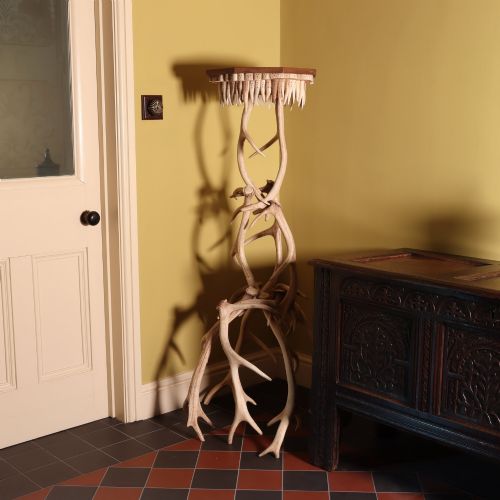
The selection on this page relies heavily on nineteenth-century and early twentieth-century examples. Forms vary from free-standing sculptures and pedestals to wall-mounted shields, stag skulls, and antler torchieres.
Originating largely from Swiss and South German workshops, these items embrace folk art traditions and continental hunting styles. Oak, linden wood, and walnut provide the carved foundations, paired directly with real horn and antler.
How they were made
Carvers utilised native timbers such as linden wood, lime wood, oak, and walnut for their fine grain and suitability for deep relief. These soft and hardwoods allowed artisans to render realistic musculature, fur texture, and facial expressions.
Natural materials like red deer antlers, horn, and bone integrate directly into the wooden mounts. Antlers are secured to carved wooden shields or incorporated into structural items like coat racks and torchieres.
What varies in quality
Anatomical precision and depth of carving separate exceptional sculptural studies from simpler folk art items. The best examples show subtle tension in the musculature and realistic rendering of hair rather than flat or rigid blocking.
The integration of natural antler and horn with carved wood dictates the structural integrity and visual harmony of the piece. Superior items balance organic asymmetry with balanced composition across shields, stands, and group sculptures.
J HUGGLER
The Black Forest Deer Carving Glossary
- Black Forest
- A regional style of nineteenth-century woodcarving originating from Switzerland and Germany. Pieces typically depict woodland animals and utilise local timbers.
- Linden wood
- A pale, fine-grained timber favoured by carvers for its even texture. It permits intricate detail without splitting.
- Antler torchiere
- A floor-standing light fixture incorporating natural horns and antlers. These function as both illumination and rustic sculpture.
- Taxidermy mount
- The preservation and display of animal remains, often combined with carved wooden shields or backing boards. In this context, it includes mounted stag skulls and trophy antlers.
Black Forest Deer Carving: Frequently Asked Questions
What is a black forest deer carving?
These are nineteenth-century and early twentieth-century wooden sculptures and functional items depicting deer, stags, and fawns. They originate predominantly from Swiss and German regions.
Artisans carved them from linden wood, walnut, and oak, frequently incorporating real antlers and horns into the design.
How were these items used originally?
Many pieces served as both decoration and functional furnishings in hunting lodges and country homes. Hat and coat racks, wall-mounted shields, and torchieres combined utility with rustic display.
Free-standing sculptures and deer groups functioned purely as decorative art celebrating alpine wildlife.
How do I style a deer carving at home?
These sculptures suit traditional studies, hallways, and living spaces with rustic or eclectic interiors. Wall-mounted stag skulls and coat racks work well above sideboards or in entrance halls.
Pair them with natural textures like leather, wool, and heavy timber furniture to complement the nineteenth-century hunting aesthetic.
How do I date a black forest carving?
Dating relies on material analysis, construction methods, and stylistic markers associated with nineteenth-century and early twentieth-century European workshops. Folk art items often display hand-carving tool marks typical of the period.
The integration of genuine antlers and regional timbers like linden wood helps anchor pieces to the eighteen-hundreds or nineteen-hundreds.