

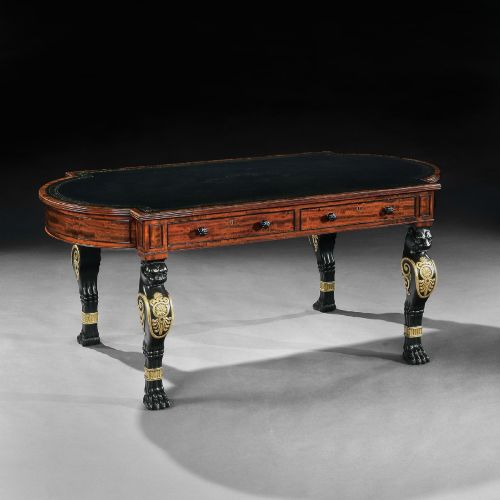
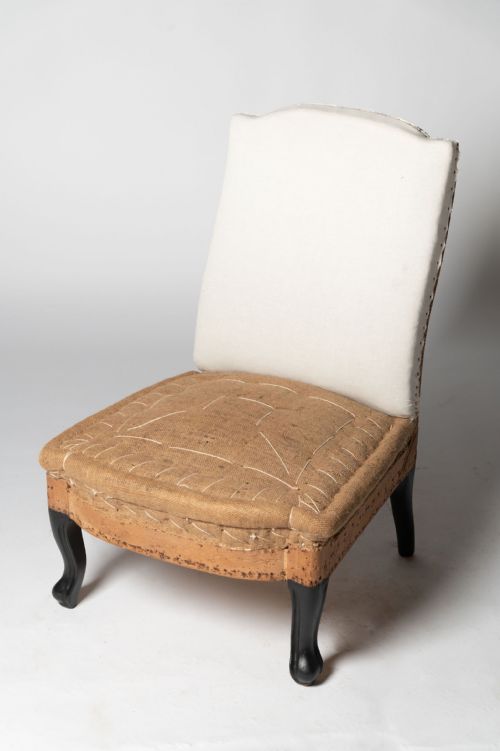
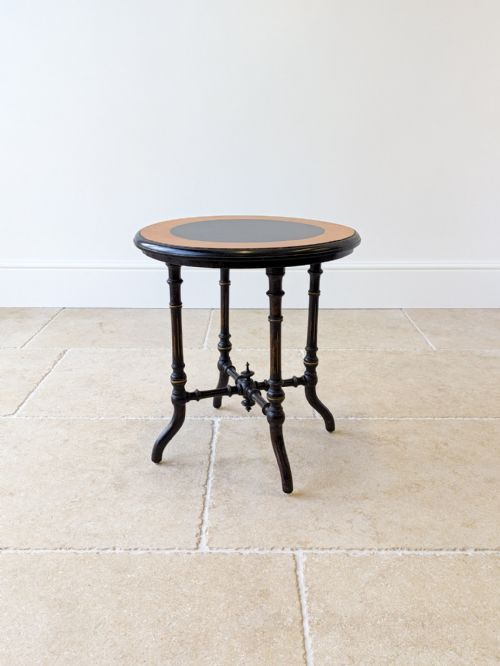
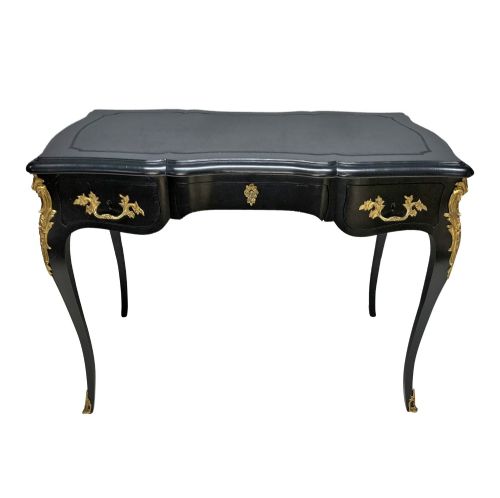
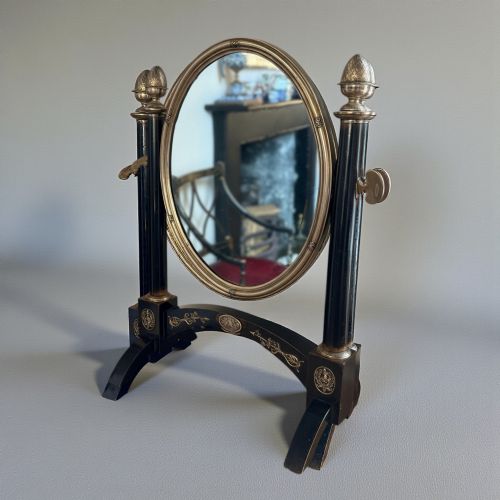
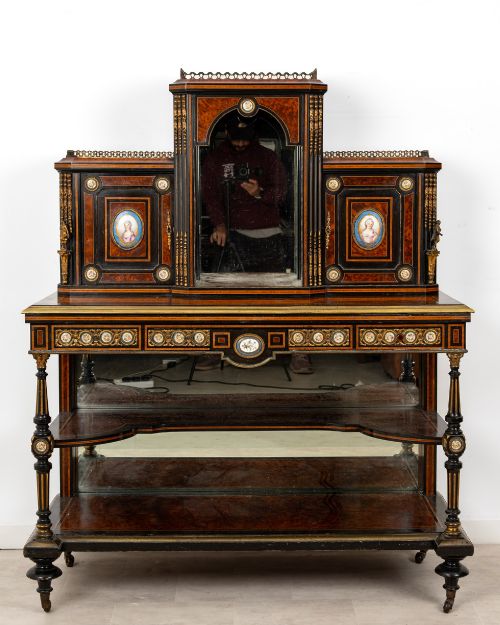
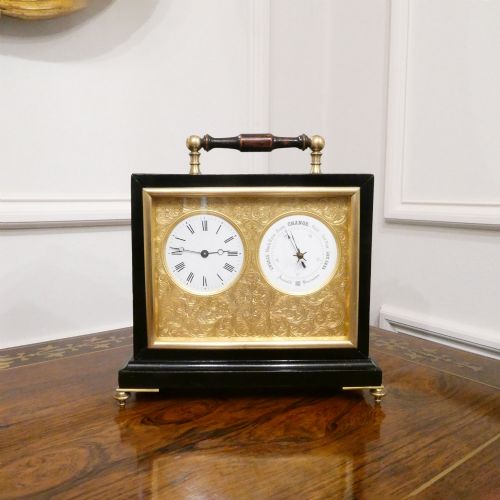
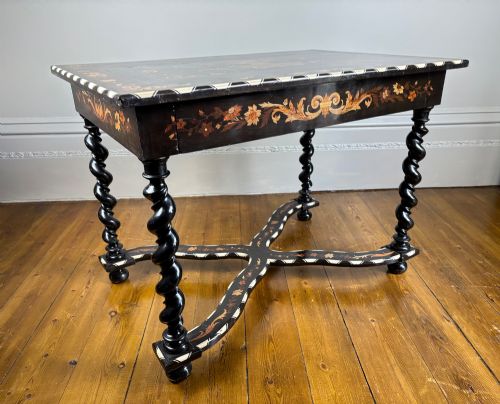
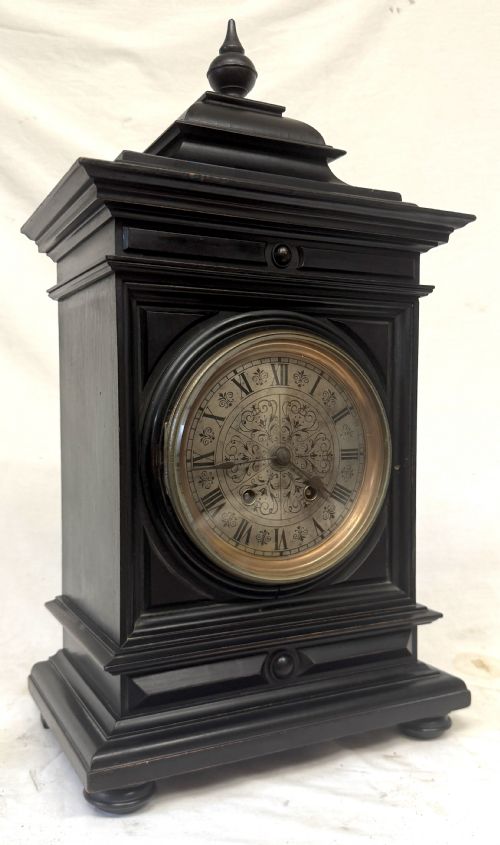
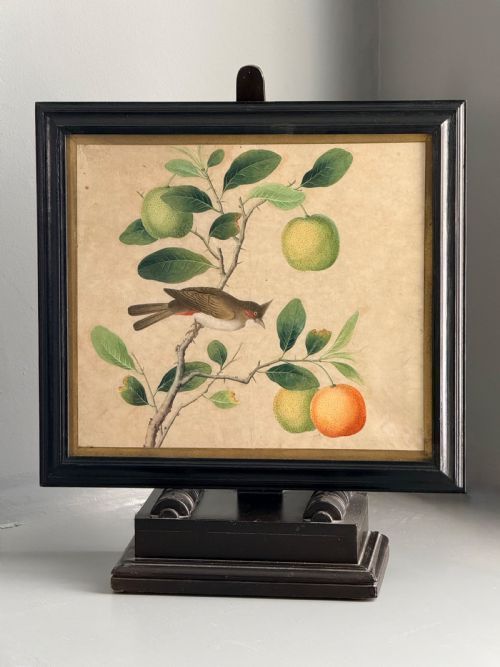
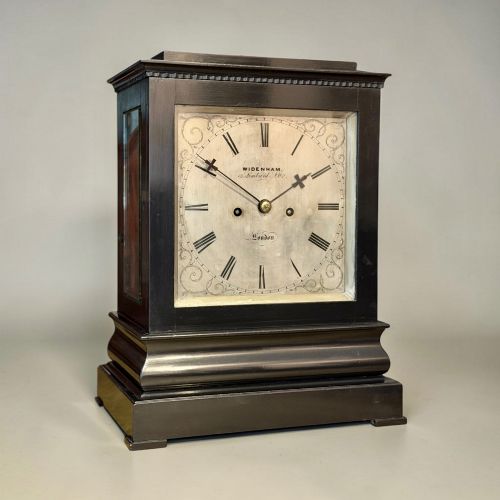
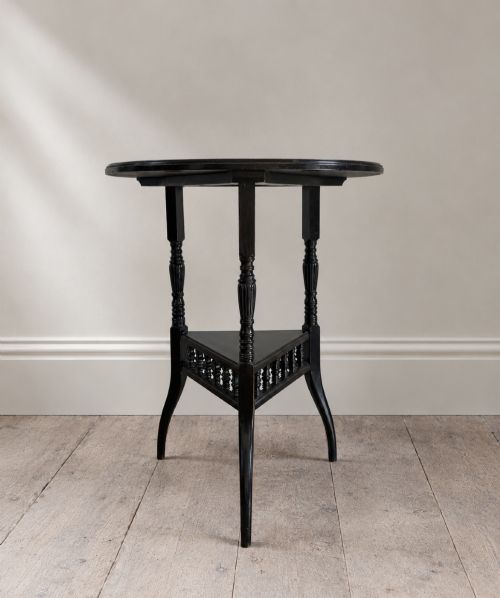
Black Ebonised Table
When you handle a black ebonised table, you deal in surfaces that imitate costly exotic timbers through skilled staining and polishing.
Black Ebonised Table
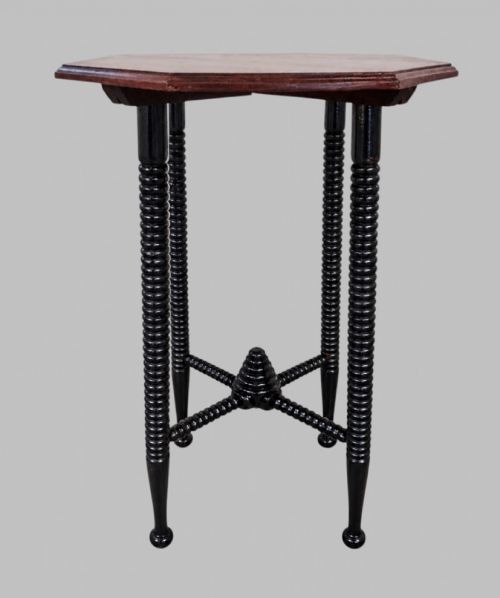
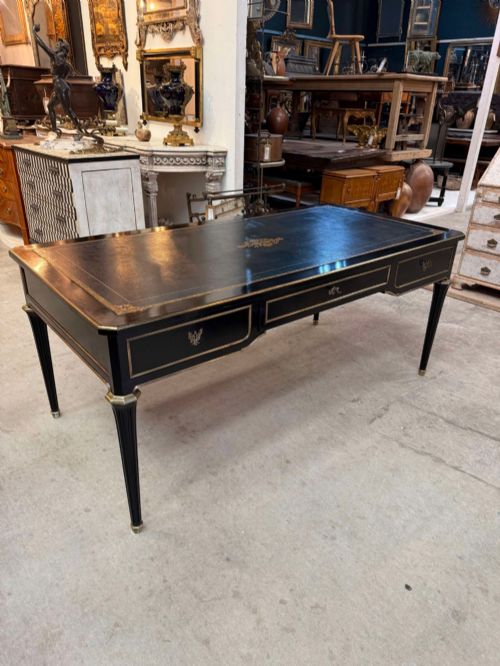
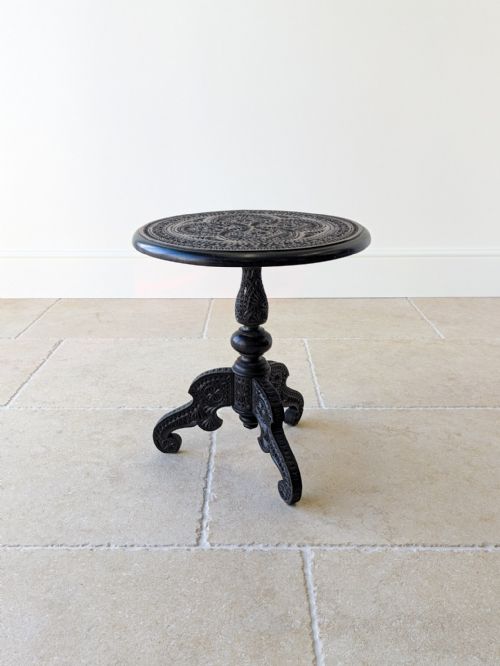
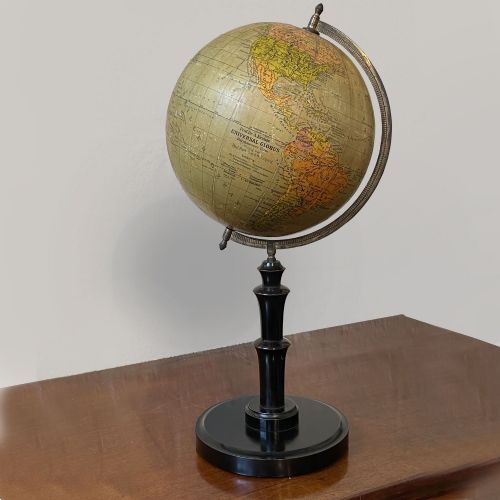
A black ebonised table is a piece of furniture finished to mimic dense, dark woods like ebony using stain, paint, or polish on a lighter timber base. These surfaces appear across several centuries and stylistic revivals, taking the form of side tables, writing desks, centre tables, and occasional stands.
The versions you meet most frequently on this page date from the Victorian and Edwardian eras, spanning styles from Aesthetic Movement designs to Chinoiserie and Napoleon III pieces. They range from simple chip-carved occasional stands to elaborately gilded and brass-inlaid writing furniture.
Makers utilised this dark finish to create sharp contrasts with gilt bronze mounts, porcelain plaques, or marquetry inlay. Collectors encounter them as functional desks, work tables, and display surfaces that bring dark, reflective tones into a room.
How they were made
Craftsmen built these tables using hardwoods such as beech, walnut, or mahogany as a base before applying a dark stain, lacquer, or black paint to achieve the ebonised effect. This technique allowed workshops to produce fashionable dark furniture without relying entirely on scarce, expensive solid ebony.
Many examples incorporate contrasting materials, pairing the black surface with brass inlay, parcel gilding, leather writing inserts, or hand-painted porcelain plaques. French workshops often combined ebonised wood with Boulle work brass and tortoiseshell, while English makers favoured parcel gilt details and turnery.
Black Ebonised Table Retail Price Guide 2026
Typical asking prices for black ebonised table among the pieces listed under this phrase on Sellingantiques today, from the lower quarter to the upper quarter. They describe what is for sale here now, not the wider market.
Some nineteenth-century tables come with hidden compartments designed to hold sealing wax and quills.
What varies in quality
The quality of a black ebonised table depends largely on the depth and durability of the surface finish and the crispness of any applied carving or gilt work. Superior pieces show careful preparation of the timber beneath the black coating, maintaining a smooth, even sheen rather than a flat, opaque paint layer.
Construction methods and secondary details also separate standard production from finer work, such as the use of solid secondary timbers in drawers and the precision of brass or marquetry inlay. Tables bearing maker signatures or demonstrating sophisticated period styling, such as Aesthetic Movement or Napoleon III designs, reflect higher workshop standards.
Hindley and Sons·Liberty of London
The Black Ebonised Table Glossary
- Ebonised
- Wood treated with stain, paint, or polish to simulate solid ebony. This dark finish gained widespread popularity during the Victorian period for accentuating classical and revival designs.
- Parcel Gilded
- Partially covered in gold leaf or gilt paint to highlight specific carved details or mouldings. This technique adds contrast against the dark ebonised background.
- Japanning
- European imitation of East Asian lacquerwork, built up with layers of varnish and often featuring painted motifs. It frequently appears on Chinoiserie occasional tables and cabinets.
- Centre Table
- A freestanding table designed to be viewed from all sides rather than pushed against a wall. These pieces often occupy the middle of a Victorian drawing room.
- Étagère
- A set of open shelves for displaying small objects, supported by slender columns or legs. Late examples often feature ebonised frames with brass or gilt highlights.
Black Ebonised Table: Frequently Asked Questions
How do I date a black ebonised table?
Dating relies on examining the construction methods, secondary timbers, and stylistic markers such as turned legs or brass mounts. Victorian and Edwardian examples often feature machine-sawn components and specific revival motifs.
Comparing the hardware, drawer construction, and finish to documented period pieces helps narrow down the decade of manufacture. Consulting archives for known maker signatures also provides precise dating.
Where were these tables used in the home?
These tables served various domestic functions depending on their form, from writing desks in studies to occasional stands in drawing rooms. Centre tables stood prominently in large reception rooms to display decorative objects.
Smaller work tables and tray-top coffee tables accommodated needlework, tea service, or general parlor use. Their dark finish suited the heavier interior decoration schemes of the nineteenth century.
How should I care for an ebonised surface?
Maintenance involves dusting with a soft, dry cloth and avoiding modern chemical polishes that can degrade the historic finish. Direct sunlight and excessive humidity should be avoided to prevent timber movement and fading.
Applying a microcrystalline wax occasionally helps protect the surface and preserve the sheen. Care must be taken around applied gilt or brass elements to prevent abrasion.
What is the difference between ebonised and ebony?
Ebony is a naturally dense, dark heartwood harvested from tropical trees, prized for its weight and dark colour without added finish. Ebonised wood is a domestic or common timber treated with stain or paint to achieve the same dark appearance.
Most antique black tables use ebonised surfaces rather than solid ebony due to the high cost and scarcity of the raw timber. Close inspection of joints or wear points usually reveals the lighter wood beneath the black coating.