


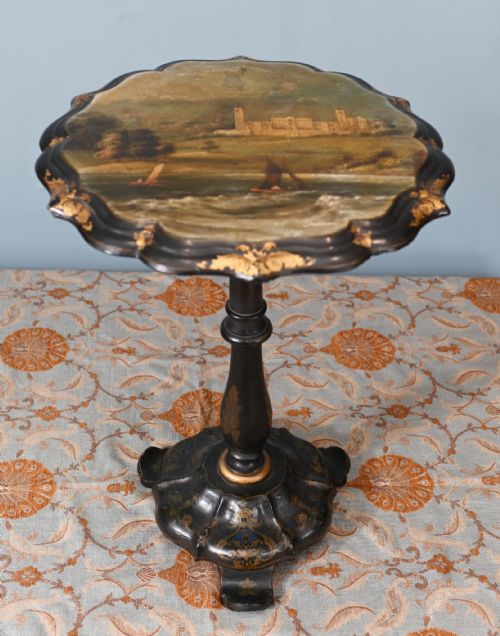

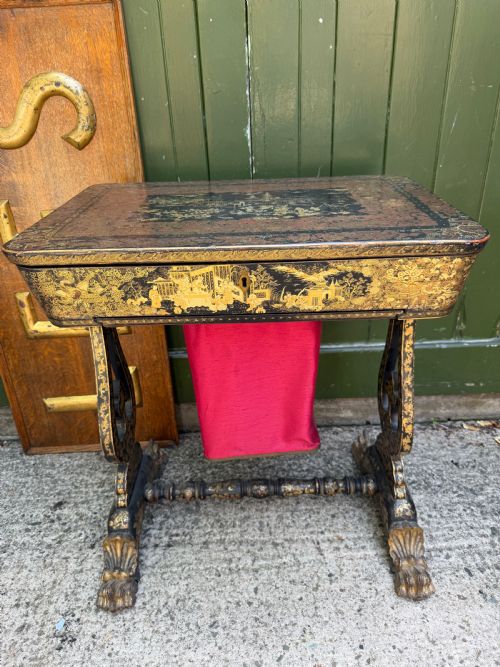
Gilded Black Table
A gilded black table brings together dark surfaces and bright metal or leaf, offering a striking centrepiece for any room.
Gilded Black Table
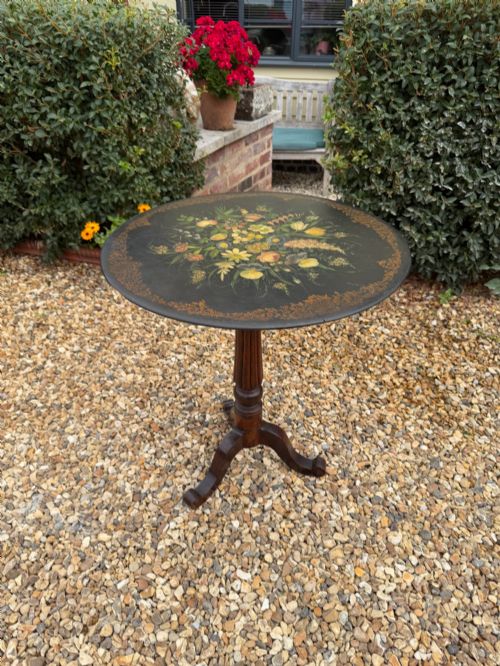
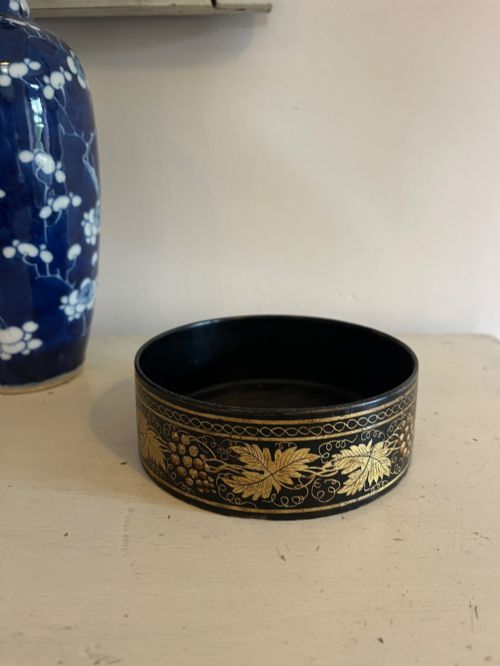
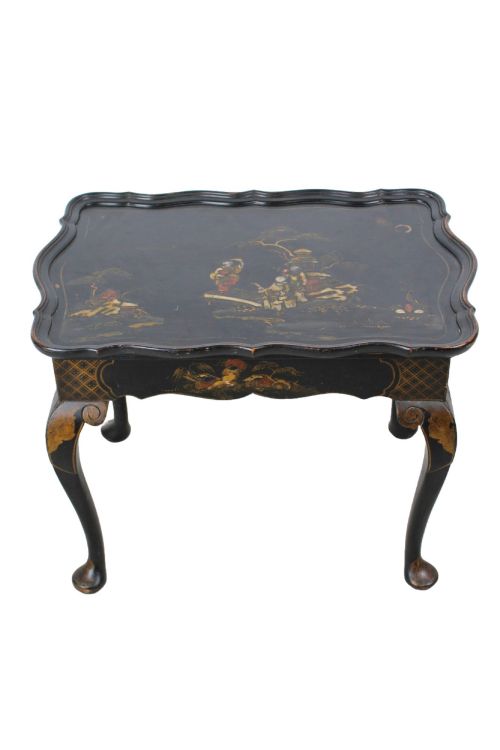
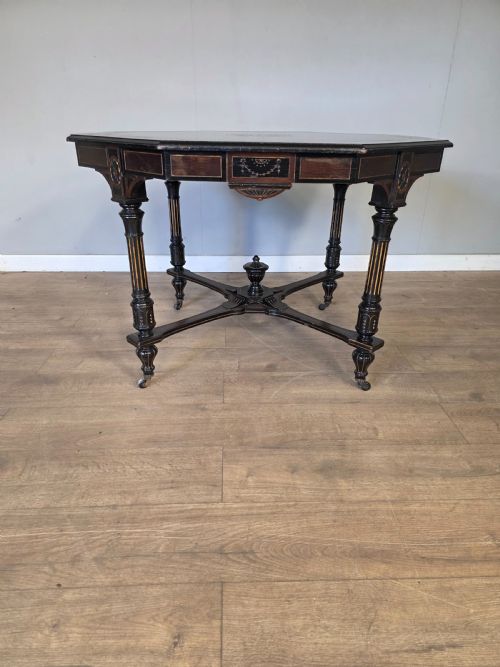
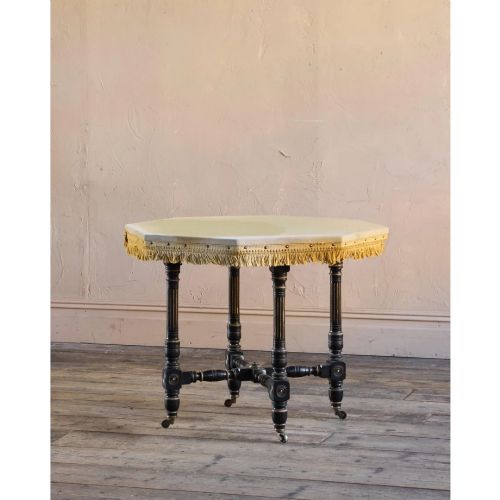
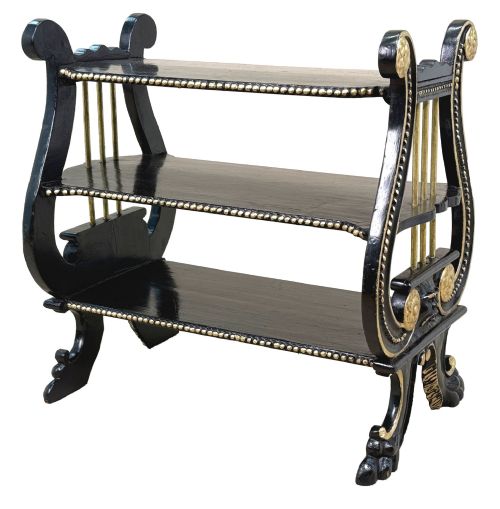
A gilded black table comprises a dark surface - often achieved through lacquer, ebonised wood, or papier-mâché - enhanced by gold leaf, ormolu, or parcel gilding. These pieces appear across the nineteenth century, the Regency period, and into the Edwardian era, taking forms such as occasional tables, centre tables, coffee tables, nests of tables, and side tables.
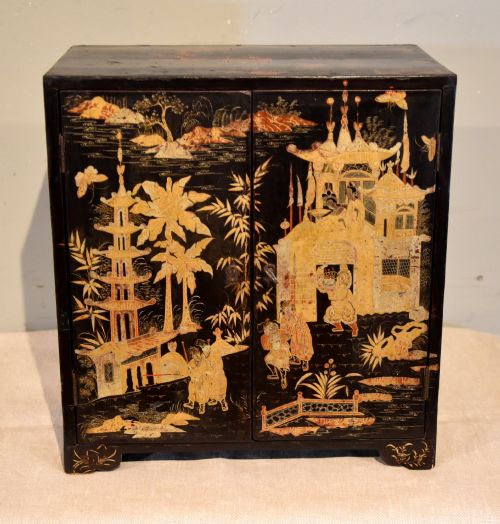
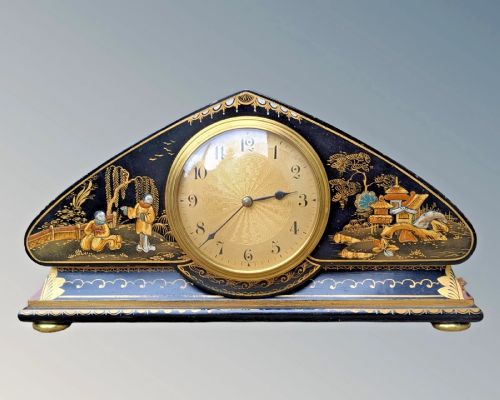
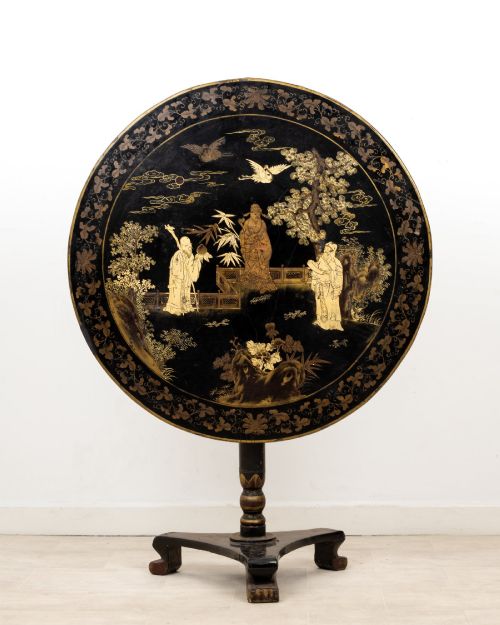
The aesthetic draws heavily on Chinoiserie, Chinese export work, and the Aesthetic Movement, where dark backgrounds provide high contrast for intricate gilded decoration. Alongside tables, related forms like lacquer cabinets, trays, and mantel clocks share the same palette and decorative grammar.
The version most commonly met on this page is the nineteenth-century occasional or centre table, often finished in ebonised wood or black lacquer with hand-gilded details. These items reflect a persistent taste for dark, reflective surfaces paired with luminous metallic highlights across various periods.
How they were made
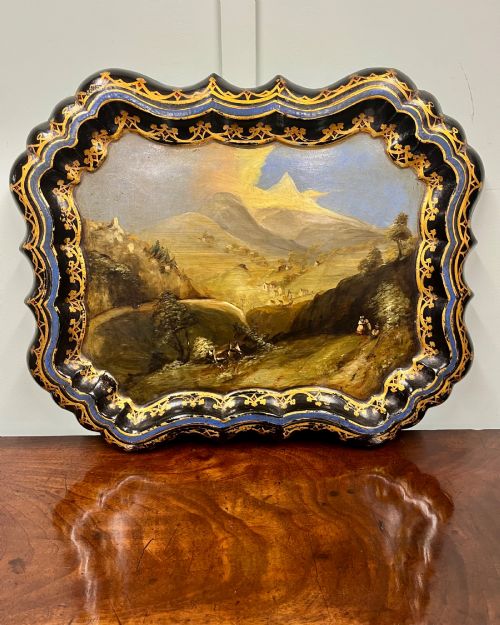
Craftsmen built the foundations from timber such as wood, limewood, or papier-mâché, preparing the surfaces with layers of black lacquer, ebonising, or black paint to create a deep, dark base. Wood was carved, turned, or assembled into frames, while papier-mâché provided a smooth, mouldable substrate for trays and tabletops.
Decoration relied on applying gold leaf, parcel gilding, or ormolu mounts to the dark surfaces, often executed in Chinoiserie motifs, floral patterns, or classical architectural details. Artisans sealed these finishes with varnishes to protect the delicate metallic leaf and glossy black grounds from everyday wear.
Gilded Black Table Retail Price Guide 2026
Typical asking prices for gilded black table among the pieces listed under this phrase on Sellingantiques today, from the lower quarter to the upper quarter. They describe what is for sale here now, not the wider market.
A surprising number of Victorian ladies found themselves sewing beside shimmering Chinoiserie lacquer work-tables.
What varies in quality
The refinement of the surface preparation and the precision of the gilding set the standard across these pieces. Fine examples display crisp, hand-applied gold leaf or detailed parcel gilding that integrates smoothly with the black lacquer or ebonised wood underneath.
Structural integrity and the fidelity of the decorative style also distinguish finer pieces from simpler ones. Pieces that maintain original lacquer, crisp carved details, and coherent stylistic execution from periods like the Regency or Victorian eras command greater attention.
Hindley & Sons·Jennens & Bettridge·Henry Clay·Philippes Paris·Henry Jones·Demetre Chiparus
The Gilded Black Table Glossary
- Ebonised wood
- Timber treated to resemble ebony by staining, painting, or finishing it a deep black colour. This technique gained widespread popularity during the nineteenth century for furniture and decorative objects.
- Chinoiserie
- European decorative style reflecting Chinese artistic influences, featuring landscapes, figures, and motifs rendered in gold on dark backgrounds. It appears frequently on lacquer tables and cabinets from the eighteenth to the early twentieth century.
- Parcel gilded
- Decorated with gold leaf or powder on specific carved or raised areas while leaving the main surface in its primary material or colour. This technique creates contrast against ebonised wood or dark lacquer.
- Ormolu
- Gilded bronze mounts applied to furniture, clocks, and decorative objects. The process involves treating cast bronze with a mixture of gold and mercury.
- Papier-mâché
- A composite material made from paper pulp or layers of paper mixed with glue, then pressed and dried into sturdy forms. It provided a smooth base for lacquer and painted trays or tables.
Gilded Black Table: Frequently Asked Questions
What periods do these pieces date from?
The pieces span the seventeenth century through to the Art Deco period of the 1930s, with a strong representation from the Victorian and Regency eras. Styles range from Queen Anne revival and French Empire to Aesthetic Movement and Chinoiserie.
Craftsmen across these different periods utilised black finishes, lacquer, and gilding, adapting traditional forms to changing domestic tastes.
How do I care for a black lacquered table?
Keep these surfaces away from direct sunlight and excessive moisture to protect the delicate lacquer and gold leaf. Dust gently with a soft, dry cloth without harsh chemical polishes.
Because finishes like lacquer and papier-mâché can be sensitive, placing coasters or protective mats underneath items helps preserve the original surface.
What is the difference between ebonised wood and black lacquer?
Ebonised wood involves staining or painting timber directly to achieve a deep black appearance while retaining the underlying grain or texture of the wood. Black lacquer builds up multiple resin or varnish layers to create a hard, highly reflective, glossy surface.
Both finishes provide the dark background characteristic of these pieces, but they involve distinct materials and application methods.
Where were Chinoiserie tables placed?
These tables served as occasional pieces, tea tables, or decorative centrepieces in principal reception rooms, drawing rooms, and boudoirs. Their reflective black and gold surfaces caught the light from candles or windows.
Owners utilised them to display small decorative objects, hold tea service items, or simply add a dramatic focal point to an interior.