


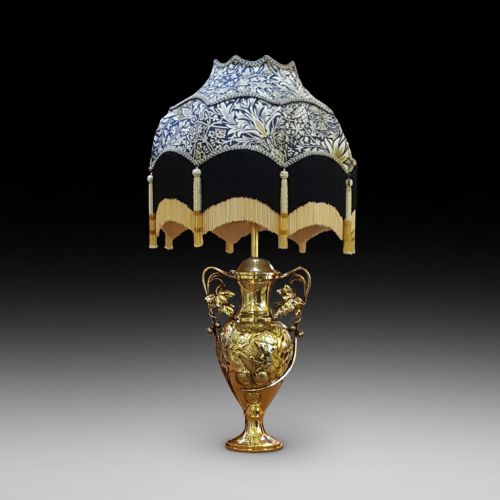
Victorian Tasseled Table
These Victorian tasseled table pieces bring tactile warmth and rich textile trim to a room, offering both decorative presence and period character.
Victorian Tasseled Table
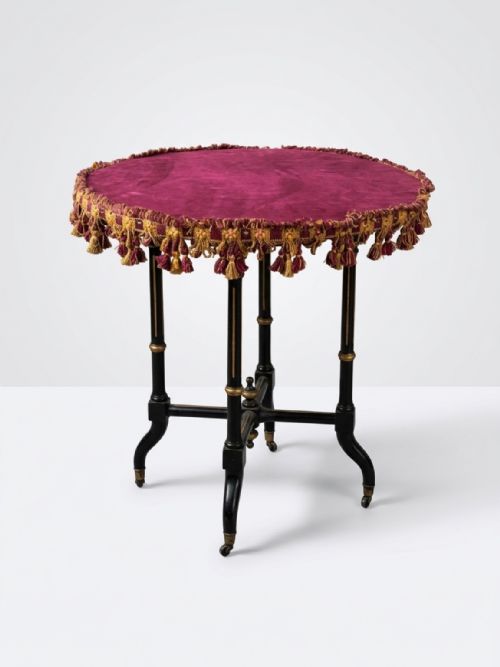
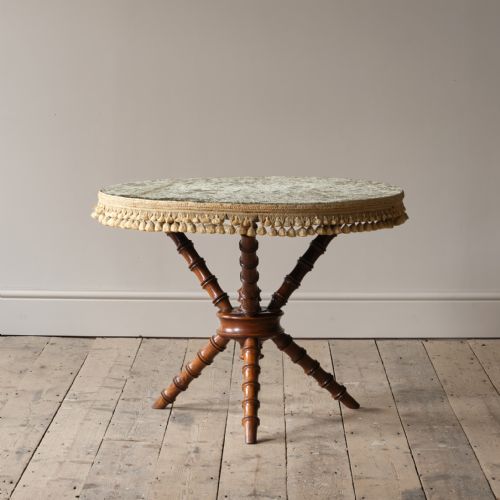
A victorian tasseled table typically presents as a compact side table, often enhanced with soft fabric coverings and elaborate fringe edging along the perimeter. The selections found here span forms such as simulated bamboo gypsy tables and kidney-shaped occasional surfaces, reflecting the eclectic tastes of the nineteenth century.
Makers of the period favoured flexible placement, creating small occasional stands that could hold lamps, reading material, or decorative ornaments. These pieces bring a distinct textile element to wooden furniture, merging upholstery arts with cabinet making.
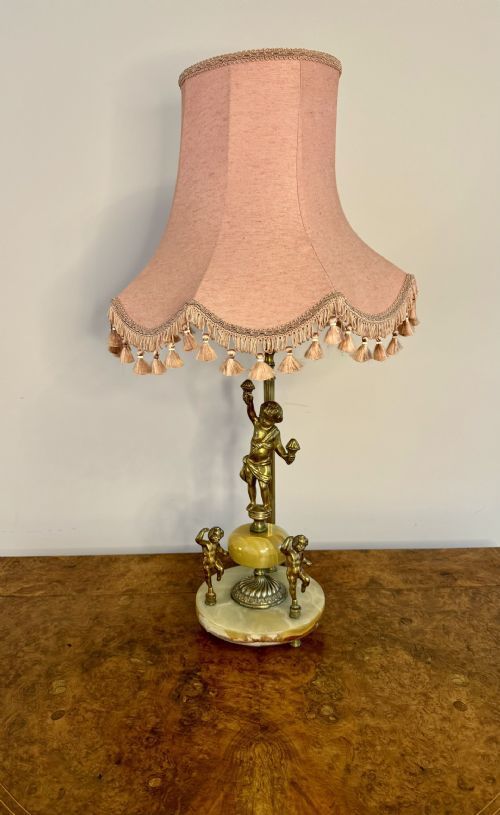
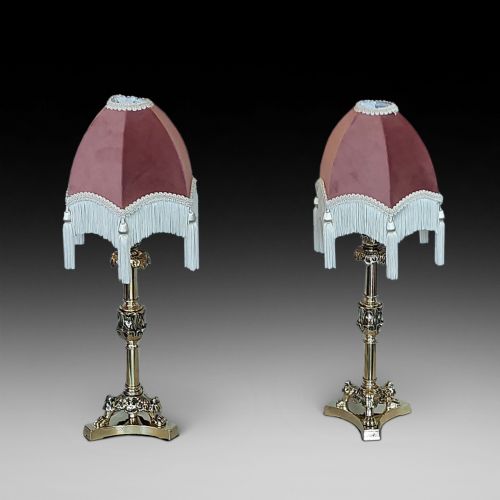
Examples on this page draw from the Victorian era alongside adjacent periods like the Edwardian years, showcasing how fringe and fabric details persisted on small tables and related lamp stands into the early twentieth century.
How they were made
Construction relies upon a foundation of turned wood, ebonised timber, or simulated bamboo, providing a sturdy skeletal frame for the more delicate fabric elements above. Artisans shaped these supports with lathe work and careful joinery before applying surface finishes.
Textiles form the primary visual signature, featuring antique velvet tops paired with intricate passementerie and hanging fringe. Metal components in brass also appear, supporting both the structural integrity of related lamp pieces and the decorative trim.
Listings here feature items from the Victorian, Edwardian, and Regency periods, utilising materials such as velvet, brass, onyx, and turned wood.
What varies in quality
Quality rests in the integrity of the textile trim and the crispness of the underlying woodwork, where tight joins and preserved velvet pile elevate a piece. Lesser examples show brittle fabric fibres or loose fringe that has suffered from decades of handling.
The sophistication of the timber turning and the originality of the fabric elements dictate the standing of an item. Superior pieces retain their synchronous upholstery and structural harmony without clumsy modern replacements.
The Victorian Tasseled Table Glossary
- Passementerie
- Elaborate trimmings made from threads, cords, gold or silver thread, silk, or beads. This term covers the braids and tassels that adorn the edges of these tables.
- Simulated bamboo
- Wood that has been turned, carved, and painted to imitate the segmented stalks of natural bamboo. It became popular during the nineteenth century for light occasional furniture.
- Kidney table
- A small occasional table featuring a curved top shaped like a kidney bean. These often stood beside chairs or in drawing rooms during the Victorian and Edwardian periods.
- Ebonised
- Timber treated with a dark stain or finish to imitate ebony. This technique provided a sharp, sophisticated contrast against colourful velvet tops and bright metallic trims.
- Aesthetic Movement
- A late nineteenth-century design current that prioritised visual beauty over narrative meaning. Furniture from this circle embraced dark finishes and refined silhouettes.
Victorian Tasseled Table: Frequently Asked Questions
How do I clean a tasseled table edge?
Dust fringe and passementerie gently with a soft brush to prevent fibres from tangling or breaking. Avoid moisture, which can damage historic velvet and distort woven threads.
Keep these textiles away from direct sunlight to preserve the original rich tones of the fabric. Professional textile conservation cleaning is recommended for heavier accumulation of dirt.
Where should I place a gypsy side table?
These compact tables suit corners, beside armchairs, or as low display surfaces for small decorative objects. Their lightweight construction makes them easy to reposition within a traditional interior scheme.
Ensure they sit away from heavy foot traffic to protect the delicate hanging tassels from being caught or pulled.
What is passementerie trim?
Passementerie refers to ornamental edgings such as tassels, fringes, and braided cords used to finish upholstered furniture borders. In nineteenth-century design, this added texture and opulence to small occasional tables.
The quality of these threads often indicates the grade of the original commission, utilising silk, wool, or metallic twists.
How do I date a Victorian velvet table?
Examine the timber framing beneath the fabric, noting whether the legs feature turned wood, simulated bamboo, or ebonised finishes typical of the mid to late nineteenth century. The style of joinery and the weave density of the velvet also provide chronological clues.
Compare the decorative motifs against documented aesthetic movement or late Victorian design patterns to narrow down the decade of production.