


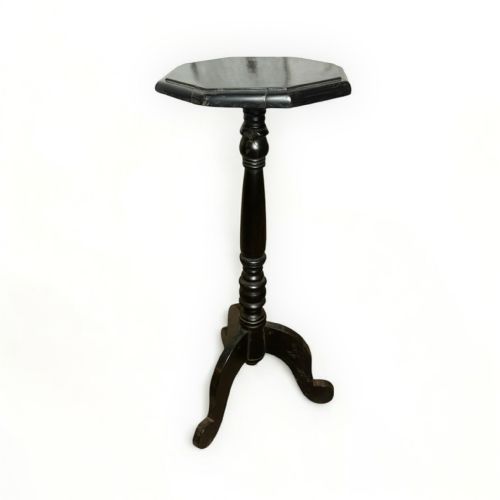
Ebonised Small Side Table
These ebonised small side table examples offer dark surfaces and compact proportions, uniting nineteenth-century craftsmanship with practical domestic utility.
Ebonised Small Side Table
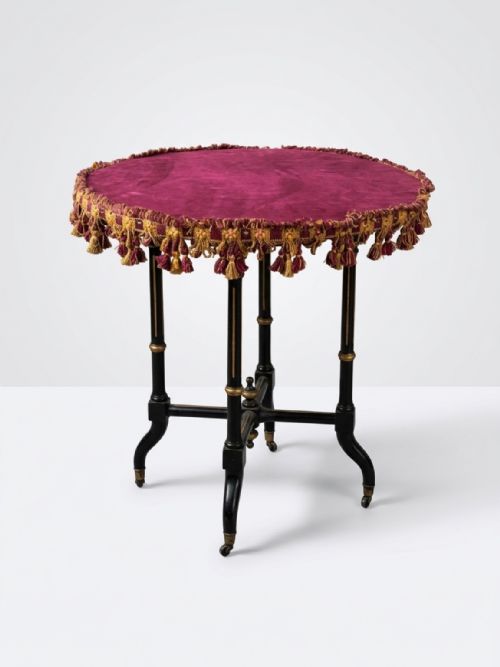
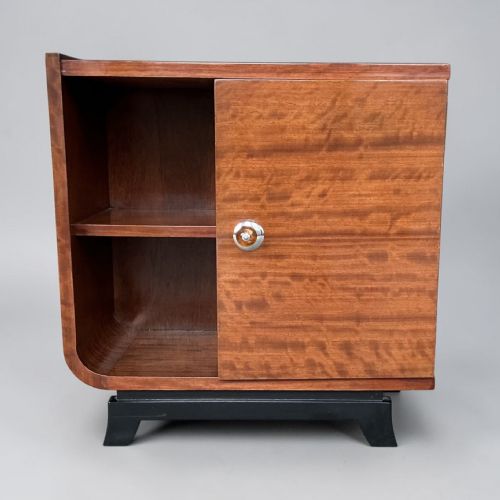
An ebonised small side table provides a compact surface for lamps, books, or decorative objects without dominating a room. These pieces span periods from the Regency era through the Victorian period, the Aesthetic Movement, and into the early twentieth century.
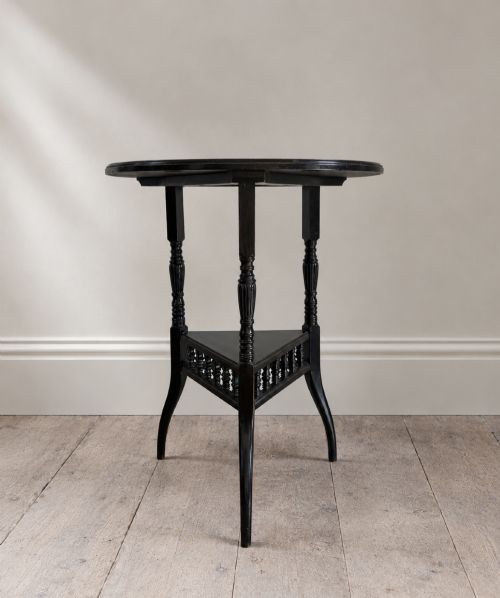
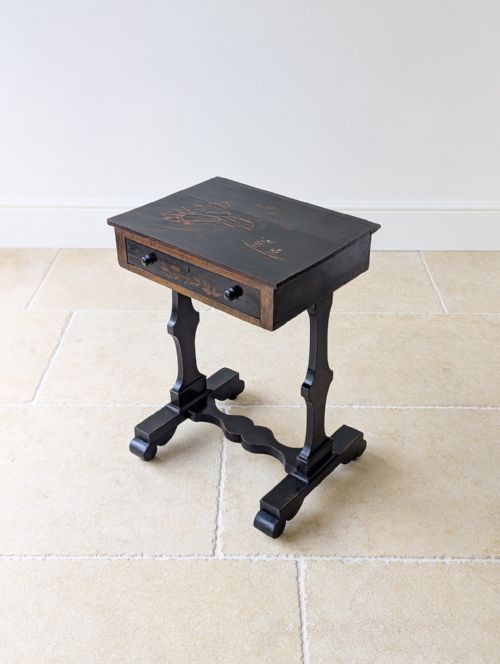
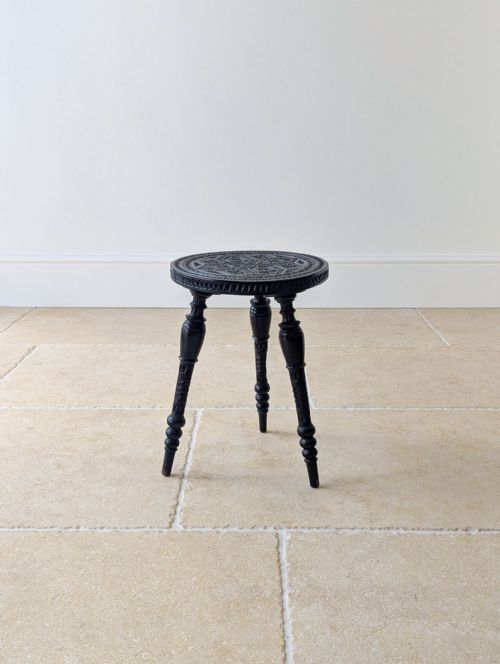
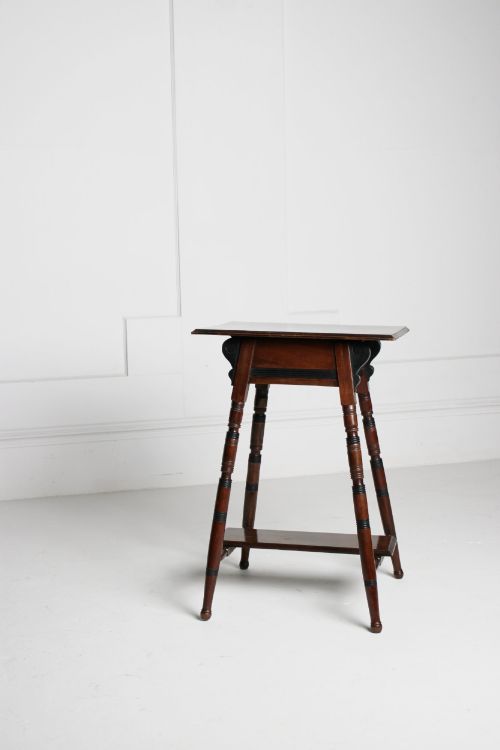
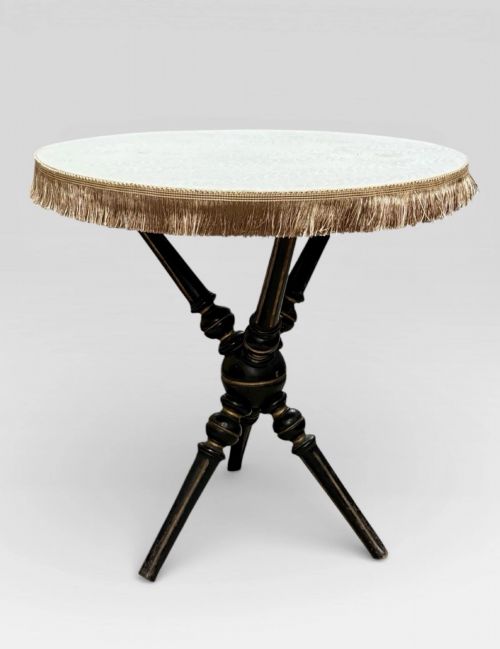
The selections on this page include occasional tables, Sutherland tables, gypsy tables, and wine tables executed in varied woods and finishes. Buyers meet items displaying straightforward vernacular forms alongside sophisticated cabinetmaker output.
Origins range across English workshops and continental makers, reflecting shifting domestic tastes for dark wood furniture throughout the nineteenth and early twentieth centuries. Each form serves a specific function, from bedside use to drawing room display.
Materials and construction
Makers achieved the characteristic dark finish by staining hardwoods such as mahogany, walnut, and elm to imitate costly ebony, often combining ebonised surfaces with parcel gilt or brass details. Construction methods rely on traditional joinery, including turned legs, tripod bases, and drop-leaf mechanisms.
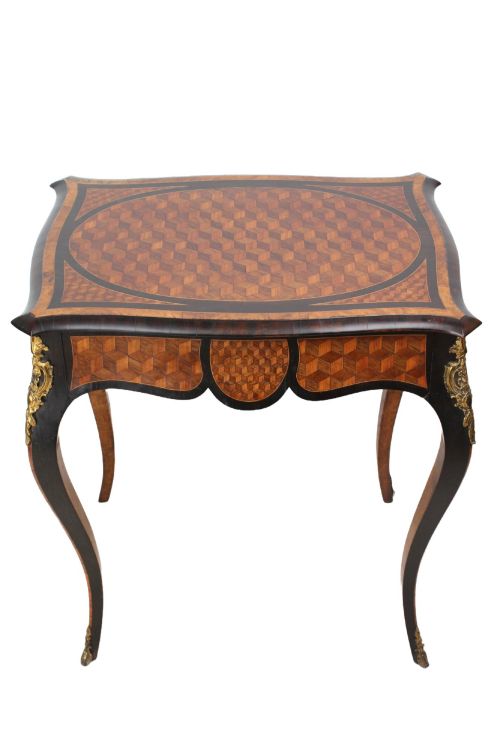
Surface treatments range from simple chip-carving and parquetry inlay to japanned Chinoiserie decoration and marble tops. These techniques demonstrate both straightforward carpentry and specialised decorative arts typical of the periods represented.
Object forms on this page include Sutherland tables, gypsy tables, writing desks, and tripod wine tables from English and French makers.
Judging quality
Quality in an ebonised small side table rests upon the crispness of carved detail, the integrity of the underlying timber, and the subtlety of the ebonised finish. Superior pieces exhibit balanced proportions and refined turning or joinery.
The distinction between standard workshop production and high-end cabinet work appears in secondary woods, stability of the base construction, and the preservation of original decorative elements such as gilding or brass mounts.
JAS Shoolbred·Druce & Co London·Jenks & Woods·Liberty & Co
The Ebonised Small Side Table Glossary
- Ebonised wood
- Timber stained or painted to resemble ebony, a technique popular in Victorian and Aesthetic Movement furniture. It provides a uniform dark surface that highlights gilt or inlaid details.
- Sutherland table
- A narrow drop-leaf table with hinged flaps supported by swinging legs. This form folds flat for storage against a wall.
- Gypsy table
- A lightweight occasional table with three turned wooden legs and a fabric or wooden top. These items emerged during the nineteenth century for informal drawing-room use.
- Chinoiserie
- European decorative style employing simulated Chinese motifs and lacquerwork. It frequently appears on Regency and nineteenth-century occasional furniture.
- Occasional table
- A small, portable table designed for specific, intermittent uses such as holding a lamp or drinks. The category encompasses wine tables, lamp tables, and bedside stands.
Ebonised Small Side Table: Frequently Asked Questions
What is an ebonised small side table used for?
These tables function as practical surfaces for lamps, drinks, or small decorative items in living rooms and bedrooms. Their compact dimensions allow them to fit into tight spaces where larger furniture proves unsuitable.
Historically, specific forms served specialised domestic roles, from holding sewing equipment to displaying porcelain objects.
How do I identify a Victorian ebonised table?
Victorian examples frequently display characteristics of the Aesthetic Movement, Arts and Crafts design, or Revival styles. Look for turned wooden legs, chip-carved surfaces, and dark stained finishes over hardwoods like mahogany or walnut.
Construction details and hardware often align with nineteenth-century manufacturing methods, distinguishing them from later reproductions.
Are ebonised tables made of solid ebony?
True solid ebony furniture remains extremely uncommon due to the weight and scarcity of the material. Most pieces consist of a secondary wood, such as mahogany, walnut, or fruitwood, treated with a dark stain or finish.
Some exceptional items utilise solid ebony for specific components, but the vast majority rely on ebonised hardwoods.
Where should I place a small antique table?
These versatile pieces suit placement beside armchairs, sofas, or beds to hold reading lamps and personal items. Their modest scale also makes them effective as freestanding display surfaces in hallways or corners.
Care should be taken to keep antique wooden surfaces away from direct heat sources and strong sunlight.