



Victorian Velvet Table
When you search for a victorian velvet table, you are looking for small, decorative occasional pieces topped in tactile fabric from the nineteenth century.
How they were made
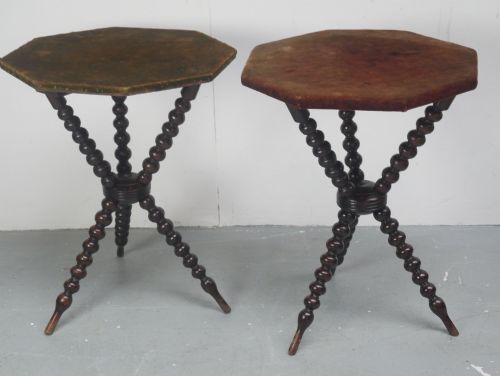
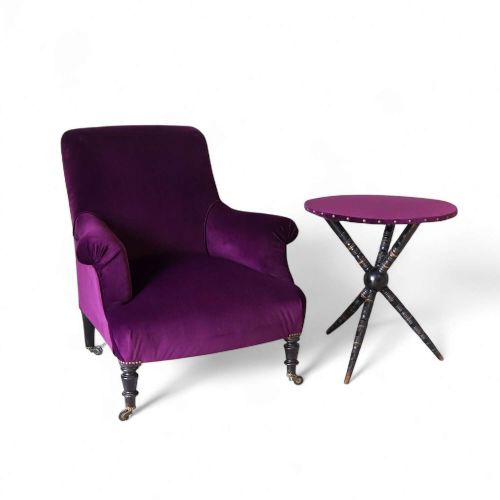
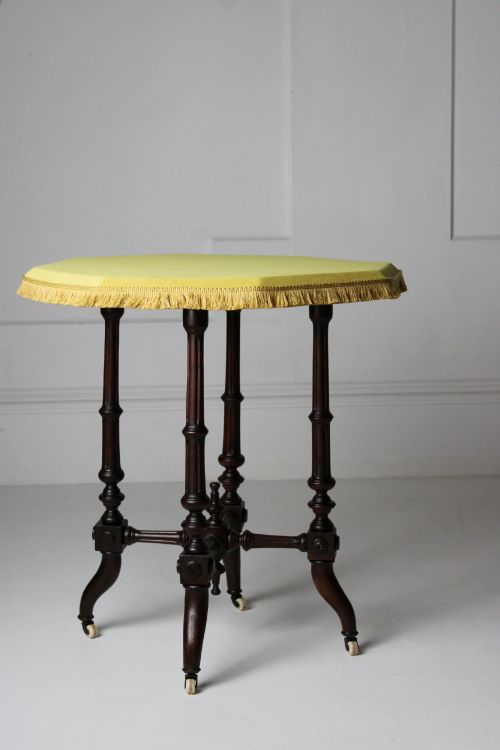
Makers constructed the frames using native and exotic timbers such as walnut, mahogany, and rosewood, alongside lighter structural choices like bamboo. Turned wooden elements, bobbin framing, and scroll carvings defined the support structures beneath the fabric tops.
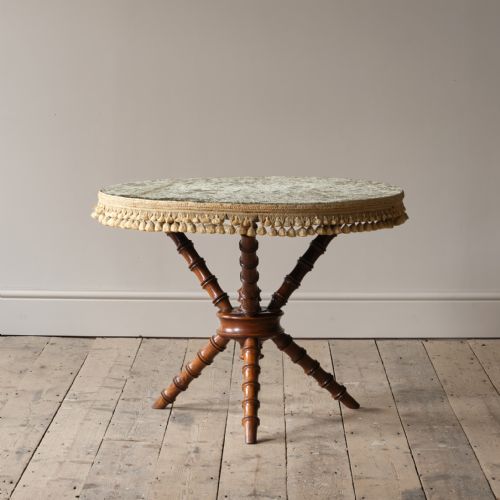
Table surfaces were upholstered or draped in woven velvet fabrics, occasionally secured with decorative brass heading tacks or finished with tasseled fringes. In many examples, the textile acts as an inset panel within a wood or gilt frame, or drapes loosely over a folding tripod base.
What varies in quality
Quality rests in the rigidity of the underlying timber frame and the precision of the joinery. Tables utilising dense hardwoods like rosewood or finely turned ebonised wood display superior structural integrity compared to lighter bamboo or softwood variants.
The distinction between standard production and finer work lies in the detailing of the woodwork, such as hand-carved mounts or intricate inlaid marquetry. Original textiles preserved in good condition or high-grade replacement velvets also elevate the finish of the piece.
Several tables retain their original tasseled fringes, whispering tales of long-forgotten parlour tea parties and Victorian interior fashions.
John Taylor Edinburgh·Henry Matthews
The Victorian Velvet Table Glossary
- Gipsy table
- A lightweight three-legged occasional table, popular in the late nineteenth century, traditionally draped with a fabric cloth. They were easily moved around Victorian parlours for tea or display.
- Aesthetic Movement
- A late nineteenth-century design style emphasising art for art's sake, often featuring ebonised finishes, Japanese-inspired motifs, and minimalist forms. Pieces from this period reject heavy Victorian clutter in favour of simpler lines.
- Bijouterie table
- A glass-topped display table designed for showcasing small treasures, jewellery, and curiosities. They frequently feature velvet-lined interiors to protect delicate objects.
- Ebonised
- Wood stained or painted black to imitate expensive ebony. This finish was widely utilised in Aesthetic Movement and Napoleon III furniture.
- Bobbin turning
- A form of woodturning characterised by a series of rounded, spool-like shapes resembling bobbins on a thread. It provides a distinct textured profile to table legs and frames.
Victorian Velvet Table: Frequently Asked Questions
What is a victorian velvet table used for?
These tables served primarily as occasional surfaces in nineteenth-century drawing rooms for holding small decorative items, books, or tea services.
Today, they function well as bedside tables, plant stands, or compact accent pieces in living spaces where floor space is limited.
How do I care for antique velvet?
Velvet requires gentle handling to preserve the pile and texture. Keep antique tables out of direct sunlight to prevent fading of the fabric.
Dust the surface lightly with a soft brush, avoiding harsh cleaning agents or water that might stain the nineteenth-century textile.
Were these tables always draped?
Not all examples feature draped cloth tops. While traditional gipsy tables often used loose velvet throws with tassels, many occasional and bijouterie tables have fixed velvet panels inset directly into wooden frames.
Both styles were common during the Victorian and Edwardian periods, depending on the specific room setting and intended use.
How can I date a gipsy table?
Dating relies on examining the timber species, turning styles, and construction methods beneath the upholstery. Ebonised frames and bamboo structures point towards the later nineteenth century, particularly the Aesthetic Movement period around eighteen-eighty to eighteen-ninety.
Earlier nineteenth-century pieces often utilise solid rosewood or mahogany with heavier turned supports.