





Black Ebonised Pedestal Table
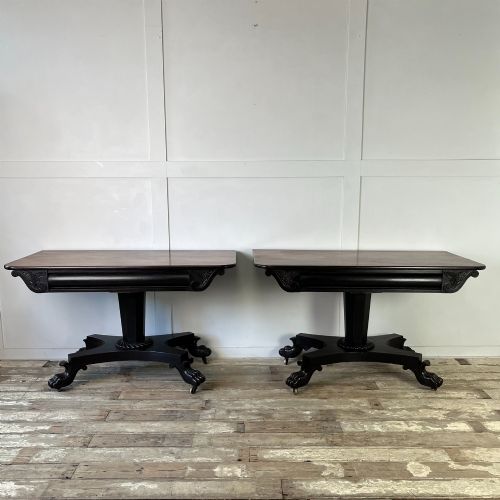
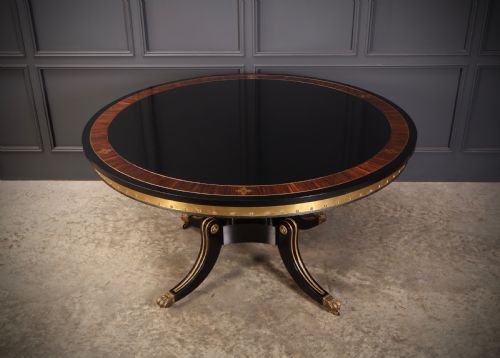
A black ebonised pedestal table offers a dark, dramatic surface and a single central support, combining utility with striking nineteenth-century and revival aesthetics.
Black Ebonised Pedestal Table
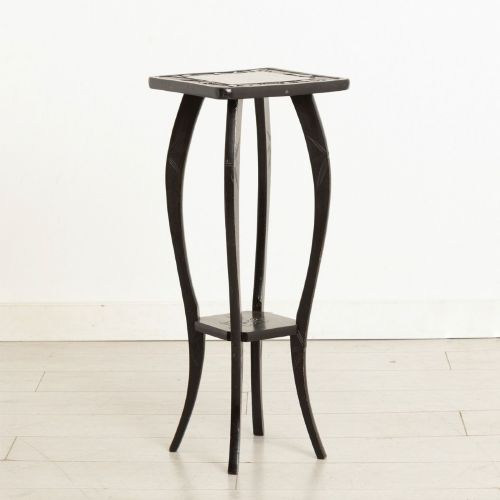
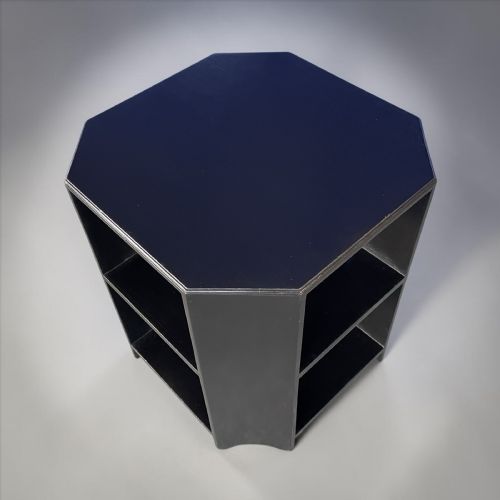
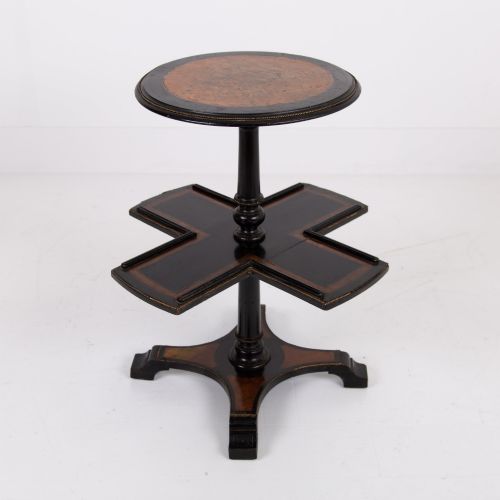
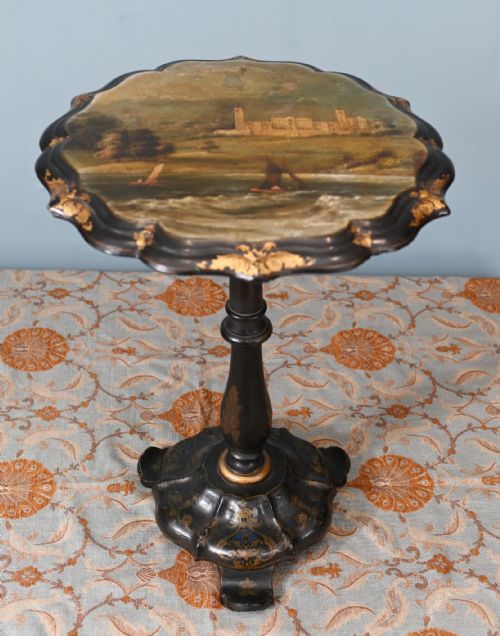
A black ebonised pedestal table appears in various forms across this selection, primarily as occasional tables, plant stands, centre tables, and games tables. These pieces originate from the nineteenth century, including the Victorian and Regency periods, alongside later twentieth-century interpretations such as Art Deco and interwar designs.
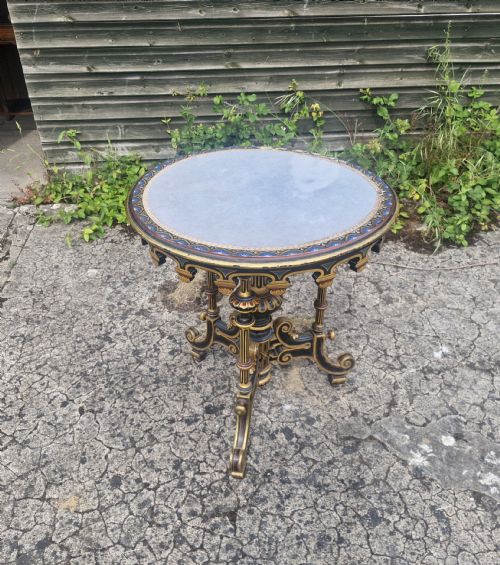
Makers and workshops utilised different woods and surface treatments, producing everything from round centre tables to compact lamp tables and Japanese-inspired stands. Buyers encounter both English and continental examples, featuring configurations like tripartite bases or central columns supporting marble, leather, or wood tops.
Materials and Technique
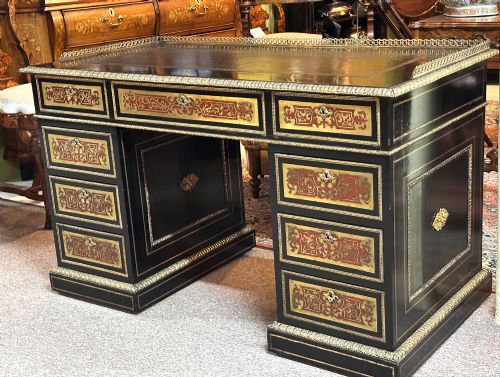
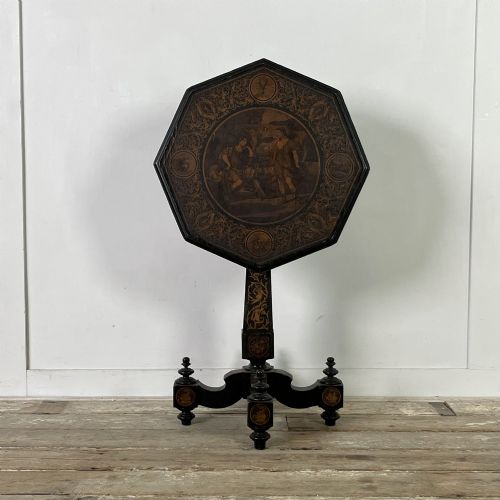
Craftsmen built these tables using ebonised hardwood, mahogany, or elm, often applying a dark finish to mimic costly ebony. Surface ornamentation frequently incorporates brass inlay, bone inlay, marquetry, and gilt detailing to contrast against the dark background.
Specialist techniques such as penwork, japanning, and hand carving define the decorative schemes of the period. Tops frequently feature inset marble or leather surfaces supported on solid central pedestals.
Several tables double as gaming boards, ready for a sudden nineteenth-century chess match.
Craftsmanship and Detail
Quality rests in the crispness of the hand carving and the precision of inlaid brass, bone, or specimen marble. Superior examples display refined proportions and stable, well-jointed pedestal bases rather than heavy or clumsy construction.
The integrity of the ebonised finish and the quality of secondary timbers indicate the level of care invested by the maker. Finer pieces integrate complex decorative elements like marquetry or penwork with clean execution.
Liberty of London·George Merrifield
The Black Ebonised Pedestal Table Glossary
- Ebonised
- Wood treated with a dark stain or finish to imitate true ebony. This process became widely popular during the Victorian and Aesthetic periods.
- Pedestal
- A single central support or column holding up the table top. It typically rests on a tripartite or shaped base for stability.
- Marquetry
- Fitted pieces of wood veneer forming decorative patterns on a surface. Artisans used contrasting timbers to create geometric or floral designs.
- Japanning
- A European imitation of East Asian lacquerwork. This technique involves applying layers of varnish and sometimes gold decoration to a dark base.
- Penwork
- Detailed surface decoration drawn with ink on wood before being varnished. It frequently appears on Regency games and chess tables.
Black Ebonised Pedestal Table: Frequently Asked Questions
What periods do these tables span?
The selection encompasses nineteenth-century pieces, including Regency and Victorian examples, alongside twentieth-century revivals.
Craftsmen produced these designs through the interwar years, incorporating styles like the Aesthetic Movement and Art Deco.
How were these tables used originally?
These tables served multiple functions in period interiors, acting as centre tables for display, writing desks, or dedicated games surfaces.
Smaller versions functioned as plant stands, lamp tables, or occasional tables for drawing rooms and parlours.
How do I identify an ebonised finish?
Ebonised surfaces consist of a dark stain or paint applied to a timber such as mahogany or hardwood to simulate solid ebony.
This treatment provides a deep black sheen that contrasts with inlaid brass, bone, or marble.
Where should I place a pedestal table?
A pedestal table suits smaller spaces or corners where a four-legged table might obstruct movement.
Centre tables look best positioned in the middle of a room, while plant stands and lamp tables anchor empty wall areas.