






Lion Paw Feet Table
These lion paw feet table pieces anchor a room with classical weight, bringing carved timber and cast metal support directly to your floor.
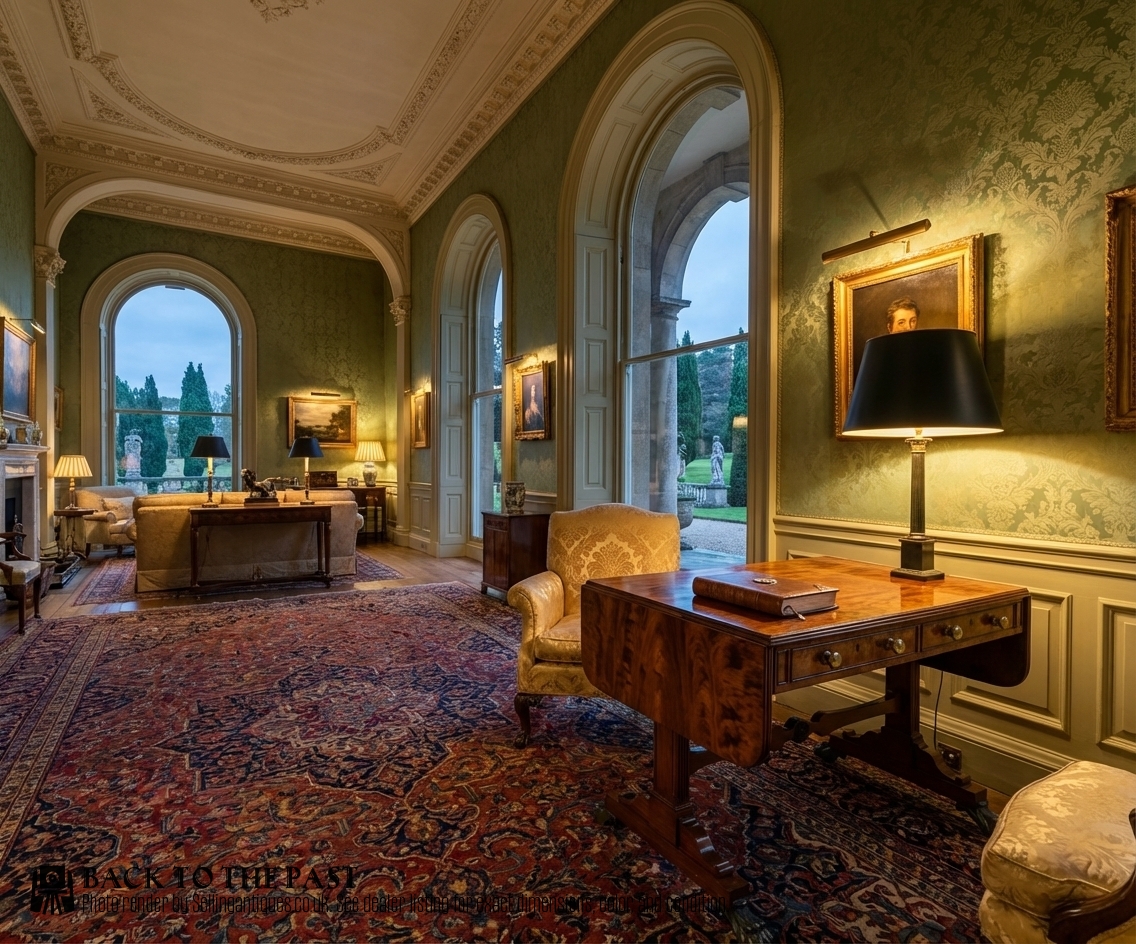
Lion Paw Feet Table
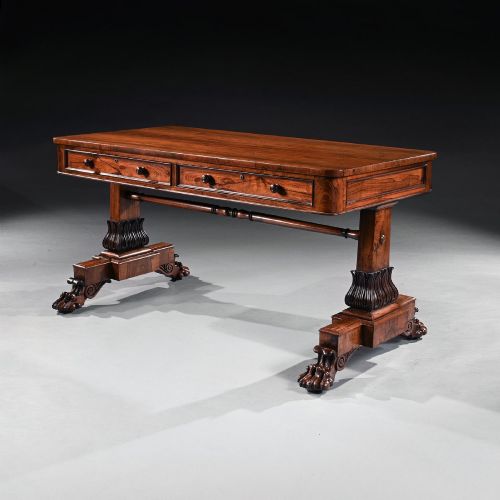
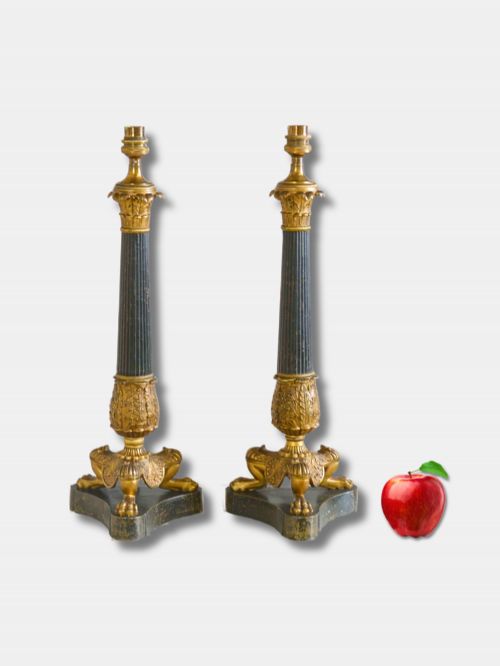
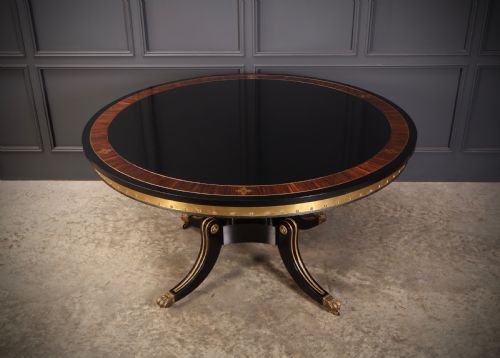
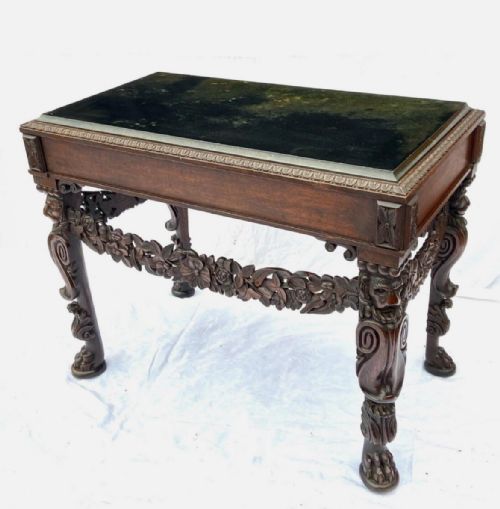
A lion paw feet table covers a broad sweep of domestic furniture, ranging from centre tables and console tables to card tables, dining tables, and writing desks. You will most frequently encounter nineteenth-century mahogany, rosewood, and walnut examples, alongside occasional marble-topped Guéridon pieces and architectural column table lamps.
The aesthetic draws heavily on Regency, George IV, and Victorian Neoclassical idioms, often echoing French Empire or Irish Rococo Revival tastes. These works span from the eighteenth century through the nineteenth century and into the early twentieth century, showing sustained affection for animalistic supports in domestic interiors.
Materials and construction
Timber selection governs the major surfaces, with dense grain figures visible in mahogany, rosewood, kingwood, and ebonised wood. Carvers shaped solid oak and mahogany for structural legs, applying brass inlays or leaving rich, polished surfaces to catch the light.
Metal components appear in cast or chased ormolu, gilt bronze, patinated bronze, and solid brass, particularly forming the distinct paw terminals that meet the floor. Marble tops also feature on circular tables, resting directly upon heavy wooden or gilt frames.
The evidence shows these tables span the eighteenth, nineteenth, and early twentieth centuries, constructed predominantly in mahogany, rosewood, and brass.
Judging execution and finish
Quality rests in the anatomical sharpness of the carved or cast paws, where deeper relief and defined claws separate superior work from softer, mass-produced casting. The integration between the upper timber frame and the heavy feet shows whether a piece was conceived as a unified whole or assembled from disparate parts.
The choice of primary veneers, such as flame mahogany or rich rosewood, alongside precise brass inlay and original fire gilding on bronze mounts, dictates the visual presence of the furniture. Secondary elements, including original crank mechanisms on dining tables or intact marble slabs, further elevate the standing of a piece.
Gillows·Joseph Angell I
The Lion Paw Feet Table Glossary
- Centre table
- A freestanding table designed to be viewed from all sides, typically placed in the middle of a principal room rather than against a wall.
- Ormolu
- Gilt bronze mounted onto furniture or functioning as a lamp base, created by applying a gold amalgam to cast bronze and firing it.
- Sofa table
- A rectangular piece fitted with drop leaves on either side and usually two small drawers, originally positioned in front of a sofa.
- Guéridon
- A small French occasional table, frequently featuring a circular marble top supported by a central column or multiple carved legs.
- Card table
- A folding table designed for evening games, opening to reveal a baize-lined surface supported by a swinging rear leg or gate-leg mechanism.
Lion Paw Feet Table: Frequently Asked Questions
Where were these tables placed originally?
Centre tables sat proudly in the middle of principal reception rooms, while console and side tables stood flat against walls beneath mirrors or paintings.
Card tables and writing desks occupied corners or smaller parlours, ready to be pulled out into the room when guests arrived for evening entertainment.
How do I care for polished wood and metal?
Apply traditional beeswax sparingly to timber surfaces to nourish the grain, buffing gently with a soft cloth rather than using modern liquid polishes that build up a hazy residue.
Keep brass and ormolu free from abrasive cleaners, dusting them dry to preserve the natural patina accumulated over centuries.
How do I distinguish Regency from Victorian examples?
Regency and George IV pieces tend to display crisper architectural restraint, classical brass inlays, and refined rosewood or mahogany veneers.
Victorian furniture generally offers heavier proportions, darker mahogany tones, and more robust carving influenced by later revivalist movements.
Were the paw feet always made of brass?
Paw feet were executed in both cast metal and solid carved timber depending on the workshop and the overall design of the furniture piece.
Ormolu, brass, and gilt bronze terminals were frequently cast separately and pinned to wooden legs, while others were carved straight from the same block of mahogany or oak.