





Antique Ebonised Foyer Table
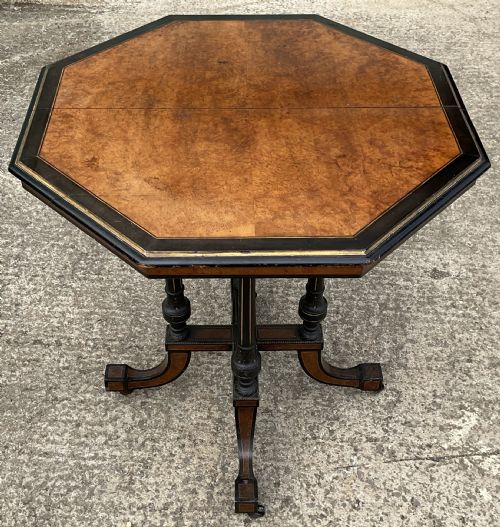
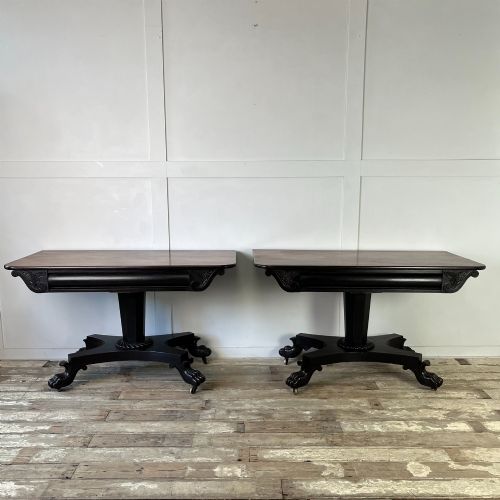
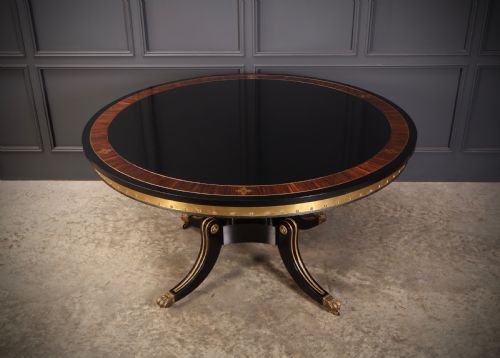
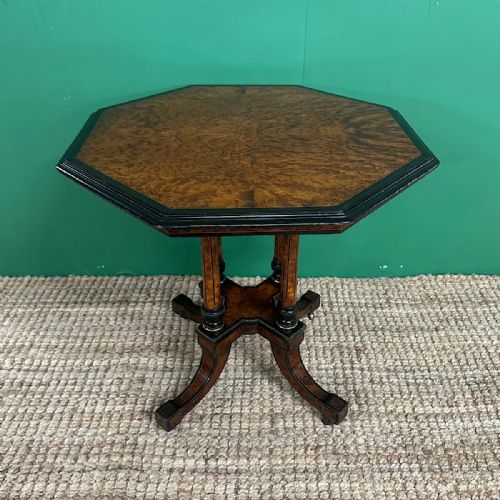
These antique ebonised foyer table pieces bring striking dark timber forms and formal presence into a hallway.
Antique Ebonised Foyer Table
When you search for an antique ebonised foyer table, you are looking at dark-finished timber furniture designed for grand entrances and principal rooms. These pieces include centre tables, console tables, and occasional tables that anchor a space with distinct silhouettes.
You are most likely to meet Victorian and nineteenth-century examples on this page, often drawing upon Regency, George IV, or William IV traditions. Forms range from octagonal and round pedestals to oval shapes and console designs intended to stand against a wall.
Origin and period heavily influence the character of these items, spanning English workshops and continental revivals. The selection demonstrates varied interpretations of dark wood finishes, incorporating brass, ormolu, and contrasting timber inlays.
How they were made
Cabinet makers utilised dense hardwoods and secondary timbers, applying ebonising techniques to mimic costly exotic woods like ebony. Surfaces often received meticulous polishing to achieve a deep, light-absorbing sheen.
Decoration relied upon fine joinery and applied metals, including brass inlay, boxwood stringing, and cast ormolu mounts. Finer pieces combined ebonised carcases with contrasting veneers such as amboyna, burr walnut, and mahogany.
Victorian cabinet makers occasionally ebonised ordinary fruitwoods just to trick dinner guests into thinking they owned solid ebony from the colonies.
What varies in quality
The sophistication of the timber preparation and the depth of the ebonised finish set finer examples apart from simpler pieces. Master craftsmen achieved a durable, lustrous black surface that integrated seamlessly with the underlying wood.
The refinement of secondary decorative elements dictates the upper tier of the range. Precision in brass inlay, the crispness of carved details, and the quality of contrasting veneers like amboyna distinguish exceptional workshop production.
The Antique Ebonised Foyer Table Glossary
- Ebonised
- Wood finished to resemble ebony through staining, painting, or chemical treatment. This technique became popular during the nineteenth century to create a dramatic, formal appearance.
- Centre table
- A freestanding piece designed to be viewed from all sides, frequently placed in the middle of a room or grand foyer. These tables often feature central pedestals or four-legged supports.
- Console table
- A table designed to stand flat against a wall, traditionally supported by console brackets or legs. In a foyer, these pieces provide a surface for decorative objects while saving floor space.
- Ormolu
- Gilded bronze ornamentation applied to furniture mounts and details. The technique involves a mercury gilding process that imparts a rich metallic lustre.
- Amboyna
- A highly prized, figured burl wood sourced from Southeast Asia. Its rich, mottled grain makes it a favoured veneer for luxury nineteenth-century tables.
Antique Ebonised Foyer Table: Frequently Asked Questions
Where should an antique ebonised foyer table go?
These tables suit grand entrance halls, wide corridors, and principal reception rooms where a freestanding centre table or wall-anchored console creates an immediate focal point. Their dark finishes work well against lighter wall colours to establish a strong visual contrast.
Ensure there is sufficient clearance around the piece for movement, particularly with round or octagonal centre tables that demand open space to be fully appreciated.
How do I care for ebonised wood?
Dust regularly with a soft, dry cloth to prevent abrasive particle build-up on the polished surface. Avoid placing these tables in direct sunlight or near heat sources to protect the dark finish and underlying veneers from drying out.
Apply high-quality beeswax sparingly if the finish requires nourishment, avoiding modern silicone sprays that can damage historic polish.
What is the difference between a centre table and a console table?
A centre table is built to stand independently in the middle of a room, featuring finished detailing on all sides and typically a central pedestal or four balanced legs. A console table is designed specifically to sit flush against a wall.
Foyer layouts usually dictate the choice, with console tables preserving floor space in narrow hallways and centre tables commanding larger entrance spaces.
How can I identify a nineteenth-century piece?
Examine the construction methods, timber choices, and secondary woods visible beneath the table or inside drawer structures where applicable. Nineteenth-century pieces frequently employ dense hardwoods, hand-cut joinery, and specific revival styles such as William IV or Napoleon III.
Look for traditional finishing techniques like hand-applied polish and natural adhesives that distinguish older cabinet making from modern reproductions.