

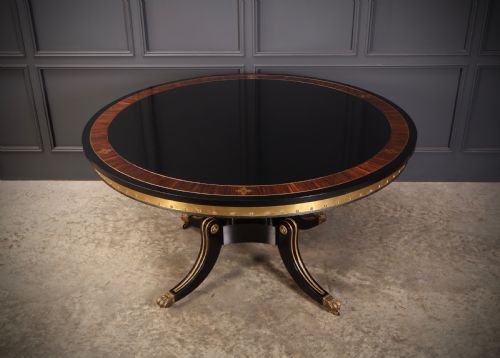


Circular Brass Inlaid Table
A circular brass inlaid table brings refined geometry and metallic warmth to a room, uniting rich cabinet timbers with intricate metalwork.
Circular Brass Inlaid Table
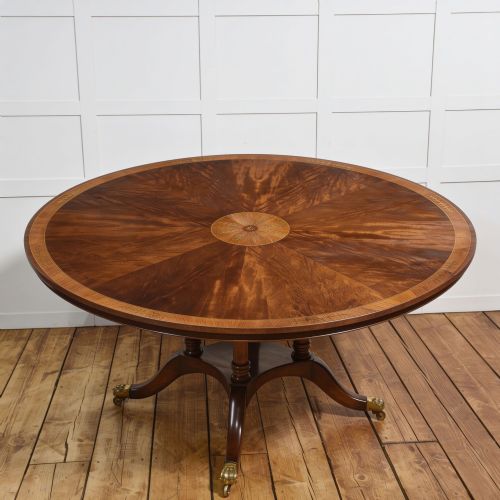
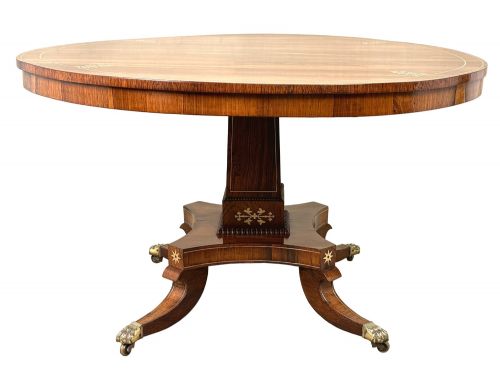
A circular brass inlaid table is primarily found from the Regency era through to the early twentieth century, spanning periods such as Victorian, George IV, and later revivals. These pieces appear most frequently as centre tables, drum tables, and side tables designed to anchor a principal room or sit gracefully beside seating.
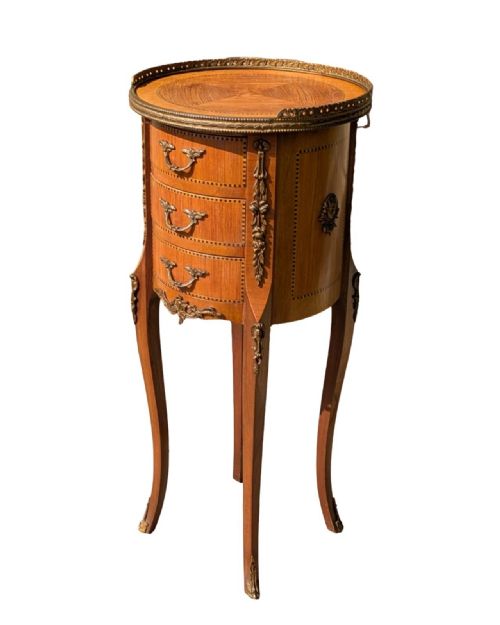
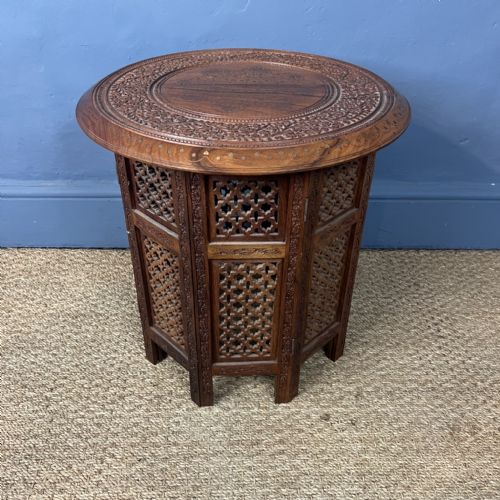
The materials recorded in these pieces encompass rosewood, mahogany, walnut, and teak, often enriched with detailed brass inlay running along the tops and borders. Alongside formal British Regency designs, the evidence includes French styles such as Louis XV and Louis XVI, as well as Anglo-Indian and Benares examples.
Buyers will encounter various formats ranging from large pedestal dining and breakfast tables to smaller bedside cabinets and revolving book tables. The prevalence of rosewood and mahogany set with brass demonstrates a sustained preference for dark, highly grained timbers contrasted against bright metal work.
Materials and construction
Cabinet makers utilised dense hardwoods including rosewood, mahogany, and kingwood as the structural base for these tables, frequently applying fine veneers to achieve fluid grain patterns. Wood veneer and crossbanding allowed artisans to create stable circular tops that resisted warping while displaying rich natural figures.
Brass inlay and occasional ormolu mounts were meticulously set into channels carved directly into the timber surface, securing the metal flush with the wood. This technique required precise hand-cutting to form the geometric or floral motifs that define the style.
One unexpected survivor among the heavy timber and brass is a mahogany golf game table.
Factors determining quality
Quality rests heavily on the precision of the brass inlay work and the selection of the underlying timber. Pieces displaying tight, even grain matching and crisp, intact metalwork without excessive replacement indicate superior craftsmanship.
The integrity of the pedestal base, whether a central pillar with sabre legs or a four-part platform, dictates the structural stability and overall proportions of the table. Finer examples maintain a harmonious balance between the top and the support, utilising substantial cuts of rosewood or mahogany.
The Circular Brass Inlaid Table Glossary
- Centre table
- A freestanding table finished on all sides, designed to stand in the middle of a room rather than against a wall. These often feature circular tops and pedestal bases.
- Drum table
- A deep-skirted circular table, typically fitted with alternating drawers and faux drawers around the perimeter, mounted on a central pillar.
- Gueridon
- A small French round table on a single pillar or multiple legs, frequently used for display or as a side table.
- Crossbanding
- A border of veneer applied to the edge of a table top where the grain runs perpendicular to the main surface, framing the central timber.
- Ormolu
- Gilded bronze used for decorative mounts and accents on furniture, providing a golden contrast to dark woods like mahogany and rosewood.
Circular Brass Inlaid Table: Frequently Asked Questions
How do I use a circular brass inlaid table?
These pieces function well as freestanding centre tables in entrance halls or drawing rooms, where their detailed tops can be viewed from all angles.
Smaller variants serve effectively as bedside cabinets, side tables, or display surfaces for lamps and decorative objects.
What woods were used for these tables?
The evidence shows a strong preference for dark, dense timbers such as rosewood and mahogany, chosen for their deep colour and fine grain.
Other examples incorporate walnut, satinwood, teak, and kingwood, often enhanced with contrasting veneers and brass work.
How do I distinguish a Regency table from a revival piece?
Original Regency pieces typically date from the early nineteenth century and exhibit period-specific construction methods and patination on the timber and brass.
Revival pieces, often produced around nineteen-ten or nineteen-twenty, emulate these earlier designs while reflecting the manufacturing standards of their own time.
Are all these tables British in origin?
While many examples reflect English Regency and Victorian cabinet making traditions, the selection also includes French styles like Louis XVI gueridons and bedside cabinets.
Additionally, Anglo-Indian and Benares pieces introduce distinct regional teak construction and brass inlay techniques.