
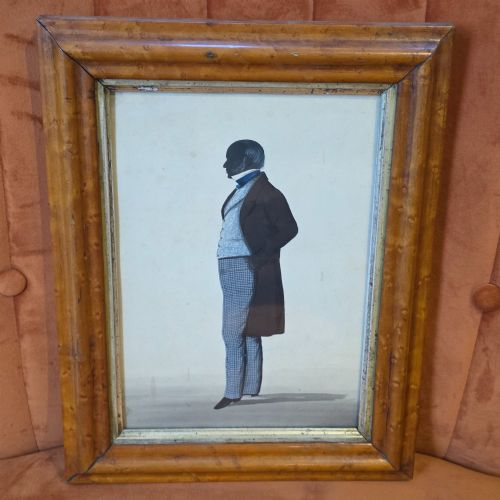
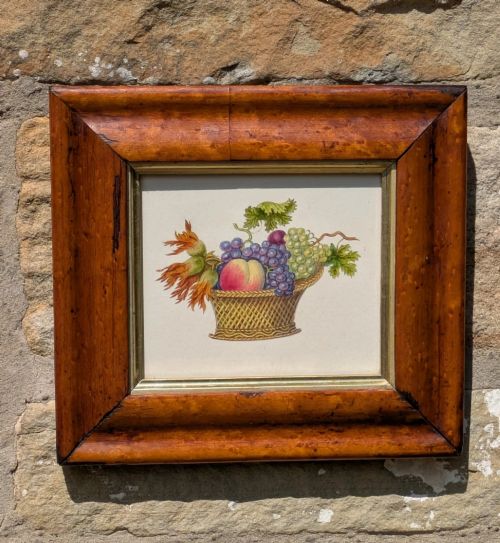
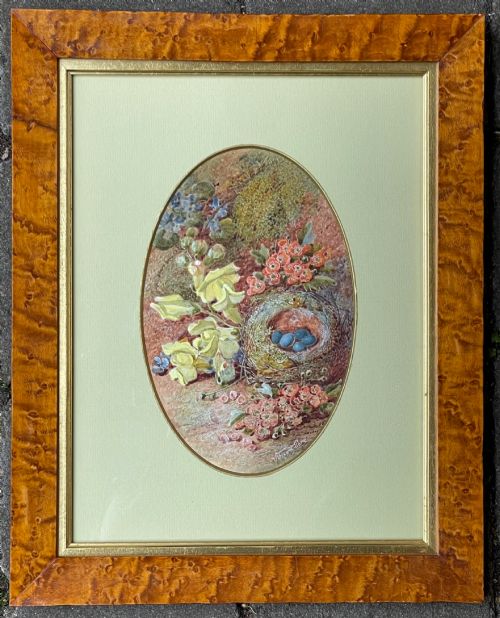


Birdseye Maple Frame
A birdseye maple frame gives warmth and a distinctive figured grain to mirrors, watercolours and portraits.
Birdseye Maple Frame
A birdseye maple frame surrounds domestic wall art, mirrors and portraits, bringing a particular tactile depth to the wall. When you search for a birdseye maple frame, you encounter surrounds that house Georgian watercolours, Victorian silhouettes and period overmantel mirrors.
The pieces listed here span the Georgian, Regency, William IV and Victorian eras, alongside later 1930s furniture. You are most likely to meet 19th-century examples housing silhouette portraits, watercolours or mirrors.
Makers utilised the distinctive spotted grain of the timber to create decorative borders that complemented the intimate scale of miniatures and folk art. These surrounds range from simple mouldings on small portraits to substantial architectural overmantel mirrors.
How they were made
Makers selected maple timber exhibiting the characteristic small circular eyes caused by local depressions in the wood fibres. This figured wood was often utilised as a veneer applied to a stable underlying wooden carcase.
Surrounds were polished to enhance the natural chatoyancy of the grain, sometimes combined with gold leaf accents or simple glass protection for the artwork within. Paper, ink and watercolour completed the works housed inside these wooden borders.
Listings show maple combined with glass, paper, watercolour, gold leaf and ink across the 18th, 19th and 20th centuries.
What varies in quality
The visual density and pattern intensity of the figuring dictate the primary tier of quality in the timber. A denser spread of eyes across the maple surface creates a more animated visual rhythm.
Construction methods also separate standard examples from finer work, particularly the precision of the mitred corners and the preservation of the original polish. Intact surface finishes without heavy restoration retain the character intended by the original maker.
The Birdseye Maple Frame Glossary
- Birdseye maple
- A figured variation of the sugar maple tree where the grain resembles tiny swirling eyes. This patterning occurs naturally in the wood and is prized for decorative veneering.
- Veneer
- A thin slice of superior wood applied to a secondary timber base. This technique allowed cabinetmakers to display striking grain patterns economically.
- Overmantel mirror
- A large looking glass designed to hang above a fireplace mantelpiece. These often incorporated substantial wooden frames to anchor the wall elevation.
- Silhouette
- A portrait profile filled in with a solid dark colour, usually cut from paper or painted. These were frequently housed in small wooden surrounds.
- Watercolour
- A painting method where fine pigment is suspended in a water-based solution on paper. Surviving examples frequently retain their original period framing.
Birdseye Maple Frame: Frequently Asked Questions
What periods do these frames come from?
The pieces span the Georgian, Regency, William IV and Victorian periods, with occasional 1930s furniture items appearing in the selection.
Dating relies on the construction methods, the style of the artwork held within, and the profile of the moulding itself.
How were birdseye maple frames used?
They served to display personal keepsakes, including silhouette portraits, watercolours and oil paintings on canvas.
Larger versions functioned as architectural overmantel mirrors placed above domestic fireplaces to reflect light.
How do I care for a wood frame?
Keep the wood away from direct sunlight and fluctuating humidity to prevent the veneer from drying or lifting from the base.
Dust gently with a dry, soft cloth and avoid chemical polishes that can damage the historical surface.
Are the frames sold with artwork?
Many listings preserve the original artwork, such as 19th-century watercolours, silhouettes, etchings and mirrors, housed together since the period of creation.
Some items focus specifically on the frame itself, while others retain their historical paper or canvas contents.