
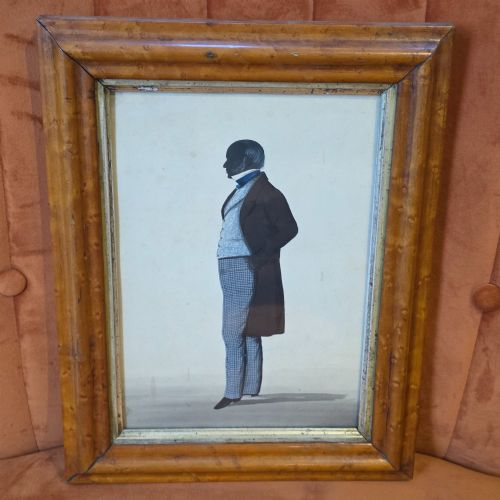


Maple Framed Silhouette
Maple framed silhouette pieces offer a charming slice of nineteenth-century portraiture, capturing profiles in ink and paper that every collector cherishes.
What They Are
When you search for a maple framed silhouette, you are looking at nineteenth-century portraiture that captures human profiles in ink and hand-cut paper. These wall art pieces range from intimate depictions of gentlemen and children to elaborate conversation pieces.
The versions you are most likely to meet on this page hail from the Regency, Victorian, William IV, and Georgian periods. They present subjects with striking detail, sometimes accompanied by a dog or other domestic elements.
How They Were Made
Maker studios utilised paper and ink, often combining hand-cut paper techniques with delicate painted silhouette work. Skilled artisans added gold leaf highlights to enhance costume details and borders.
The enclosing frames were constructed from wood, specifically utilising maple and birds eye maple veneer. Glazing protected the delicate paper artwork beneath.
Retail Price Guide 2026
Typical UK retail prices for maple framed silhouette, calculated from the Sellingantiques database of over a million retail prices indexed since 2003. This retail price guide relies exclusively on Sellingantiques data; no external sources or auction records are used, so the figures do not describe the wider market.
Listings feature works exclusively from the nineteenth century, utilising paper, glass, ink, and birds eye maple.
What Varies in Quality
The distinction between standard examples and the top of the range lies in the precision of the hand-cutting and the presence of signature work by notable artists. Finer pieces demonstrate superior control over the paper silhouette, capturing subtle facial expressions and contemporary costume accurately.
Framing also dictates distinction, where rich birds eye maple grain and original glass elevate the piece. The inclusion of gilding and detailed painted embellishments separates master artisan output from routine studio production.
Frederick Frith·Augustin Edouart
The Maple Framed Silhouette Glossary
- Silhouette
- A portrait depicting the solid shape of a person's profile, usually filled in with dark ink or cut from black paper. This portrait style gained immense popularity before the invention of photography.
- Birds Eye Maple
- A figure in maple wood that resembles tiny, swirling eyes, prized for decorative veneer work on frames. This timber choice adds distinct visual texture to nineteenth-century framing.
- Conversation Piece
- An artwork depicting a group of figures engaged in a common activity, often within a domestic setting. These complex compositions show multiple subjects interacting.
- Gold Leaf
- Gold beaten into extremely thin sheets, applied to highlight specific details on framed artwork. It provides a bright contrast against the dark silhouette profile.
Frequently Asked Questions
What is a maple framed silhouette?
A maple framed silhouette is a nineteenth-century profile portrait housed in distinctive wooden framing. These artworks feature hand-cut paper or painted depictions of people.
They serve as historical wall art capturing the likenesses of individuals from the Georgian through Victorian eras.
How old are these silhouettes?
The pieces available date primarily from the nineteenth century, including specific works from around eighteen hundred to eighteen forty.
These dates span the Regency, William IV, and Victorian periods when profile portraiture reached its height.
Who made these framed silhouettes?
Professional artists and specialised galleries created these works, occasionally signing their paper cuttings. Well-documented practitioners included prominent silhouette cutters working during the nineteenth century.
Studio output ranged from independent travelling artists to established urban galleries.
How do I hang wall art safely?
Protect the original wood frame and antique glass by using appropriate picture wire and secure wall fixings. Keep the artwork away from direct sunlight to prevent fading on the paper and ink.
Stable room humidity helps preserve both the wooden maple veneer and the paper interior.