


Cut Paper Portrait
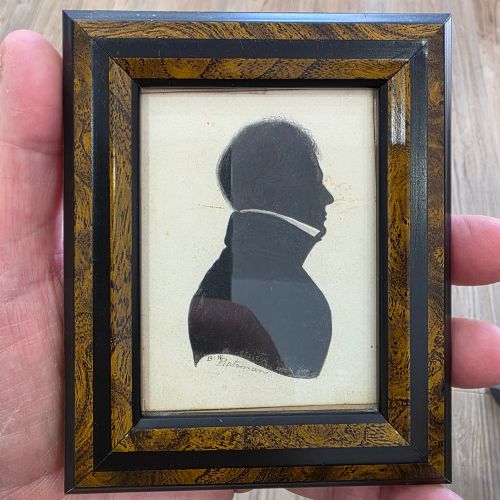
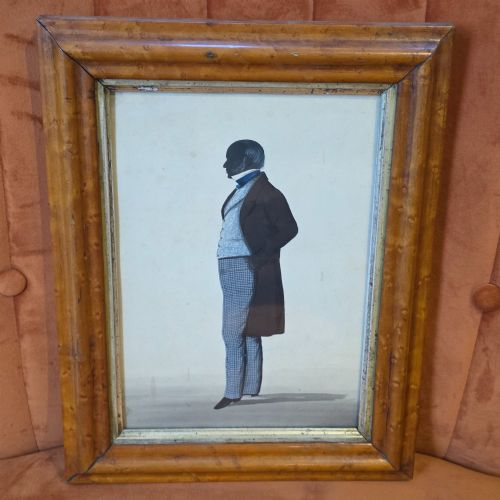
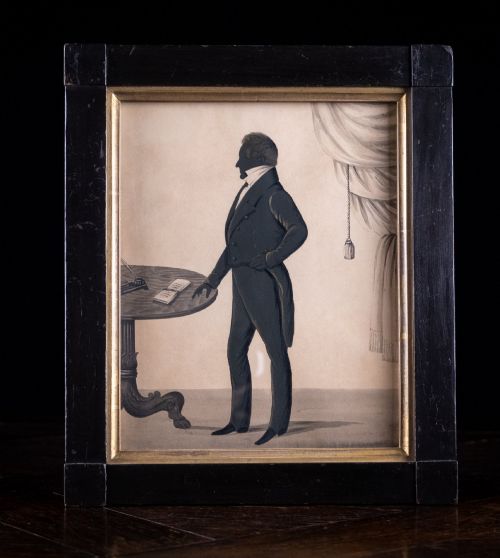
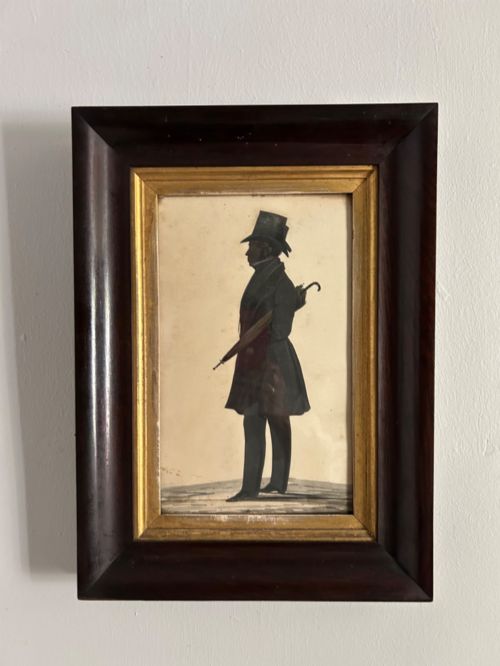
These cut paper portrait examples are silhouette artworks shaped by hand from paper, offering direct likenesses of Georgian and Victorian sitters.
Cut Paper Portrait
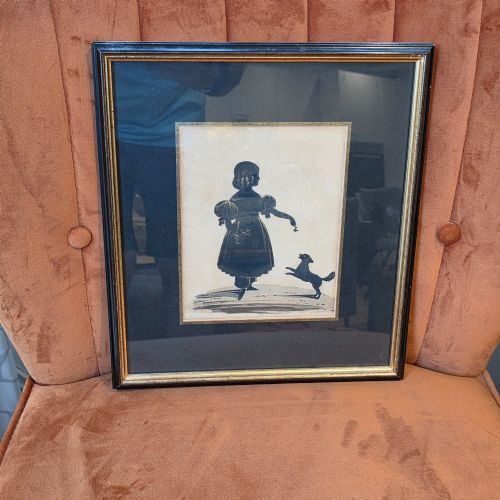
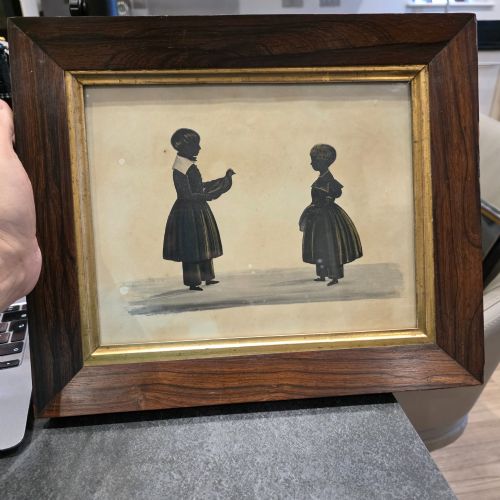
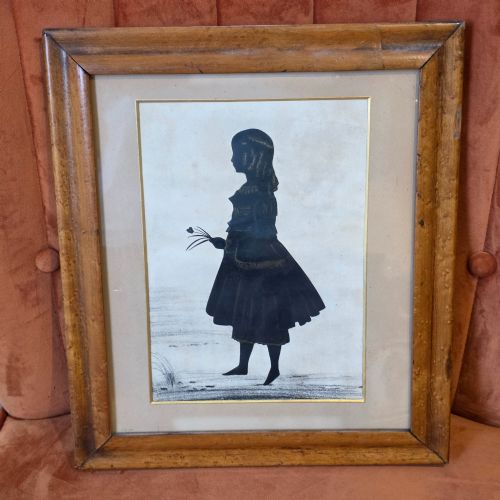
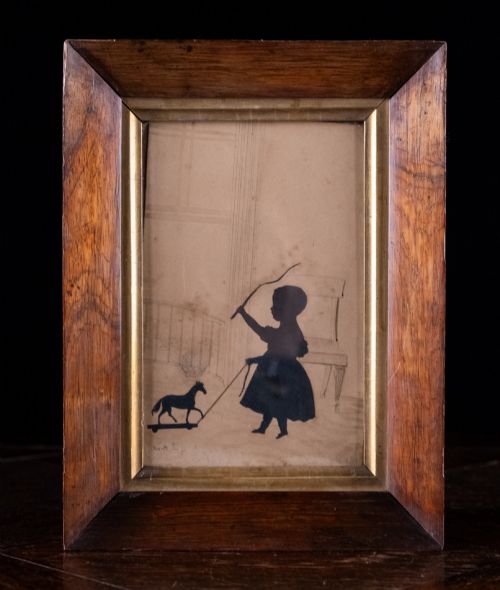
A cut paper portrait is a profile likeness formed from dark paper and mounted behind glass, capturing sitters from the Georgian, Regency, and Victorian periods. Most pieces on this page originate from the nineteenth century, ranging from simple head and shoulders profiles to full length conversation pieces involving children, animals, and multiple figures.
The subjects appear as gentlemen, ladies, and children, occasionally enhanced with ink, watercolor, or gold leaf highlights. Common formats include single framed silhouettes alongside pairs and family groups set within maple, ebony, or gilded frames.
Work spans unsigned British school pieces through to documented works associated with known galleries and artists of the era. The simpler profile images sit alongside elaborate full length compositions complete with detailed costume and background elements.
Materials and construction
Makers cut these profile portraits directly from dark paper using fine scissors or blades, relying entirely on the precision of the outline to convey age, expression, and costume. Artists often mounted the finished black paper against a pale background or directly onto card.
Many examples incorporate delicate watercolor or ink details drawn onto the paper surface to define hair, lace, and clothing folds, sometimes accented with gold leaf. Gilded highlights and bronze paint bring depth to buttons, waistcoats, and jewellery.
Cut Paper Portrait Retail Price Guide 2026
Typical asking prices for cut paper portrait among the pieces listed under this phrase on Sellingantiques today, from the lower quarter to the upper quarter. They describe what is for sale here now, not the wider market.
Several Victorian artists specialised in cutting dogs and horses with the same solemn dignity afforded to human sitters.
Markers of quality
Quality rests in the dexterity of the cutting, where clean, confident scissor work captures the exact drape of a garment, the set of a collar, and the specific hairstyle of the sitter without hesitation or ragged edges. Lesser examples rely heavily on painted details to rescue a weak silhouette.
William James Hubard·Augustin Edouart·Frederick Frith·Alfred Darbyshire·Nathaniel Bermingham
The Cut Paper Portrait Glossary
- Silhouette
- A portrait represented as a solid shape, usually a profile in black against a pale background. The form takes its name from Étienne de Silhouette, a French finance minister.
- Conversation piece
- An artwork depicting a group of figures engaged in a common activity or conversation. These pieces often show family members with pets or objects in domestic settings.
- Gilt
- A thin layer of gold or gold leaf applied to frame mouldings or directly onto the portrait surface. This technique illuminates the edges of the composition.
- Bust
- A portrait sculpture or image showing a person from the chest up. Most standard silhouette portraits take this format.
- Full length
- A portrait showing the entire figure of the sitter from head to toe. These compositions often include floor lines, furniture, or pets.
Cut Paper Portrait: Frequently Asked Questions
How were these silhouettes displayed?
Original owners hung these portraits in domestic interiors, frequently grouping family members or pairing husband and wife profiles together on a wall. The compact scale suited intimate parlours and drawing rooms.
Frames made from maple, ebony, or gilded wood protected the delicate paper from handling and environmental damage.
Are all silhouettes signed by the artist?
Many surviving cut paper portraits are unsigned, originating from regional practitioners or amateur artists working in the British school. Signed examples or works carrying gallery stamps are less common.
Attributions often rely on distinctive cutting techniques, framing styles, or old inscriptions found on the reverse of the backing board.
How do I care for antique paper art?
Antique paper art requires protection from direct sunlight to prevent the dark paper and watercolor pigments from fading. Keeping the piece away from damp environments ensures the paper and backing board remain stable.
Original glass and frames should be left intact where possible, as altering the mount can disturb the historic sealing of the artwork.