


Victorian Silhouette Portrait
These Victorian silhouette portraits capture a quiet likeness in ink and cut paper, offering a direct window into nineteenth-century life.
Victorian Silhouette Portrait
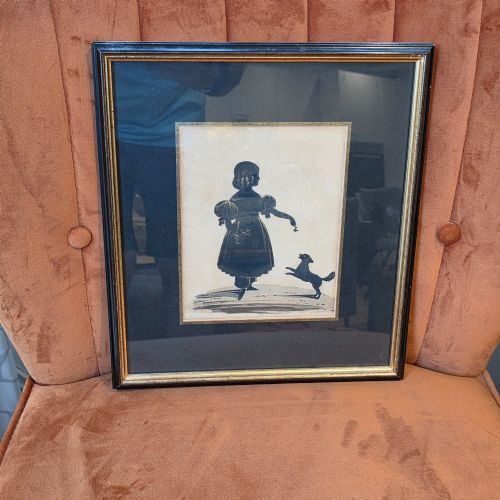
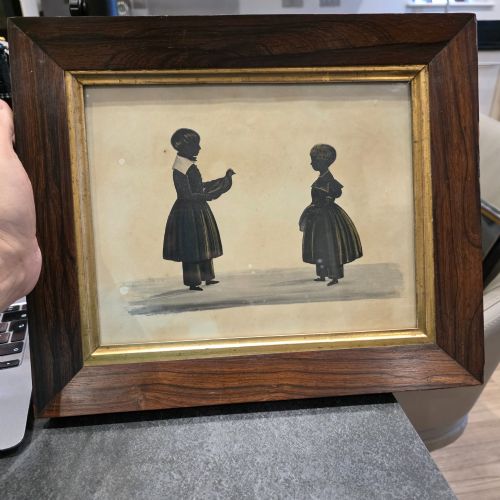
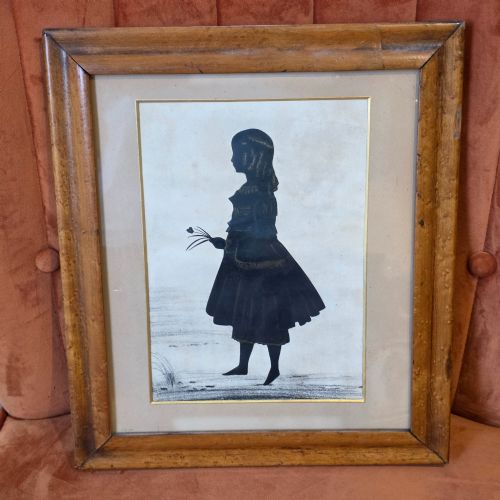
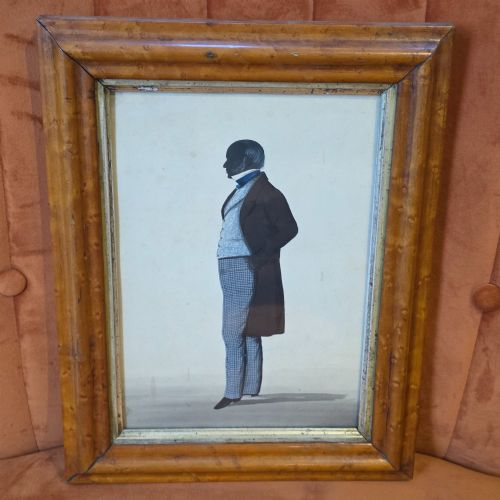
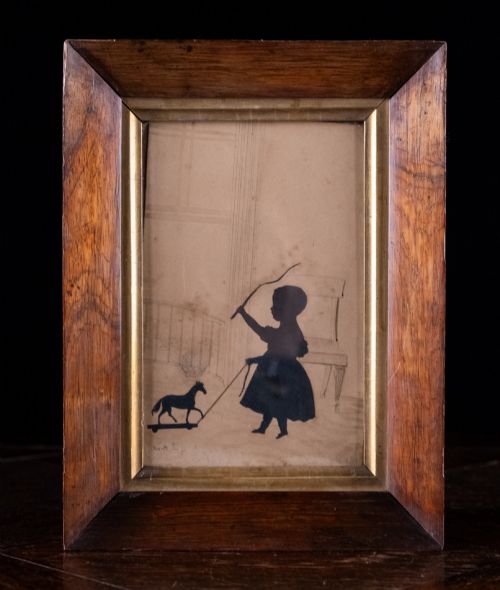
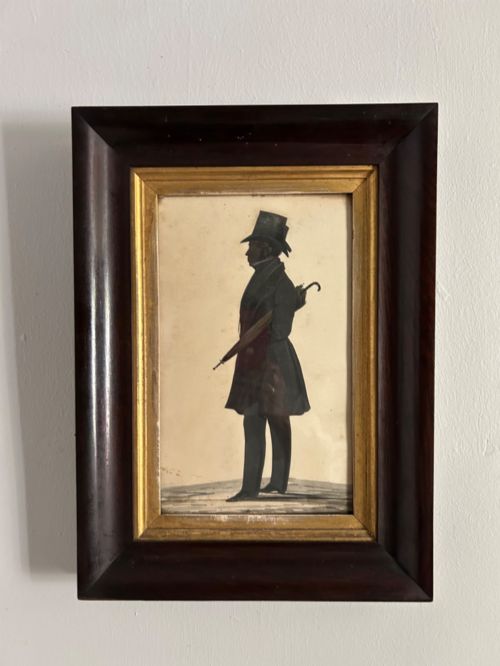
A victorian silhouette portrait presents a profile or full-length figure of a person, child, or animal, rendered in solid black against a pale background. These works range from simple profile cuts to detailed conversation pieces involving multiple figures and animals.
The pieces on this page appear in various formats, including framed artwork, wall art, and miniature watercolours. Many examples date from the nineteenth century, encompassing Regency and Victorian periods, as well as specific years such as 1840, 1843, 1850, 1860, and 1880.
Subjects include gentlemen, ladies, children, families, maids, and jockeys, sometimes accompanied by dogs or horses. They frequently arrive in original frames made of wood or rosewood, often protected by glass.
What Varies in Quality
Execution and precision separate the finest works from simpler examples, visible in the sharpness of the hand-cutting and the fineness of any added watercolour details. Full-length figures and complex conversation pieces involving animals or multiple people demonstrate greater skill than basic profile cuts.
The presence of a known signature, a recorded studio stamp such as the Hubard Gallery or Royal Victoria Gallery, and a well-preserved period frame elevate a piece. Original materials, including period glass and rosewood surrounds, contribute to the integrity of the object.
Several Victorian silhouettes feature beloved family pets, including dogs and horses joining their owners in profile.
William James Hubard·Augustin Edouart·Frederick Frith·Alfred Darbyshire·Skeolan
The Victorian Silhouette Portrait Glossary
- Cut paper
- A technique where the artist shapes the silhouette directly from paper using scissors or a small knife. The resulting paper profile is then mounted onto a contrasting backing sheet.
- Conversation piece
- An artwork depicting a group of people engaged in a shared activity or interaction, rather than a solitary sitter. In silhouette work, these often include family members, children, and pets in domestic settings.
- Gilt
- A thin layer of gold leaf or gold paint applied to highlight details on the portrait or frame. It frequently accents uniform buttons, jewellery, or the inner edge of the mount.
Victorian Silhouette Portrait: Frequently Asked Questions
What materials make up a victorian silhouette portrait?
These works rely primarily on paper, ink, and watercolour for the image itself. Artisans often mounted them behind glass within wood or rosewood frames, sometimes incorporating brass fittings and gold leaf highlights.
Backgrounds typically consist of pale paper or card, which creates a sharp contrast with the black cut paper or painted silhouette. Original framing materials help retain the historical context of the piece.
How do I distinguish Regency pieces from later Victorian ones?
Regency examples often reflect the neoclassical clothing styles of the early nineteenth century, such as high waistlines for women and specific tailcoat cuts for men. Later Victorian pieces from the 1850s, 1860s, or 1880s display the fuller skirts, hairstyles, and domestic settings characteristic of those decades.
Looking at the framing styles and any accompanying handwritten notes on the reverse can also provide clues to the exact decade of creation.
Were all silhouettes cut by hand?
Many professional artists and travelling practitioners cut these portraits by eye using small scissors or blades without drawing a preliminary outline. This hand-cut method produces crisp edges and distinctive individual characteristics in the profiles.
Other examples were painted directly onto paper or glass using black ink or pigment, sometimes enhanced with fine watercolour brushwork for clothing details.
How should I display and care for framed silhouettes?
Keep framed pieces away from direct sunlight to prevent the paper, ink, and watercolour from fading over time. Stable indoor humidity levels protect the paper and the original wood or rosewood frames from warping.
Leave original backing papers and seals intact where possible, as tampering with the reverse can expose the delicate silhouette to dust and damage.