


Maple Framed Watercolour
Maple framed watercolour paintings bring soft botanical, portrait and still life subjects from the Georgian, Regency and Victorian periods into modern rooms.
Maple Framed Watercolour
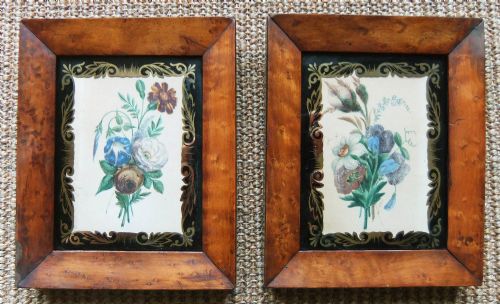
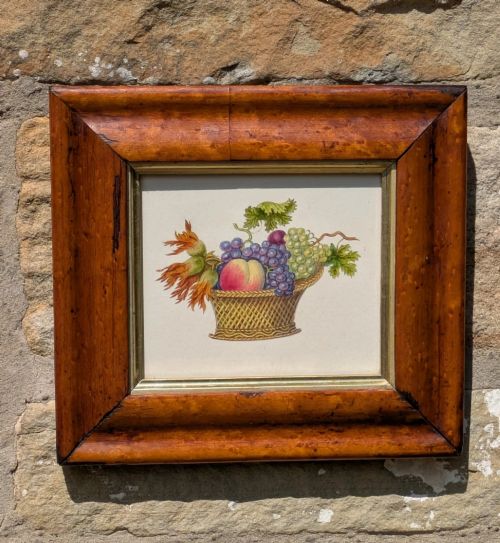
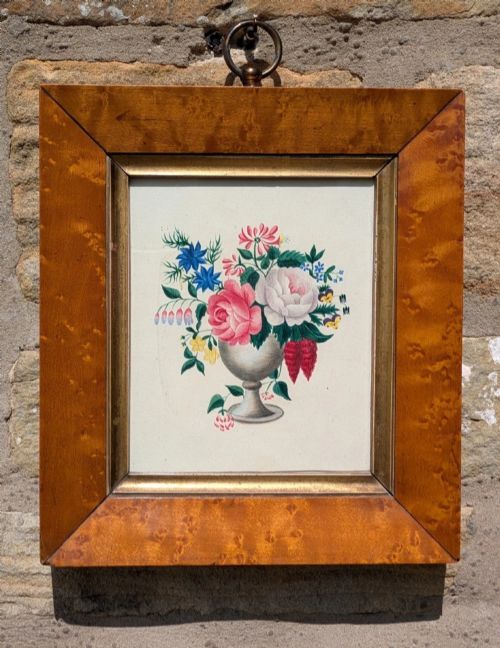
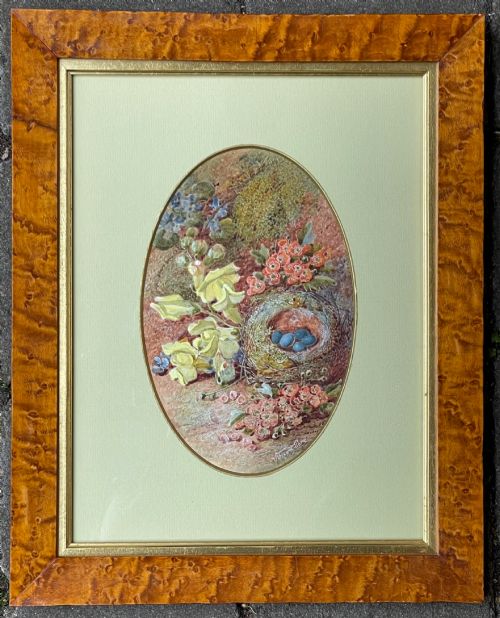
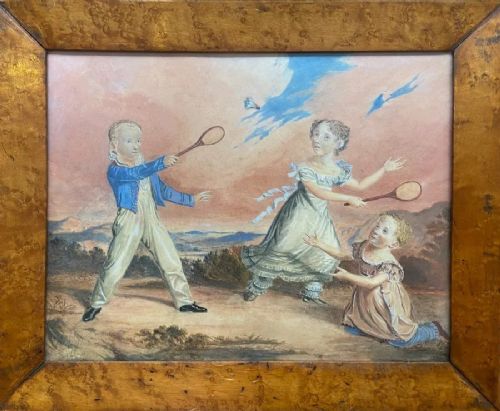
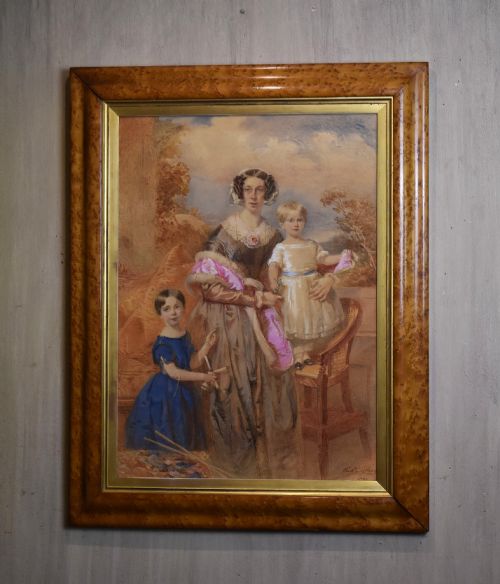
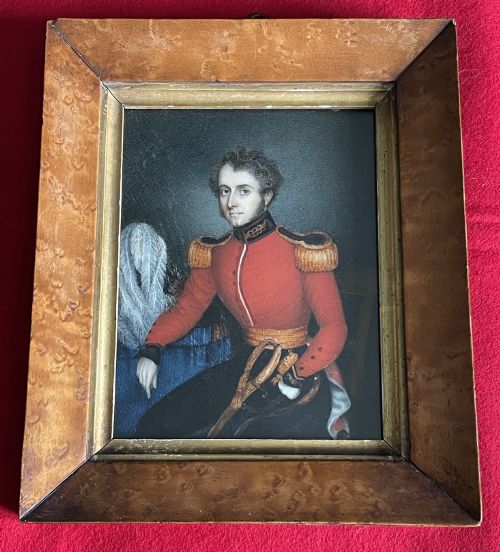
A maple framed watercolour search brings up delicate paper works depicting botanical studies, fruit baskets, fashion plates and miniature portraits. These pieces span the Georgian, Regency and Victorian eras, capturing domestic scenes alongside naive interiors.
Buyers frequently encounter portraits and still life paintings produced across the nineteenth century and into the early twentieth century. These works showcase the transition from Regency elegance toward Victorian naturalism and folk art traditions.
Subjects range from single figures and children to cattle scenes and military officers, all preserved beneath glass. The accompanying timber surrounds highlight the distinctive grain patterns characteristic of maple and burr wood.
Materials and construction methods
Watercolour pigments are applied directly to paper substrates, frequently incorporating gold leaf accents for enhanced detail. These delicate painted sheets are protected behind glass panes to prevent environmental degradation.
The distinctive frames utilise maple veneer or solid wood constructions, sometimes paired with gilt metal slips. This traditional framing technique accentuates the warm tonal variations inherent in the timber.
Maple Framed Watercolour Retail Price Guide 2026
Typical asking prices for maple framed watercolour among the pieces listed under this phrase on Sellingantiques today, from the lower quarter to the upper quarter. They describe what is for sale here now, not the wider market.
Listings feature works across the Georgian, Regency, Victorian and Edwardian periods, utilising paper, watercolour, glass, maple veneer, gold leaf and gilt metal.
Judging the quality of the work
Quality rests upon the precision of the brushwork and the preservation of the paper support. Finer examples display confident pigment application and minimal fading across the painted surface.
The joinery and finish of the timber frame also dictate value, with well-figured maple veneers showing greater depth and grain complexity than plain wooden mouldings.
Vincent Clare·Henry Travis·Frederick Tatham·J F Marie Huet Villiers·Edward Smyth
The Maple Framed Watercolour Glossary
- Watercolour
- A painting method in which the paints are made of pigments suspended in a water-based solution. This technique allows for translucent washes and delicate tonal gradations on paper.
- Maple Veneer
- A thin decorative layer of maple wood applied to a base timber to display the distinctive grain. This material creates a warm, figured border around historical artwork.
- Regency
- A British historical period spanning the early nineteenth century noted for classical elegance in art and design. Pieces from this era often feature refined botanical or fashion subjects.
- Portrait Miniature
- A small, highly detailed painting depicting a person, executed on paper, ivory or vellum. These intimate works frequently date from the Georgian and Victorian eras.
Maple Framed Watercolour: Frequently Asked Questions
How do I date a maple framed watercolour?
Dating relies upon stylistic clues within the subject matter, clothing and framing techniques. Georgian and Regency pieces show distinct fashion and palette choices compared to later Victorian works.
Examining the backboards, paper types and glazing methods also helps establish the approximate decade of production.
Where should I hang these watercolours?
These works suit dining rooms, studies and hallways where direct sunlight is limited. Protecting the paper from harsh UV rays prevents the watercolour pigments from fading over time.
Pairing them with traditional or contemporary neutral wall colours lets the warm timber tones of the maple frame stand out.
Are these frames original to the paintings?
Many pieces retain their period frames, which utilise maple veneer or burr wood typical of nineteenth-century framing workshops. Original surrounds often show natural patina and minor age-related wear.
Matching timber types and construction methods generally indicate a contemporary pairing of art and frame.
What subjects are most common?
The selection includes botanical studies, fruit arrangements, family portraits and naive interior scenes. Military subjects and animal paintings also appear among nineteenth-century examples.
Each genre reflects the prevailing aesthetic tastes of its specific period, from Regency botanical precision to Victorian naturalism.