


Biedermeier Cabinet
When searching for a biedermeier cabinet, collectors encounter practical storage furniture built with clean geometric lines and striking wood veneers across nineteenth-century continental Europe.
Biedermeier Cabinet
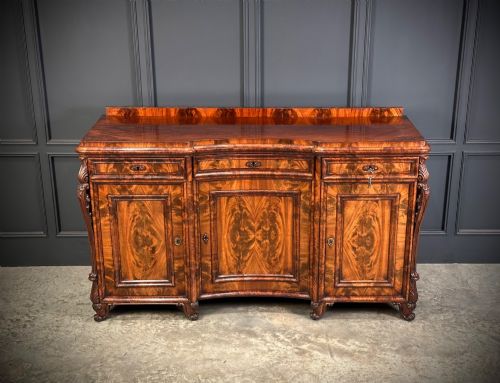
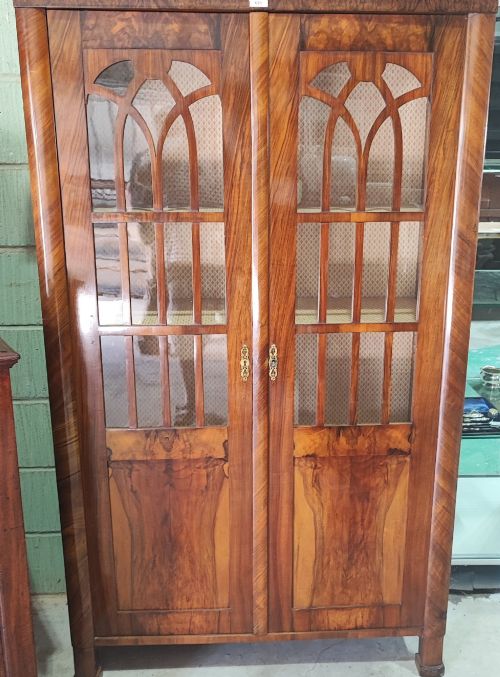
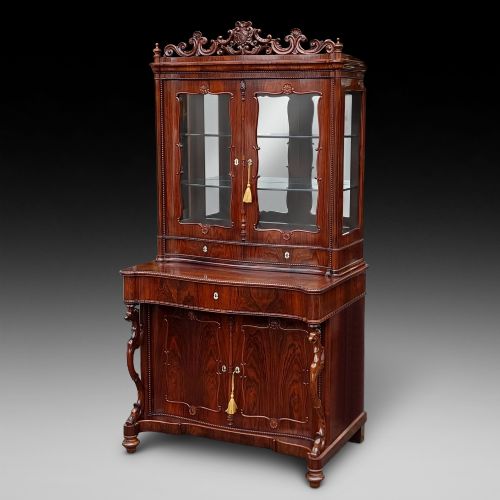
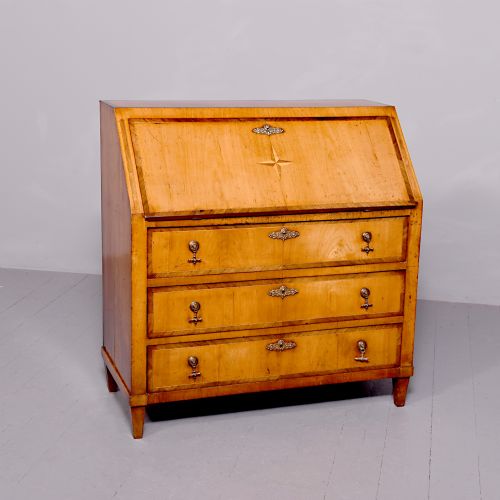
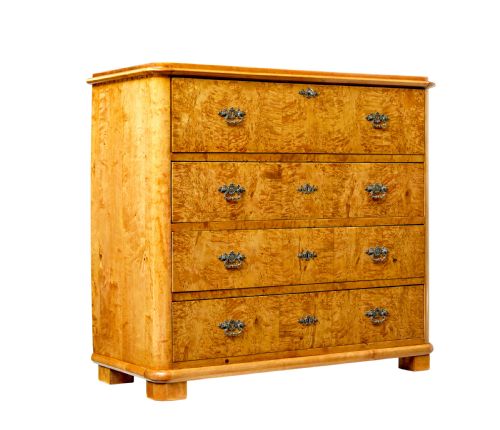
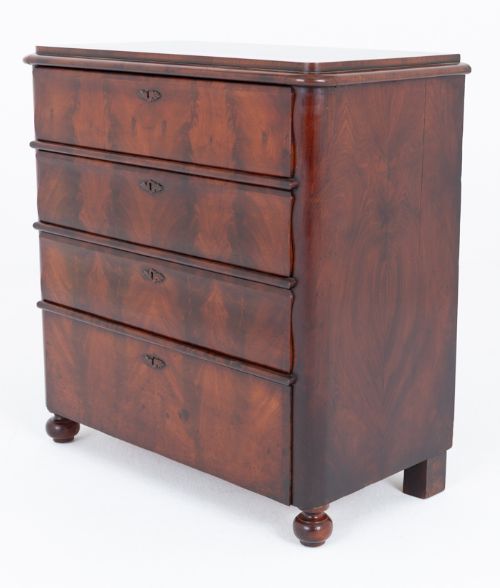
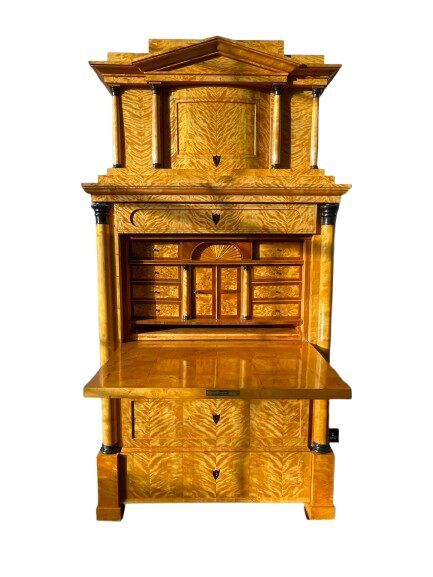
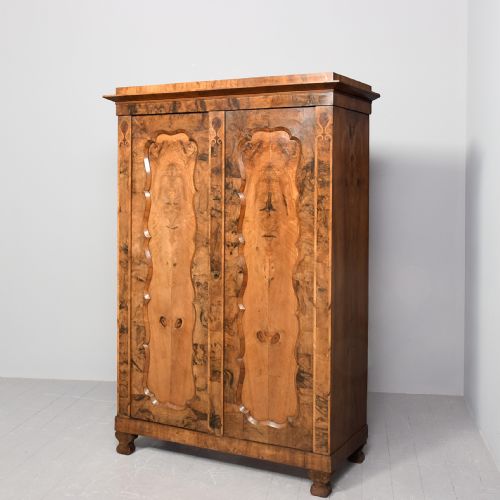
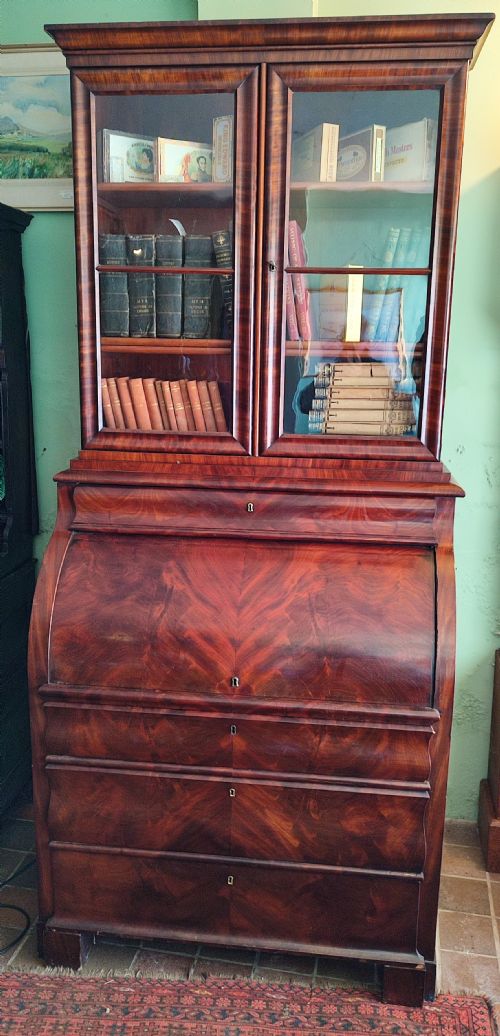
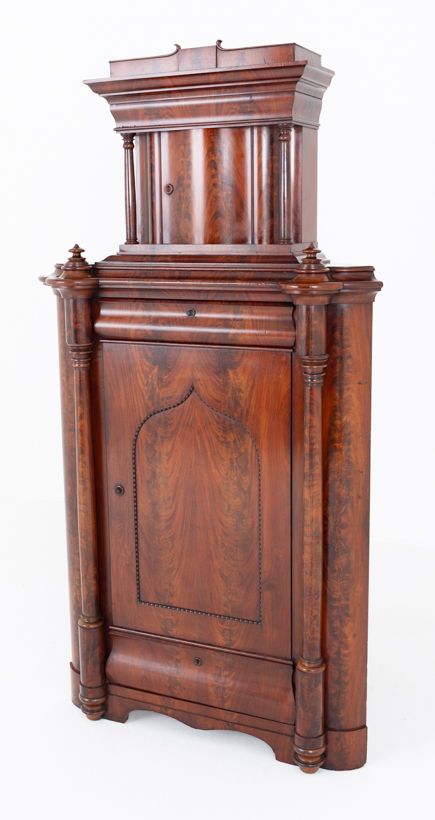
A biedermeier cabinet encompasses a wide variety of domestic storage forms, including tall secretaires, display cases, corner cupboards, and chests of drawers produced primarily during the nineteenth century. These pieces focus on architectural restraint, abandoning heavy ornamentation in favour of unadorned surfaces that highlight the natural figure of the timber.
The versions most commonly met on this page originate from Sweden, Denmark, and wider continental Europe, often rendered in native birch, ash, or imported mahogany. They range from compact bedside commodes to imposing bookcase cabinets designed to anchor a principal reception room.
Makers adapted classical proportions to suit domestic interiors, creating furniture that balanced utility with visual harmony. Buyers typically select these items to bring warmth and understated elegance into modern or traditional spaces alike.
Materials and construction methods
Cabinetmakers relied heavily on birch, mahogany, and walnut, often applying thin veneers to pine or oak carcases to create symmetrical patterns across drawer fronts and doors. Flame mahogany and burr birch provided dramatic contrast when matched centrally along the grain.
Structural joinery prioritized stability and seamless exterior planes, concealing drawer construction behind flush facades and integrating doors tightly into rebated frames. Brass mounts and ebonised details occasionally accented the primary wood without disrupting the planar geometry.
Some secretaires hide tiny secret compartments behind dummy book spines.
Distinctions in quality
Quality rests primarily in the selection and matching of the wood veneer, where master craftsmen mirrored figures symmetrically across large expanses. Superior examples maintain crisp architectural mouldings and original interior fittings rather than altered or replaced components.
The integration of secondary timbers and the precision of the joinery distinguish workshops of higher standing from standard regional production. Surface preparation that retains a soft, historic polish rather than a heavy modern gloss marks the finer pieces.
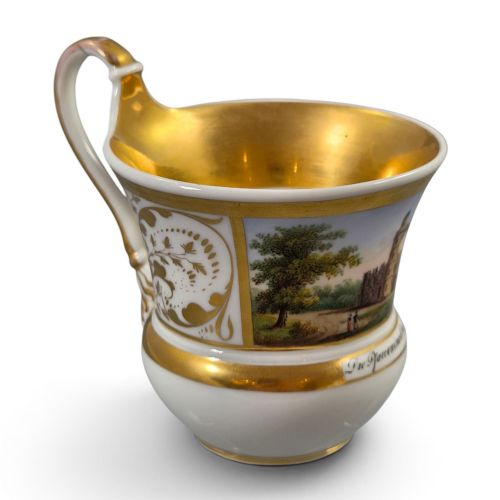
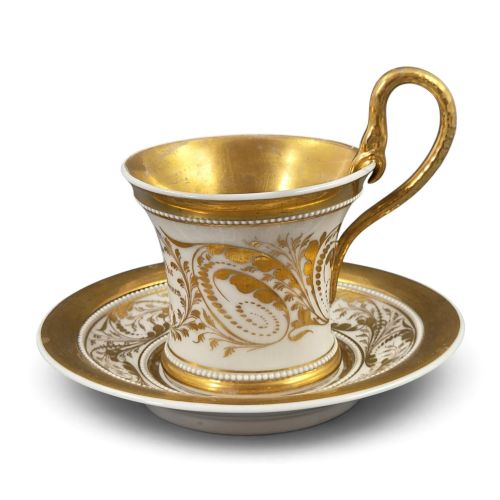
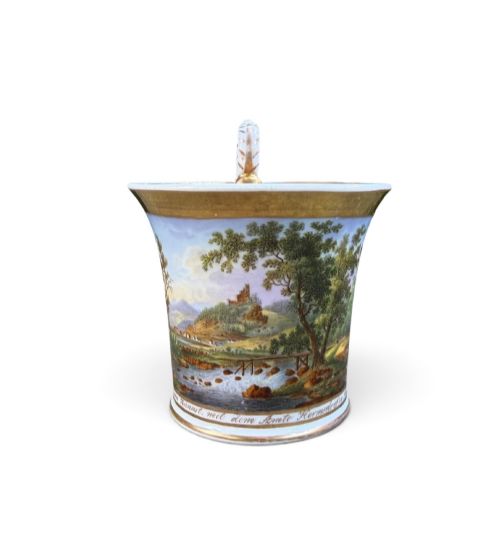
KPM Berlin
The Biedermeier Cabinet Glossary
- Secretaire
- A cabinet incorporating a fitted writing desk with a drop-down flap or sliding drawer. This form conceals small pigeonholes and inner drawers behind a secure vertical facade.
- Veneer
- A thin layer of figured wood applied over a secondary timber carcase. This technique allowed makers to display dramatic grain patterns without consuming scarce solid hardwoods.
- Escritoire
- A tall writing cabinet designed for personal correspondence and document storage. These pieces frequently feature a central fall-front writing surface above banks of wide drawers.
- Ebonised
- Wood treated with a dark stain or finish to simulate ebony. Makers utilised this process to create sharp visual borders and architectural contrast against pale birch grounds.
- Commodes
- Low freestanding storage units fitted with multiple drawers. Continental examples often display serpentine fronts and highly figured burr veneers.
Biedermeier Cabinet: Frequently Asked Questions
Where were these cabinets made?
Production centred across Germanic lands, Austria, and Scandinavian countries including Sweden and Denmark during the nineteenth century. Regional workshops adapted the aesthetic using locally available timbers like birch alongside imported mahogany.
Scandinavian makers favoured pale veneers, while continental workshops frequently employed darker fruitwoods and rich walnut figures.
How do I use a secretaire daily?
The drop-down writing flap pulls forward to provide a stable wooden surface for correspondence or laptop use. Internal compartments organise stationery while lower drawers handle larger storage needs.
Most writing flaps lock securely with original keys, keeping private papers contained when not in use.
Are these pieces suitable for modern homes?
Their restrained architectural lines allow them to blend easily into contemporary interiors without overwhelming a room. Tall bookcases and corner cabinets provide substantial vertical storage in compact footprints.
The warm tones of birch and mahogany introduce natural texture to minimalist spaces.
How do I identify Swedish pieces?
Swedish examples typically utilise pale blonde birch, masur birch, or satin birch veneers combined with minimalist neoclassical proportions. The surfaces often present a lighter, golden hue compared to darker continental furniture.
Internal drawer construction and secondary pine framing further point toward Scandinavian regional work.