


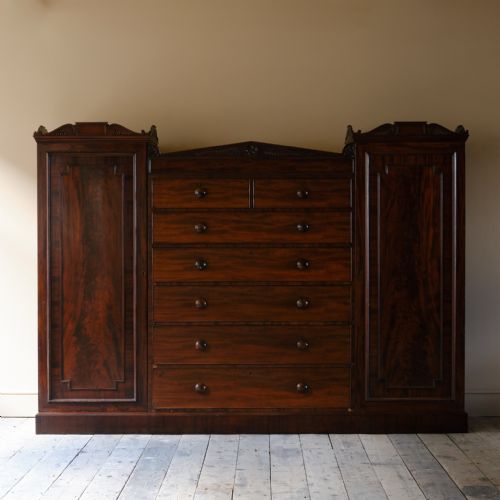


Gentlemans Clothes Press
A gentlemans clothes press is a traditional storage piece designed to keep garments orderly, offering serious presence and deep historic utility.
Gentlemans Clothes Press
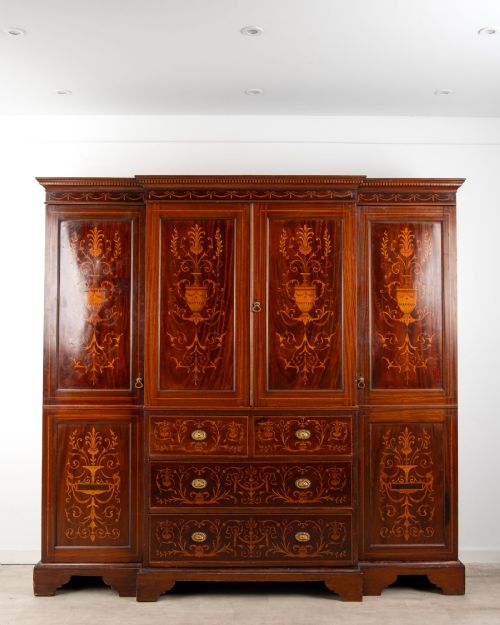
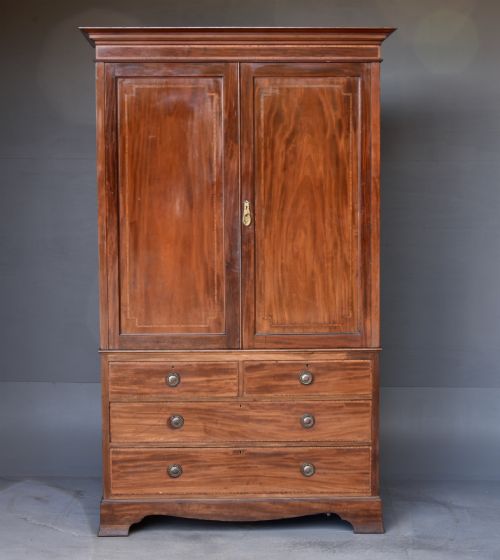
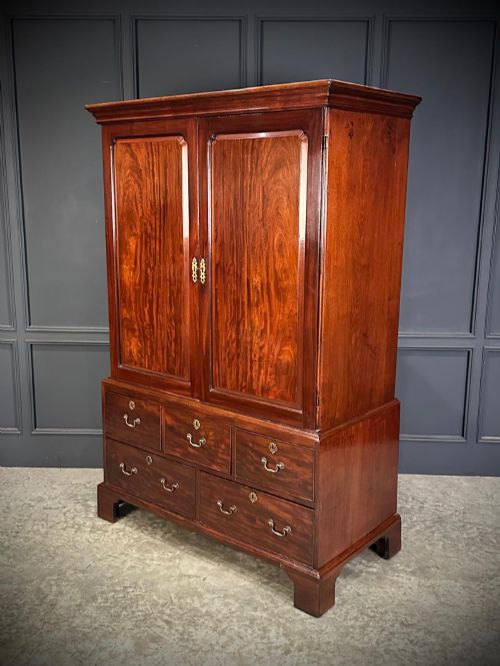
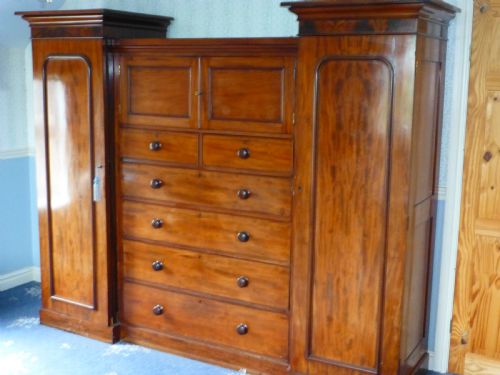
A gentlemans clothes press bridges the gap between a linen press and a wardrobe, providing dedicated space for folded garments and hanging items alike. These pieces serve as substantial storage anchors, often taking the form of breakfront compactums or cabinet-on-chest configurations.
The selections span from the robust proportions of the eighteenth century through the Regency and Victorian eras, up to Edwardian iterations and later Art Deco interpretations. Mahogany dominates the record, alongside walnut, oak, satinwood and pollard oak.
Buyers encounter everything from simple hanging wardrobes to elaborate combination compactums featuring internal sliding trays and drawers. These forms reflect the changing domestic requirements of gentlemen across multiple centuries of British and Irish craftsmanship.
Materials and Construction
Cabinetmakers relied heavily on solid mahogany and flame mahogany veneers, often enhanced with satinwood banding, brass hardware and glass elements. Oak and walnut appear frequently, providing sturdy structural carcases for both Georgian presses and later Victorian wardrobes.
Construction techniques involve traditional dovetailing for internal drawers and sophisticated carcase framing to support large panelled doors and breakfront cornices. Artisans selected timber grain deliberately, matching flame mahogany and burr walnut across wide drawer fronts and cupboard doors.
Listings for this phrase span multiple distinct periods, ranging from 18th Century Georgian pieces to 1930 Art Deco designs.
Assessing Quality and Execution
Quality rests on the selection of timber figures and the integrity of the internal configuration, such as original sliding linen trays or specialised hanging compartments. Superior examples display meticulous attention to timber matching, particularly where satinwood banding or flame mahogany veneers meet.
The finesse of the joinery, the weight of the brass fitments and the preservation of original internal fittings dictate the standing of a piece. Finer workshops delivered crisply carved mouldings and seamless drawer operation that endured centuries of daily domestic use.
maples & co·Gillows·Robert Strahan of Dublin
The Gentlemans Clothes Press Glossary
- Compactum
- A multi-compartment wardrobe combining hanging space, drawers and linen slides within a single unified cabinet. This form maximises storage efficiency without requiring an oversized footprint.
- Breakfront
- A piece of furniture where the central section projects forward from the flanking outer sections. This architectural arrangement creates depth and visual rhythm across large wardrobes.
- Linen Press
- A tall cabinet specifically designed with internal sliding trays for storing folded textiles and garments. Lower sections frequently incorporate chest of drawers configurations.
- Satinwood
- A pale, hard timber native to Ceylon and India, prized for its lustrous golden sheen and smooth texture. Cabinetmakers utilised it extensively for banding and decorative inlay work.
Gentlemans Clothes Press: Frequently Asked Questions
What is the difference between a wardrobe and a clothes press?
A traditional wardrobe focuses primarily on vertical hanging space for garments, while a clothes press incorporates internal sliding trays or shelves alongside hanging sections.
Historically, presses were designed specifically for folded linen and tailored menswear before full-length hanging became the domestic standard.
How do I date a mahogany gentleman's press?
Dating relies on observing structural characteristics, timber selection, and hardware styles across different design periods from the eighteenth century onward.
Georgian examples often display cleaner architectural lines and solid brass handles, whereas Victorian and Edwardian pieces frequently introduce larger breakfront proportions and complex internal configurations.
Can these large wardrobes fit into modern bedrooms?
Many of these pieces are substantial architectural furniture items that require careful measurement of ceiling height and doorway clearance prior to placement.
Compactum models and breakfront wardrobes often dismantle into modular sections, including cornices, base units and side carcases, to facilitate easier transport and installation.
How should I maintain the wood finish?
Mahogany, walnut and oak surfaces benefit from regular dusting with a soft, dry cloth and occasional treatment with quality traditional wax.
Avoid placing antique timber pieces in direct sunlight or near direct heat sources to prevent the timber veneers from drying and splitting over time.