
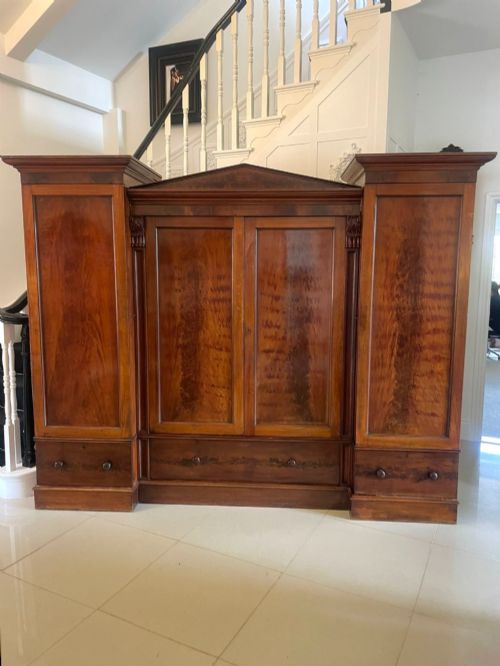
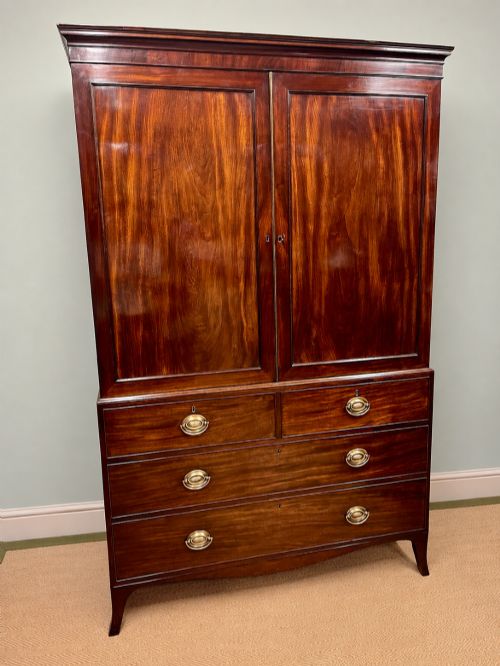
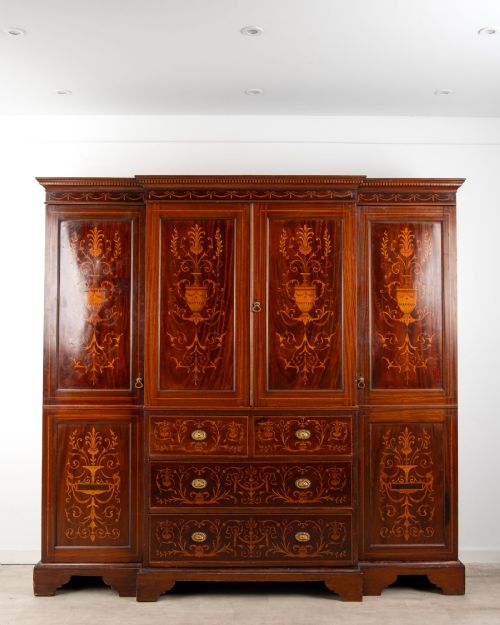
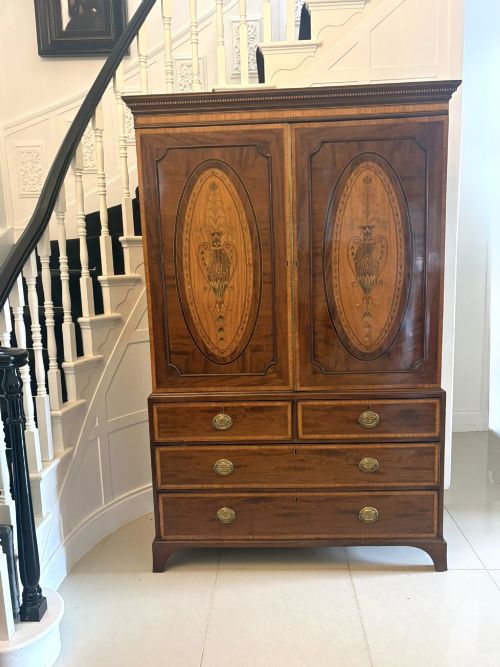
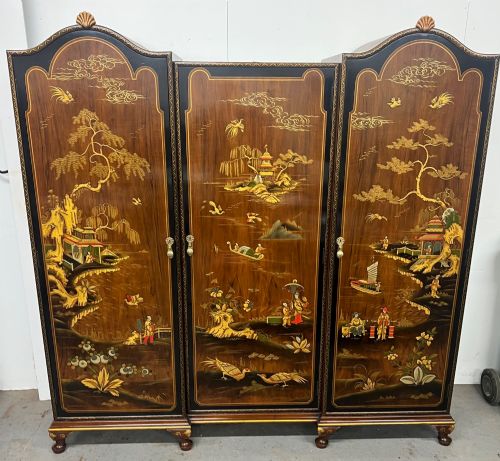
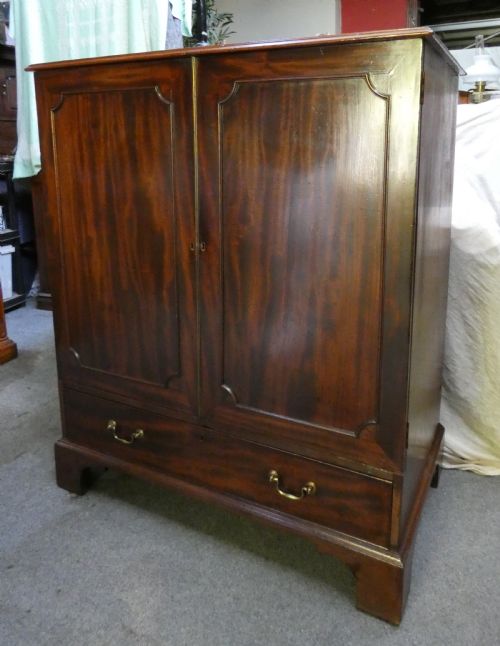
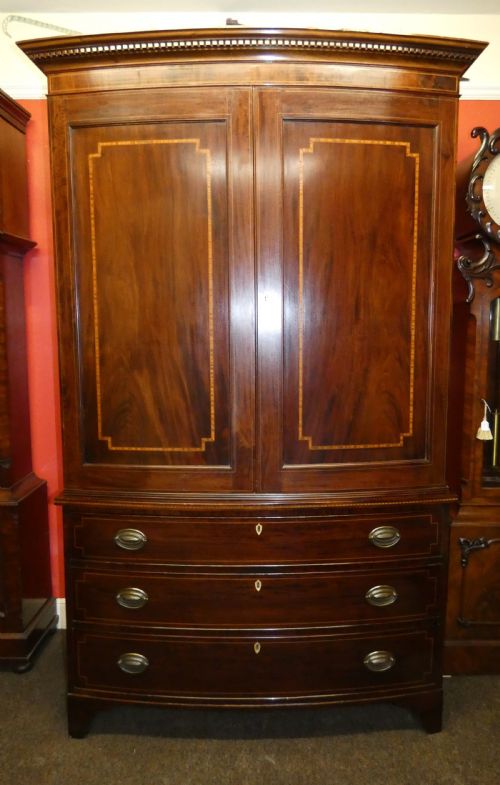
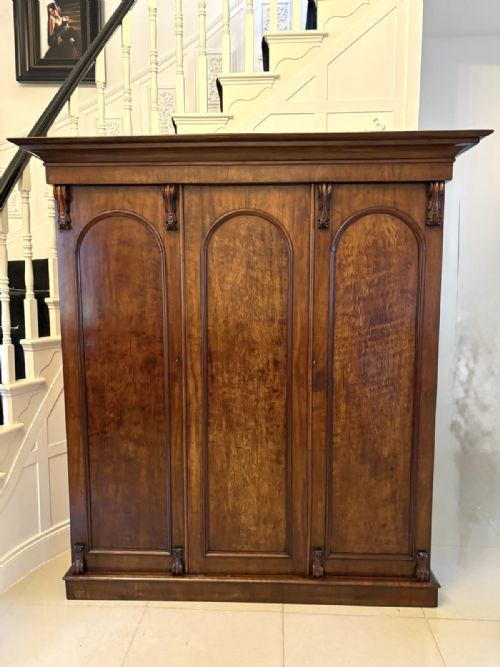
Antique Mahogany Clothes Press
An antique mahogany clothes press is a substantial storage piece built for folding textiles, bringing Georgian and Regency craftsmanship directly into your bedroom.

Understanding the Antique Mahogany Clothes Press
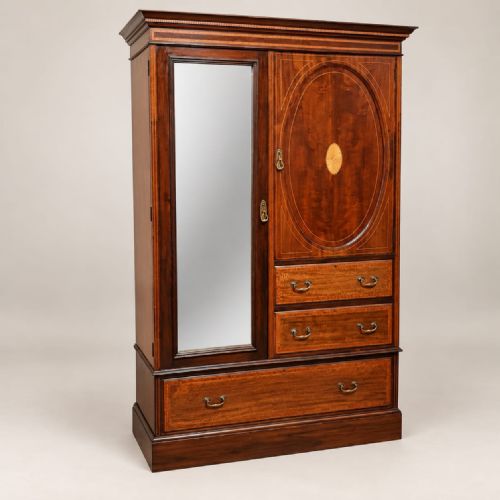
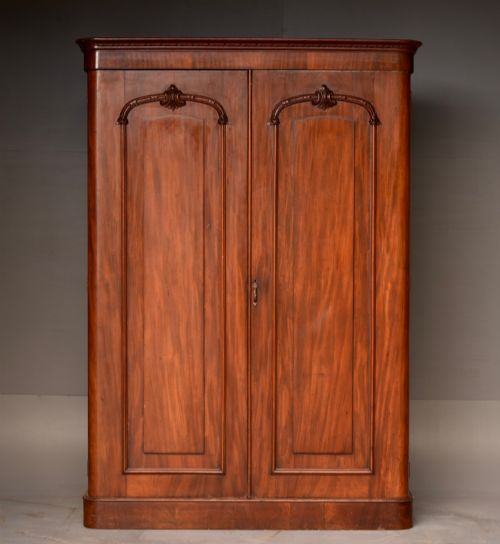
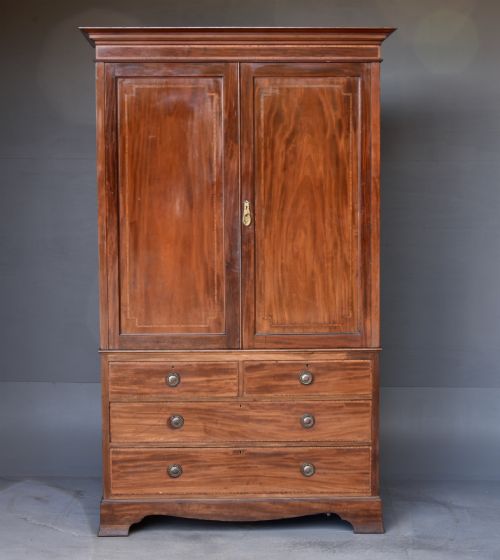
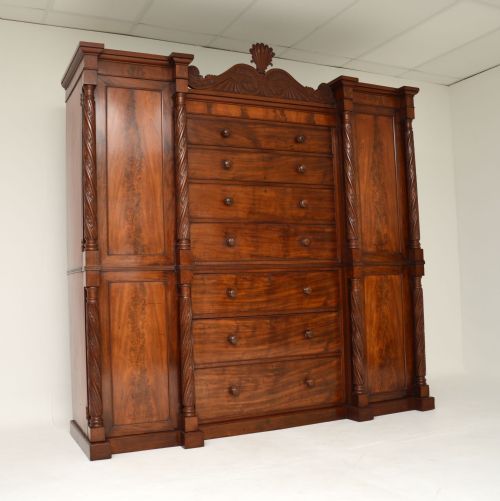
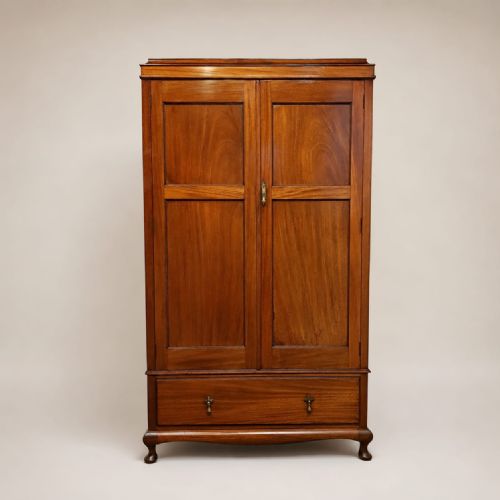
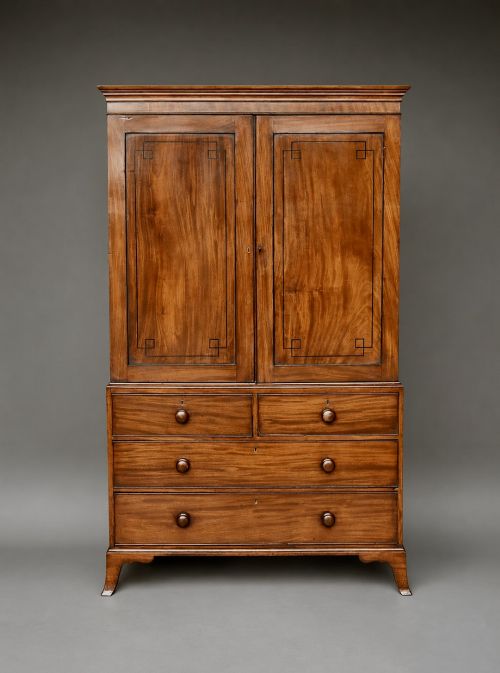
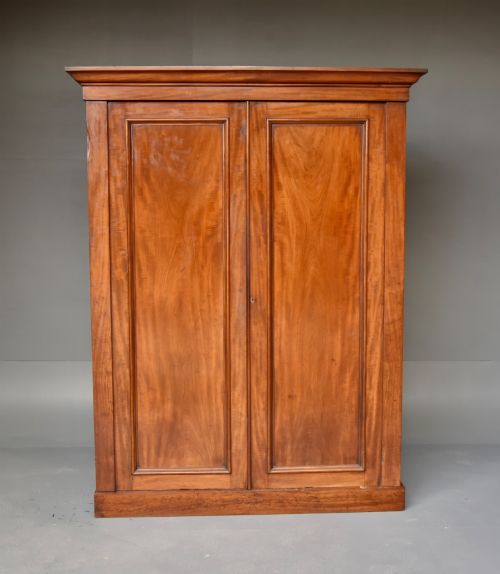
When searching for an antique mahogany clothes press, you examine large case furniture designed to house folded garments and linen before modern wardrobes became common. The pieces on this page span the 18th century through the Victorian era, encompassing Georgian, Regency, and George IV styles.
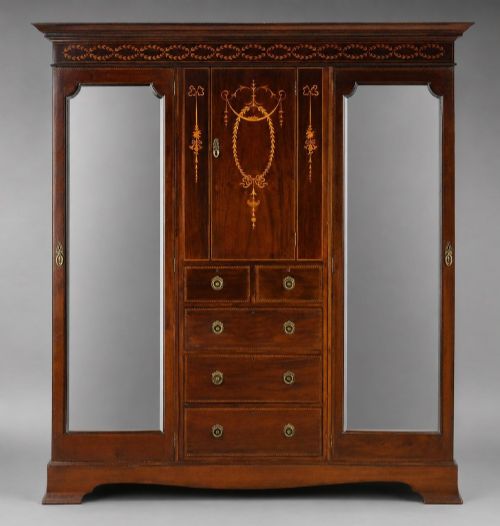
You will encounter various formats, from tall double wardrobes and four-door cabinets to low dwarf presses and narrow Channel Island style variants. Many examples combine hanging space with internal sliding trays or drawers hidden behind panelled upper doors.
The architectural presence of these items reflects domestic storage needs from periods when textiles were precious and required careful flat storage. Proportions vary from compact Edwardian compactums to expansive 18th century specimens.
Materials and Construction
Cabinet makers utilised solid timber alongside flame mahogany veneer to achieve rich grain patterns across wide panel surfaces. These woods were worked by hand, often incorporating subtle inlay work or polished glass elements in associated compartments.
Structural integrity relied on dense timber framing, housing internal trays and deep drawers constructed with traditional joinery. Brass hardware such as escutcheons, handles, and hanging fittings completed the functional assembly of the cabinet doors and drawers.
Retail Price Guide 2026
Typical UK retail prices for mahogany clothes press, calculated from the Sellingantiques database of over a million retail prices indexed since 2003. This retail price guide relies exclusively on Sellingantiques data; no external sources or auction records are used, so the figures do not describe the wider market.
Listings feature mahogany, brass, glass, and flame mahogany veneer across Georgian, Victorian, and Regency styles.
Distinguishing Quality in Cabinet Work
Superior examples display careful selection of timber figures, where flame mahogany veneer is matched symmetrically across the front elevation. The depth of the colour and the crispness of the mouldings define the level of craftsmanship invested in the piece.
Internal execution separates standard utility storage from high cabinet making, visible in the smoothness of the sliding linen trays and the precision of the drawer linings. Original brasses and unaltered interior configurations elevate the integrity of surviving specimens.
Gillows·Denby & Spinks
The Antique Mahogany Clothes Press Glossary
- Clothes press
- A tall storage cabinet traditionally fitted with sliding trays for linen in the upper section and deeper drawers below. This form predates the standard hanging wardrobe.
- Flame mahogany veneer
- A decorative wood slicing displaying a distinctive swirling flame-like grain pattern. Cabinet makers applied this thin layer over secondary timbers to create dramatic visual surfaces.
- Dwarf press
- A shortened version of the standard tall cabinet, built lower to the ground. These shorter pieces offer surface top space while retaining internal sliding trays.
- Compactum
- A multi-functional wardrobe combining various internal storage arrangements such as clothes presses, hanging space, and drawers into one unified case.
- George IV style
- Design characteristics spanning the reign of George IV, bridging late Regency heaviness and early Victorian proportions. Pieces from this era often show robust classical influences.
Frequently Asked Questions
What is a clothes press?
A clothes press is a large wooden cabinet historically used for storing folded garments and linens on interior sliding trays.
Upper doors typically conceal these trays, while lower sections contain multiple wider drawers for additional storage.
How do I date an antique press?
Dating relies on observing structural characteristics, timber types, and decorative styles associated with periods like the 18th century or Regency era.
Handle styles, foot designs, and construction methods inside the drawers offer further clues regarding the manufacturing decade.
Can I hang clothes inside?
Some variants include internal hanging space alongside the traditional sliding trays, particularly larger Victorian and Edwardian examples.
Buyers should check the internal depth and configuration, as many early Georgian presses were built exclusively for flat linen storage.
How do I care for mahogany?
Maintenance involves keeping the timber away from direct heat sources and sudden humidity changes to prevent veneer splitting.
Regular dusting with a dry cloth and occasional application of appropriate wax helps preserve the natural sheen of the polished wood.