
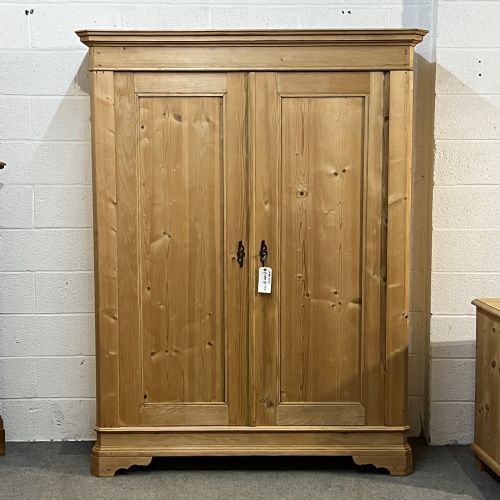
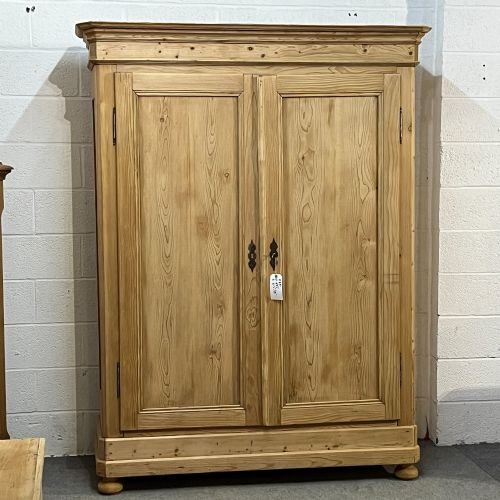
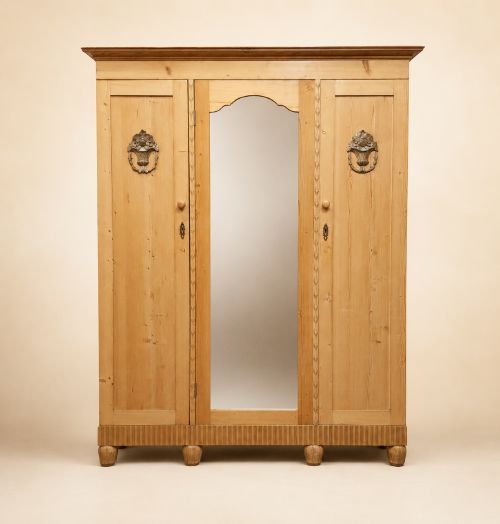
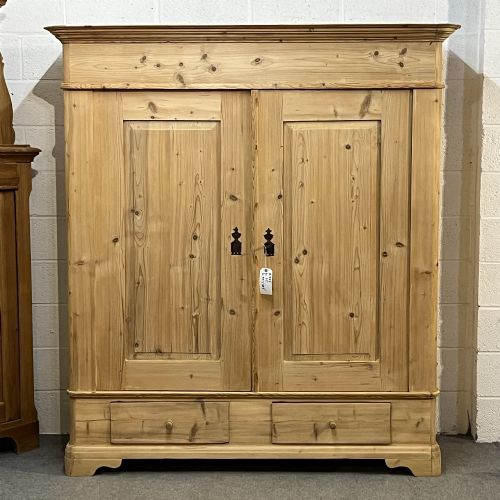
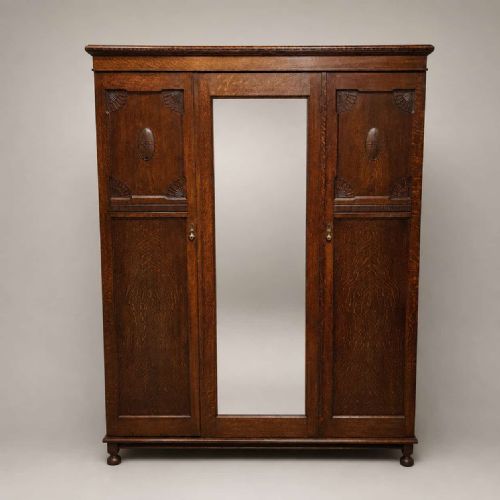
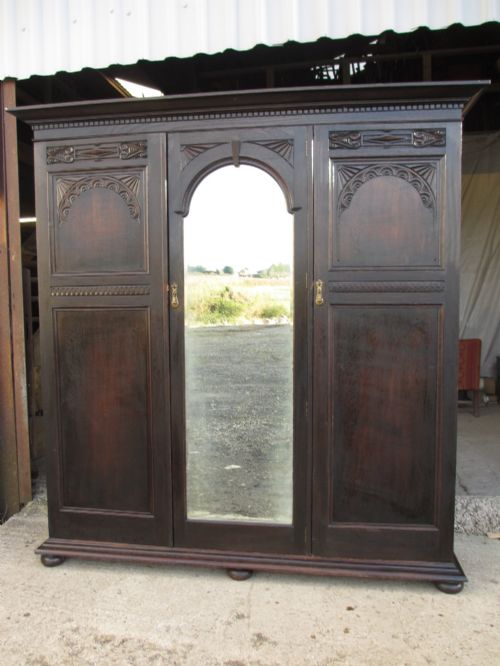
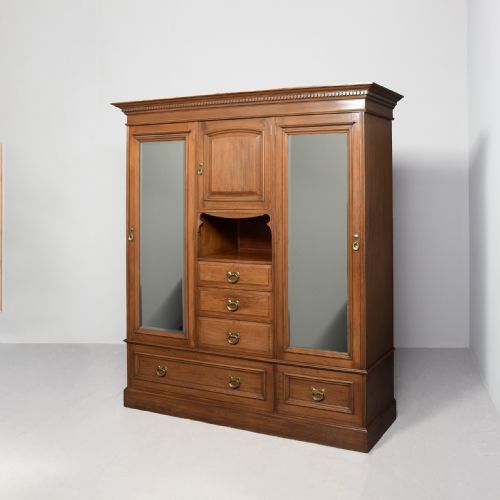
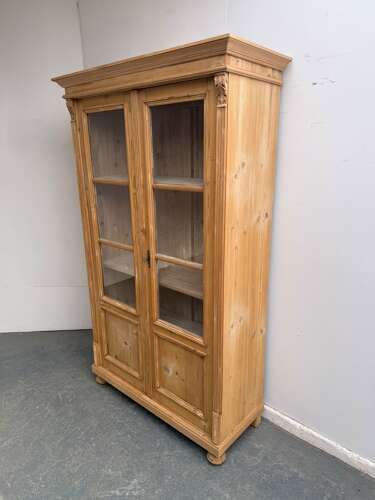
Antique Large Wardrobe
An antique large wardrobe provides monumental presence and essential bedroom storage, combining period craftsmanship with impressive scale.
Antique Large Wardrobe
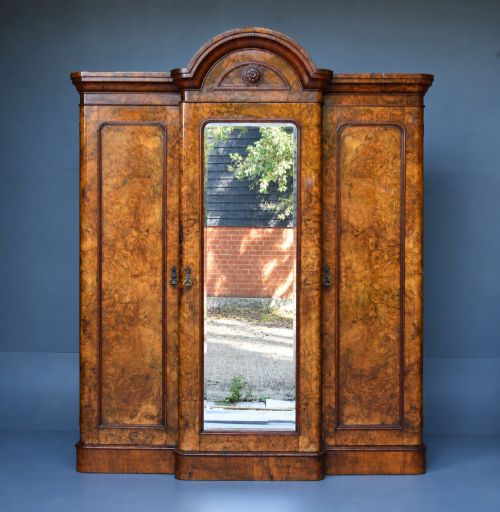
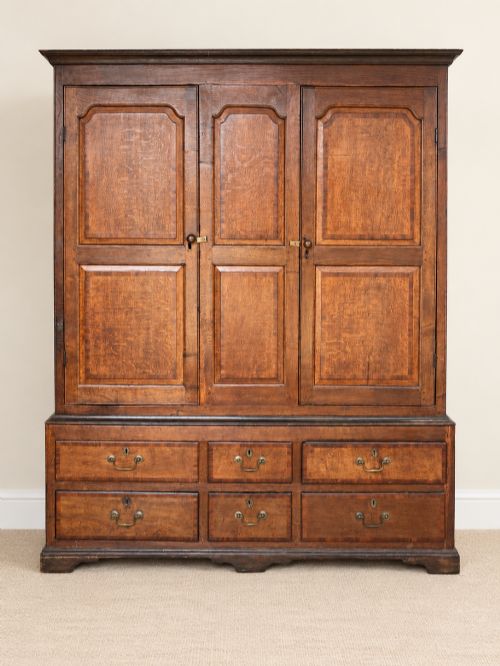
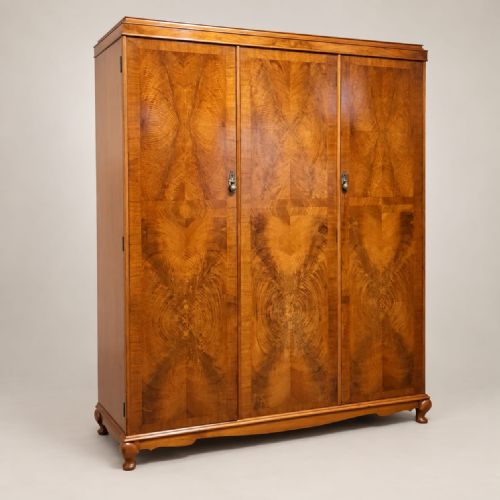
An antique large wardrobe encompasses substantial storage pieces designed for principal bedrooms, frequently encountered as triple or four-door configurations alongside robust armoires and compactums. These substantial furniture items span multiple centuries, originating in periods such as the Georgian era, continuing through Victorian and Edwardian reigns, and extending into the 1920s.
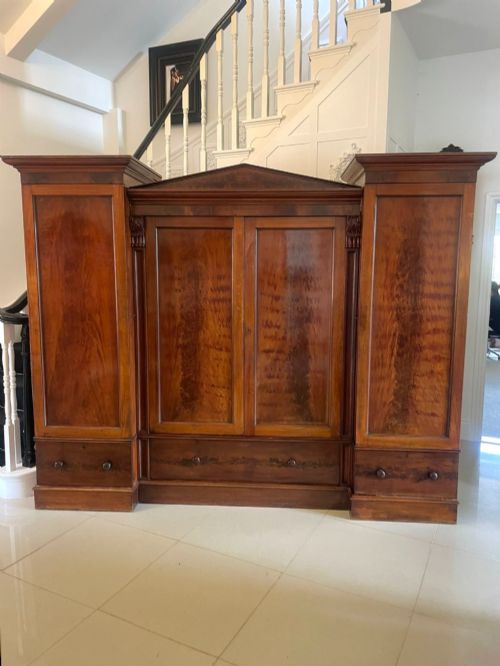
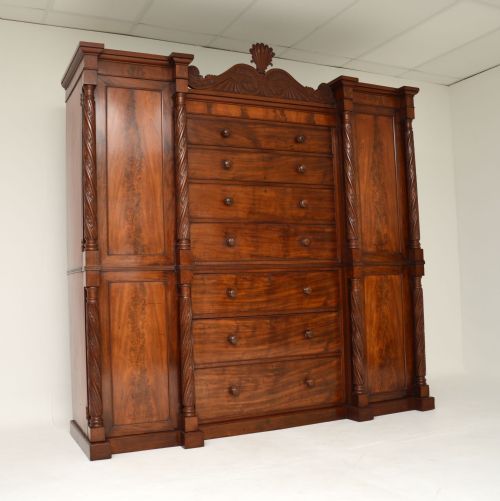
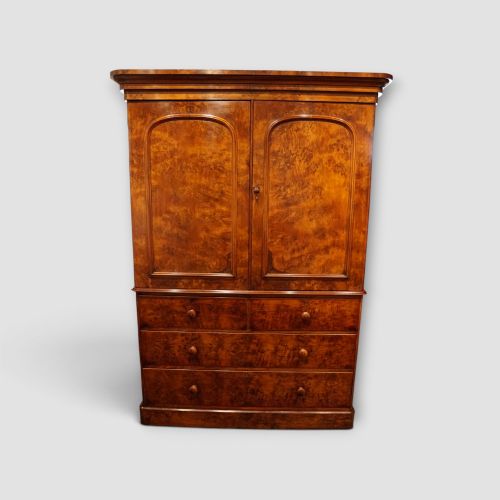
The category incorporates specialised variations including linen presses, housekeepers cupboards, and breakfront designs which integrate linen slides and multiple internal drawers beneath hanging compartments. Buyers on this page encounter both grand formal mahogany and burr walnut expressions intended for stately rooms, alongside substantial painted or waxed pine versions built for domestic utility.
Regional and stylistic diversity shapes the selection, ranging from British architectural carcase work to French provincial armoires and Edwardian satinwood painted pieces. Many of these larger formats utilise knockdown construction, allowing the carcase to dismantle into manageable sections for transport and installation into period properties.
How They Were Made
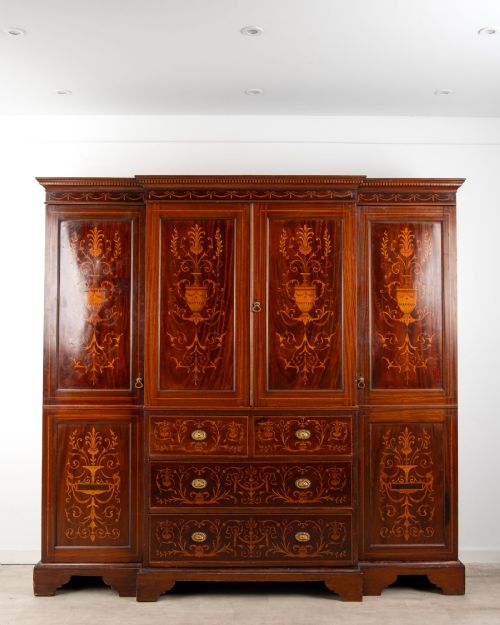
Cabinet makers utilised dense native and imported timbers, selecting figured mahogany, burr walnut, and oak for formal architectural pieces, while employing plain and stained pine for vernacular utility cupboards. Surfaces often display meticulous grain matching, floral marquetry inlay, or satinwood painting on Edwardian and Victorian examples.
Construction techniques prioritized structural integrity for heavy doors and massive carcases, employing panelled framing, dovetailed internal drawers, and breakfront cornices. Many large pine and mahogany editions were engineered as knockdown units with pegged joints or internal bolts, enabling the massive furniture to be disassembled for transit.
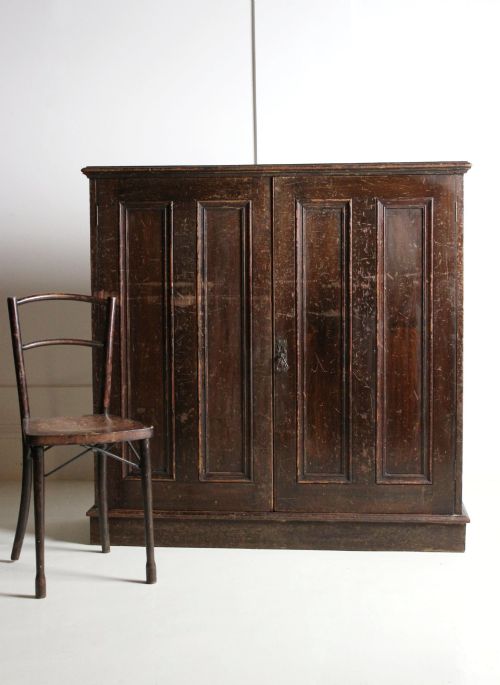
Some pine wardrobes arrive bearing the honest paint splashes of past country decorators who prepped them for cottage life.
What Varies in Quality
The grade of timber selection and veneer preparation dictates visual merit, separating standard utility pieces from pieces commissioned from prominent workshops using highly figured mahogany and burr walnut. Finer examples display symmetrical grain patterns, sophisticated marquetry, and integrated architectural carving.
Internal configuration and joinery execution distinguish superior cabinet work, with top-tier examples offering fully fitted interiors, sliding linen trays, and precisely dovetailed drawers. The execution of mechanical elements such as operable panelled doors and substantial brass or iron hardware reveals the maker's original standard of production.
Holland and Sons·Gillows·Heals of London
The Antique Large Wardrobe Glossary
- Compactum
- A multi-compartment wardrobe combining hanging space, linen slides, and multiple internal drawers within a single unified carcase. This versatile form often includes mirrored doors and central pedestals.
- Breakfront
- A cabinet design where the central section projects forward from the flanking wings. This architectural arrangement creates depth and visual rhythm on large wardrobes and linen presses.
- Linen Press
- A tall storage piece featuring upper cabinet doors enclosing sliding trays for folded textiles, positioned above a chest base with operational drawers. Early versions date to the Georgian and Victorian eras.
- Knockdown
- A construction method utilising pegged joints, bolts, or tongue-and-groove assembly that permits a massive wardrobe to be completely dismantled. This ingenious system facilitated delivery into historic multi-story residences.
- Armoire
- A traditional continental European freestanding cupboard featuring large panelled doors enclosing hanging or shelved storage. French provincial examples frequently exhibit carved crests and fielded panels.
Antique Large Wardrobe: Frequently Asked Questions
How do I dismantle a large wardrobe?
Many period wardrobes utilise knockdown construction with internal bolts or pegged joints designed for assembly on site. Careful removal of the cornice, plinth, and doors allows the main side panels to separate from the backboards.
Marking each component during disassembly ensures correct alignment when rebuilding the carcase in its permanent bedroom location.
What is a compactum wardrobe?
A compactum is a specialised multi-functional storage piece that integrates hanging space, shelving, linen slides, and internal drawers into one unified carcase. These pieces were popular in the Victorian and Edwardian periods for organising complete wardrobes efficiently.
They often feature central mirrored doors flanked by linen presses and hanging compartments, providing maximum utility within a single footprint.
Will a large antique wardrobe fit my room?
These pieces possess monumental scale and require careful measurement of ceiling height, floor space, and stairwell clearance before purchase. Many editions dismantle into sections, which significantly aids in navigating tight corridors and historic doorways.
Allowance must be made for the swing of large panelled doors and the projection of breakfront cornices or lower drawer bases.
How do I care for antique wood surfaces?
Polished mahogany, walnut, and oak surfaces benefit from regular application of traditional beeswax to nourish the timber and maintain a soft lustre. Direct sunlight and proximity to heat sources should be avoided to prevent veneer lifting or wood splitting.
Pine versions finished with wax or paint require gentle cleaning and periodic re-waxing to preserve the tactile finish of the wood.