


Dark Wood Compactum
A dark wood compactum is a substantial storage piece built for serious clothes organisation, combining hanging space and internal drawers.
Dark Wood Compactum
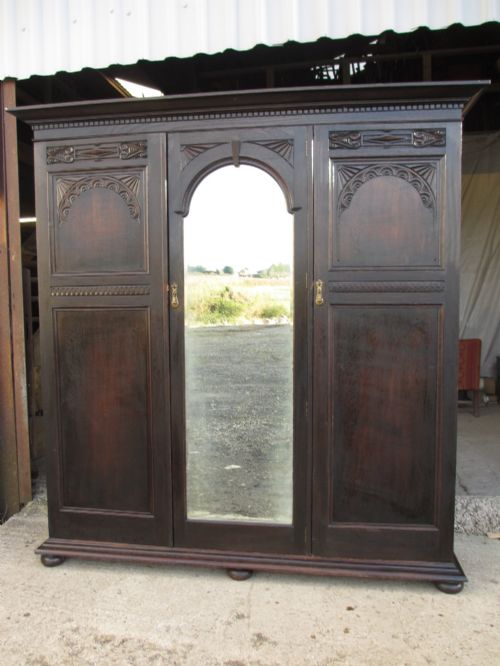
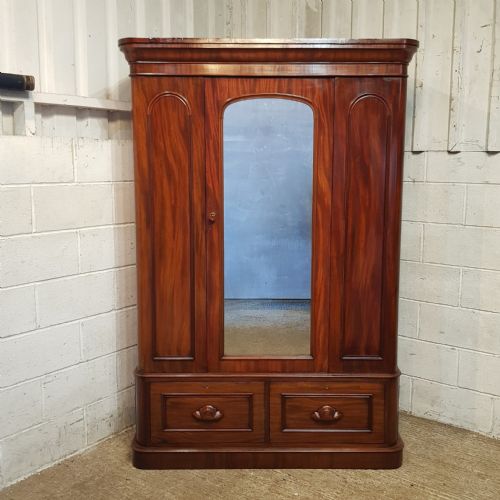
A dark wood compactum is a capacious wardrobe designed to maximise storage by integrating hanging compartments with banks of internal drawers. When browsing this selection, you will encounter substantial pieces primarily originating from the Victorian, Edwardian and Regency periods, alongside early twentieth-century examples.
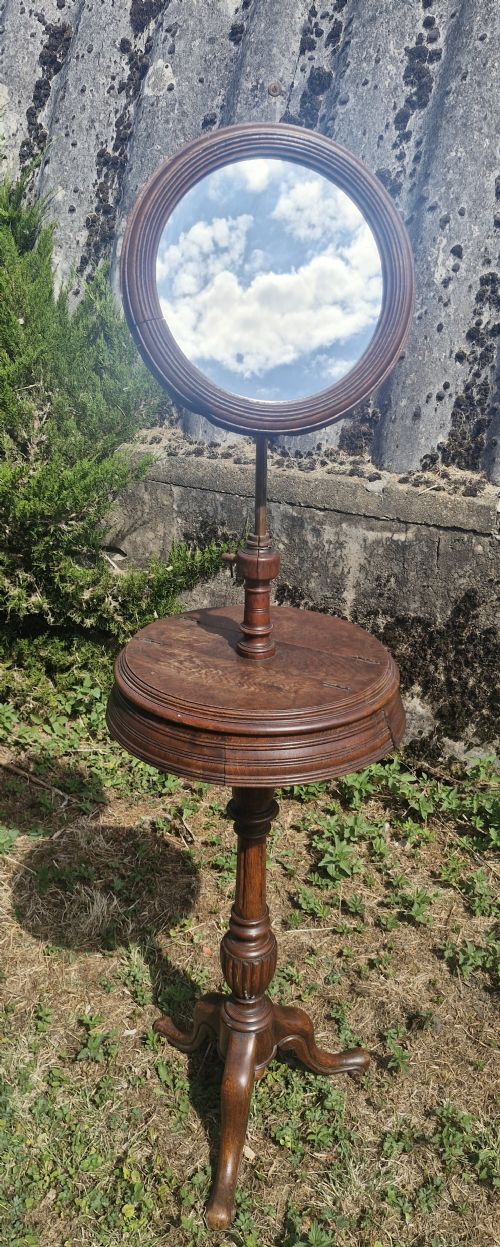
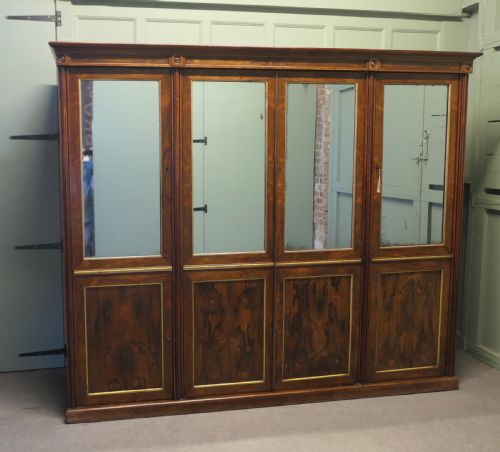
The materials span rich timbers including mahogany, flame mahogany veneer, rosewood, and oak, frequently enhanced with satinwood inlay or brass hardware. While the broader category encompasses wardrobes, shaving stands, and vanity tables, the true compactum combines these storage functions into a single architectural carcass.
How they were made
Cabinet makers constructed these large wardrobes using solid timbers such as mahogany, oak, and rosewood for the main structural elements, often applying flame mahogany veneer to large flat surfaces to create striking grain patterns. Satinwood inlay provided contrasting detail, while brass fittings secured doors and internal mechanisms.
The construction relied on traditional joinery techniques capable of supporting massive timber doors, multi-panel mirror glass, and internal drawer boxes. Breakfront designs and carved ornamentation required skilled hand-working to achieve the architectural proportions seen across Victorian and Edwardian iterations.
The listings span Victorian, Edwardian, and Regency periods, utilising mahogany, rosewood, oak, and satinwood inlay.
What varies in quality
Quality in a dark wood compactum lies in the selection of timber and the precision of its veneers, where matched flame mahogany or carefully cut satinwood inlay elevates a standard carcass into a superior piece. The ambition of the design, from simple Edwardian models to elaborate breakfront configurations, dictates the level of craftsmanship invested in the carved details and brass fittings.
Internal organisation also distinguishes finer pieces, as fitted interiors with integrated drawer boxes and specialised compartments demonstrate a higher standard of bespoke cabinet making. The structural integrity required to support triple doors and heavy mirror glass means that sturdiness of build remains paramount across all periods.
Edwards & Roberts
The Dark Wood Compactum Glossary
- Compactum
- A multi-functional wardrobe that integrates hanging space with internal drawers and shelving within a single carcass. This form provides comprehensive clothes storage.
- Flame mahogany veneer
- A thin slice of mahogany cut from the branch junction to produce a distinctive, flamy figure. Cabinet makers applied this to large flat surfaces for visual impact.
- Satinwood inlay
- Contrasting yellowish timber inserted into the primary dark wood surface to create decorative borders and motifs. This technique brightened formal Edwardian and Victorian designs.
- Breakfront
- A cabinet design where the central section projects forward from the flanking wings. This architectural arrangement creates depth and shadow on large wardrobes.
Dark Wood Compactum: Frequently Asked Questions
What is a compactum wardrobe?
A compactum is a large wardrobe designed to combine hanging space with internal drawers and compartments within one unified piece of furniture.
This format offered complete clothes storage in a single footprint, making it a prominent feature in period bedrooms.
How do I date a dark wood wardrobe?
Dating relies on examining the primary timber, veneer patterns, and decorative motifs such as satinwood inlay or carved panels.
Victorian and Edwardian pieces show distinct stylistic shifts from heavy Gothic Revival details to lighter inlaid Edwardian aesthetics.
Where were these pieces used?
These large storage items were built for the principal bedrooms of substantial nineteenth and early twentieth-century homes.
Their substantial proportions required dedicated rooms designed to accommodate architectural furniture.
Are compactums difficult to move?
Due to their solid timber construction and large carcasses, these wardrobes are heavy and often dismantle into sections for transport.
Breakfront designs and triple door configurations require careful dismantling and reassembly during relocation.