


Rosewood Bedroom Storage
Rosewood bedroom storage offers rich grain and dark warmth, bringing sophisticated utility to traditional and modern sleeping quarters alike.
Rosewood Bedroom Storage
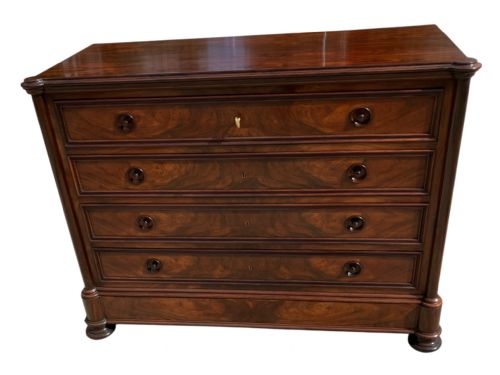
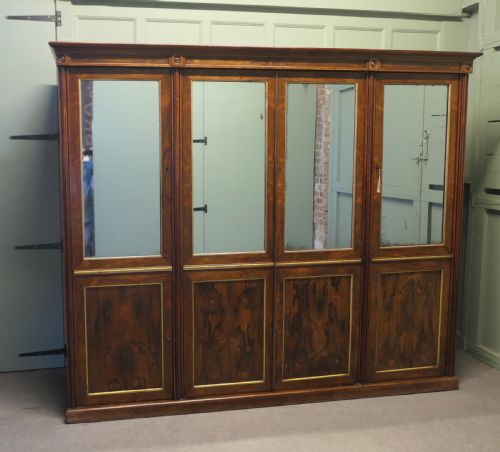
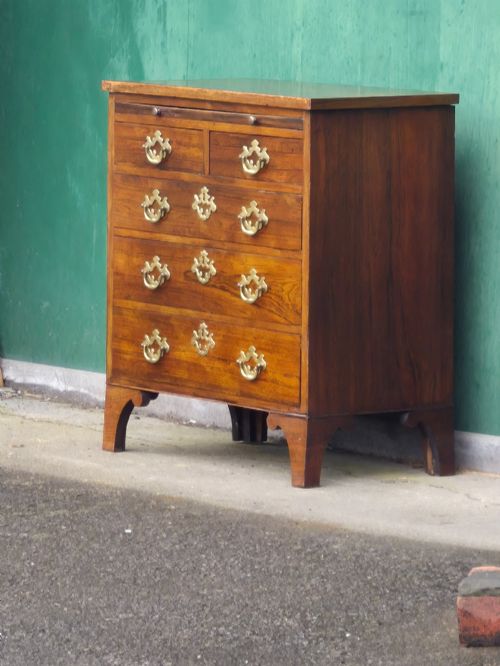
Rosewood bedroom storage encompasses substantial case furniture designed for clothing and linens, featuring prominent timbers and varied regional styling. Buyers searching for rosewood bedroom storage encounter pieces ranging from compact chests of drawers to large wardrobes and linen presses.
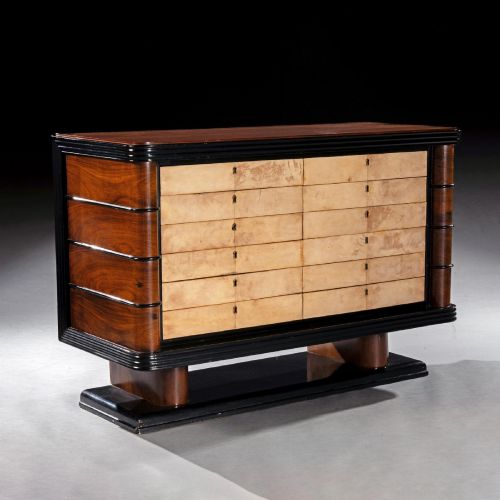
The selection includes Victorian examples alongside French commodes and Regency pieces, reflecting diverse domestic requirements across the nineteenth and early twentieth centuries. Wardrobes, armoires, and chiffoniers appear alongside specialised forms such as ottomans and parchment-fronted commodes.
Victorian and nineteenth century periods dominate the available forms, accompanied by earlier eighteenth century French designs and Art Deco variations. These items combine deep-toned hardwoods with practical internal configurations suited to contemporary organisation.
Materials and construction
Makers utilised solid and veneered rosewood and palisander, frequently enhanced by crossbanding in contrasting timbers such as mahogany, satinwood, tulipwood, and kingwood. Marquetry and delicate stringing details appear across French commodes and English chests.
Metal mounts in ormolu and brass provide structural accents and drawer pulls, while inset marble tops appear on numerous continental commodes. Parchment serves as a contrasting drawer covering on twentieth century pieces.
Internal carcases employ secondary timbers to support heavy hardwood drawer boxes and hanging spaces, constructed with traditional joinery appropriate to each period.
Storage forms range from traditional English chests and linen presses to continental commodes, chiffoniers, and parchment-fronted Art Deco cabinets.
Assessing quality
Quality rests upon the selection and matching of the rosewood veneer and grain patterns across large surfaces. Superior examples demonstrate continuous grain flow and careful timber pairing on drawer fronts and doors.
The integration of secondary materials such as marble, brass ormolu, and parchment indicates the level of ambition in the original workshop. Finer hardware and precise marquetry distinguish workshop standards from standard commercial production.
The Rosewood Bedroom Storage Glossary
- Rosewood
- A dense, heavily figured dark timber valued for its rich colour and polished finish. It appears extensively in high-status cabinet work throughout the nineteenth century.
- Commode
- A decorative low chest of drawers or cabinet originating in France. These pieces frequently feature marble tops and elaborate marquetry.
- Linen Press
- A tall piece of furniture combining upper storage trays for textiles with lower drawers for garments. They often feature panelled doors enclosing sliding shelves.
- Palisander
- A botanical term often applied to specific varieties of dense tropical rosewood. The material shows distinct dark figuring and takes a high polish.
- Crossbanding
- A decorative border technique where veneer strips are laid perpendicular to the main grain. This frames drawer fronts and top panels with contrasting timber direction.
Rosewood Bedroom Storage: Frequently Asked Questions
How do I care for rosewood furniture?
Keep rosewood pieces away from direct sunlight and steady heat sources to prevent the timber from drying and the finish from fading. Dust regularly with a dry cloth and avoid silicone-based polishes that build up over time.
Apply a microcrystalline wax occasionally if the surface requires nourishment, rubbing it gently with the grain. Ensure spills are wiped immediately to protect the polished finish.
Are these pieces suitable for modern bedrooms?
Rosewood storage pieces provide deep internal capacity for modern clothing while introducing substantial presence and historic character to a room. Their dark tones anchor neutral interior schemes effectively.
Consider the physical footprint of wardrobes and large chests before purchase, as nineteenth-century proportions can be generous. Measure access routes including stairwells and doorways to ensure safe delivery.
What is the difference between a commode and a chest of drawers?
A commode generally refers to continental European low chests, frequently featuring decorative marquetry, shaped aprons, and fitted marble tops. They serve both decorative and practical storage functions.
A standard chest of drawers typically follows British or American domestic formats with straightforward rectangular proportions. Both types provide robust storage capacity for bedroom interiors.
How can I identify the period of a piece?
Period identification relies on examining construction methods, timber choices, decorative motifs, and hardware styles. Regency and Victorian items display specific proportions and revival ornamentation that distinguish them from earlier Georgian work.
French transitional and Art Deco pieces exhibit distinct continental design markers such as parchment panels or specific ormolu mounts. Comparing internal secondary woods and drawer linings further clarifies dating.