




Bevelled Overmantel Mirror
A bevelled overmantel mirror anchors a chimney breast with scale, reflecting light and depth across a room.
Bevelled Overmantel Mirror
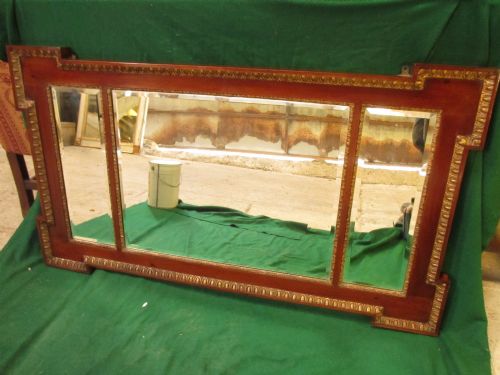
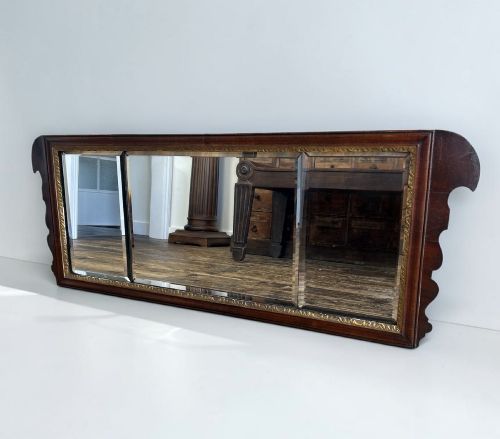
A bevelled overmantel mirror sits above a fireplace, designed specifically to fill the architectural span of a chimney breast. These pieces bring light and a sense of breadth into reception rooms through substantial proportions and reflective surfaces.
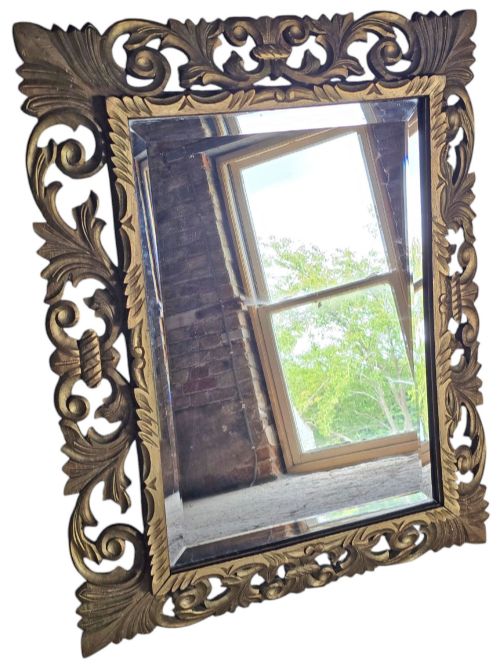
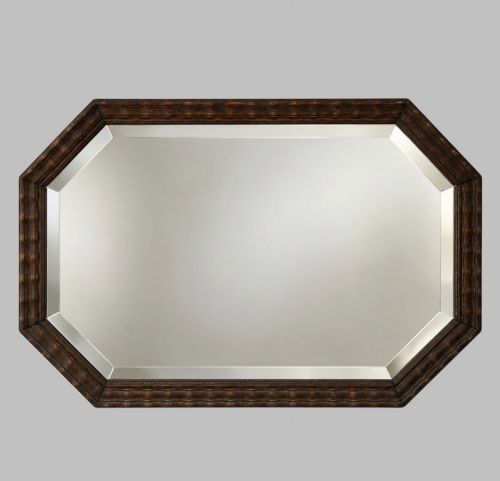
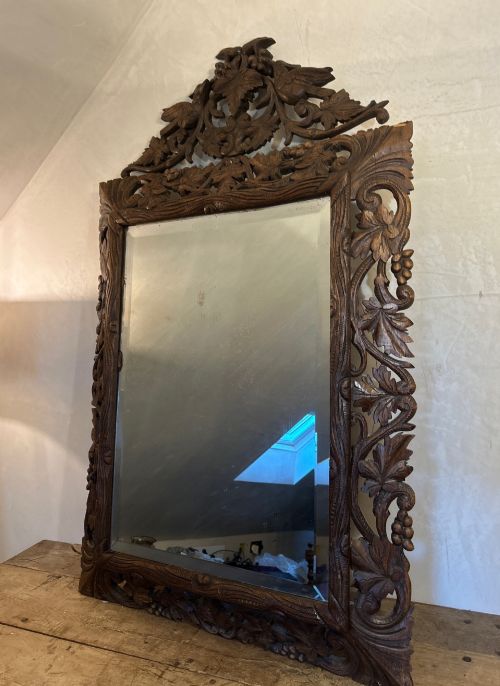
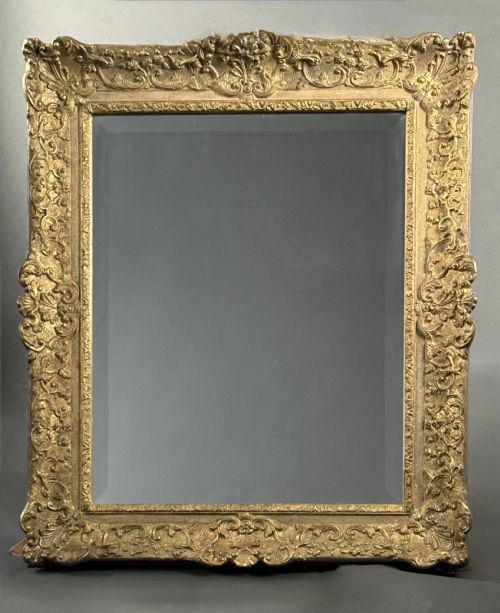
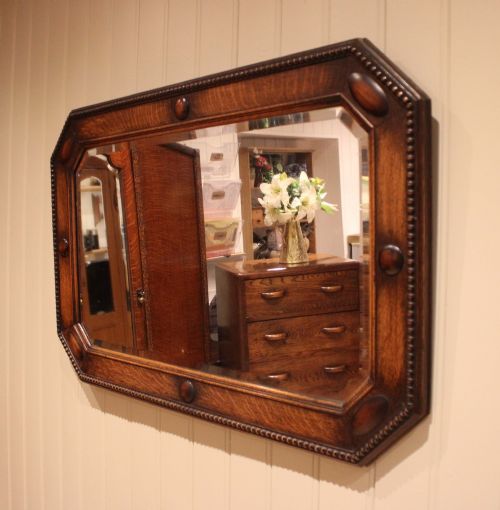
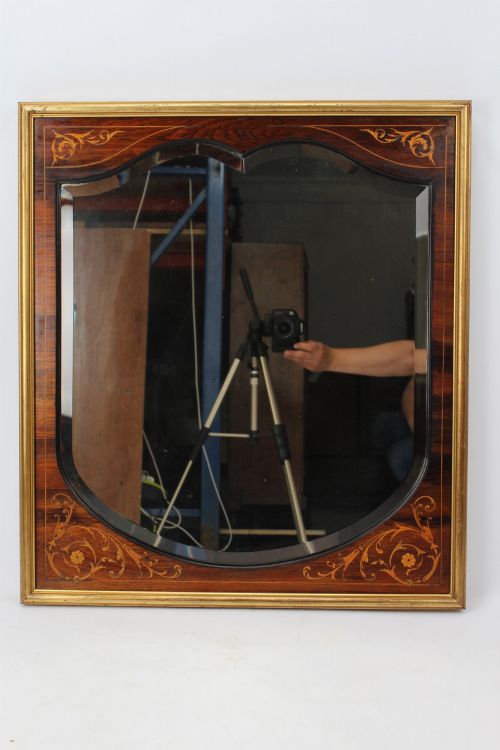
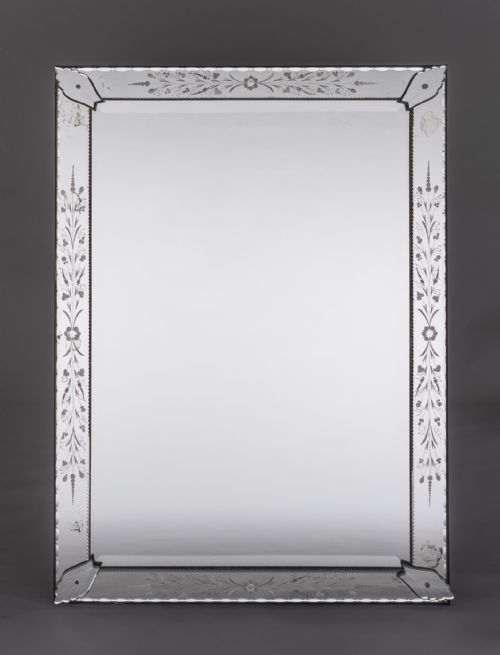
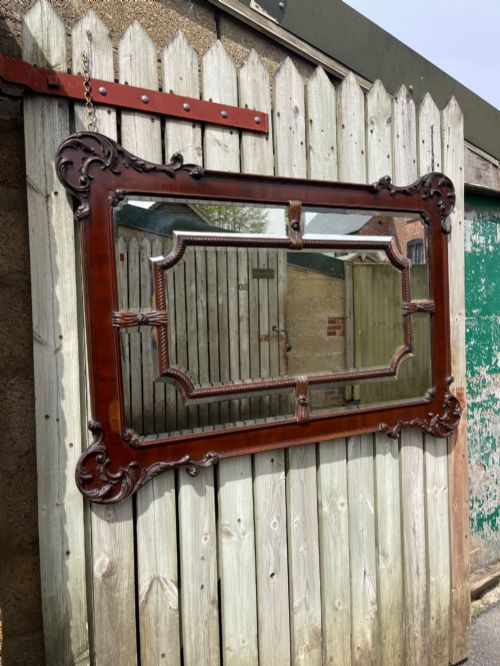
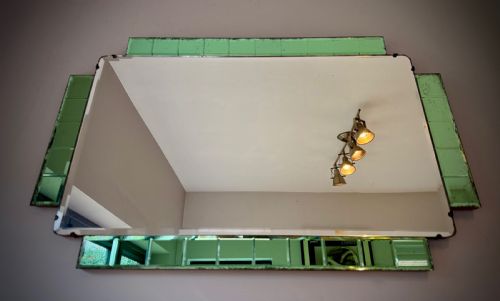
The versions met on this page range widely in origin and period, spanning Georgian symmetry, Victorian gilding, Edwardian rosewood, and the geometric lines of Art Deco. Many examples show French influence, utilising Rococo revival curves or Louis XVI restraint alongside English oak and mahogany frames.
How they were made
Frames rely upon traditional timber construction, using oak, walnut, mahogany, and rosewood, often enriched with carved gesso and applied gilding. Cabinetmakers shaped solid woods and applied veneers with precision to create durable architectural housings for heavy glass.
Glass plates were ground by hand to produce the characteristic angled edge known as the bevel, sometimes utilising mercury backing in earlier examples. Carvers and gilders layered gold leaf over prepared gesso grounds to achieve deep, reflective metallic finishes.
Early mercury glass plates sometimes catch the light with subtle, cloudy constellations born from centuries of slow oxidation.
What varies in quality
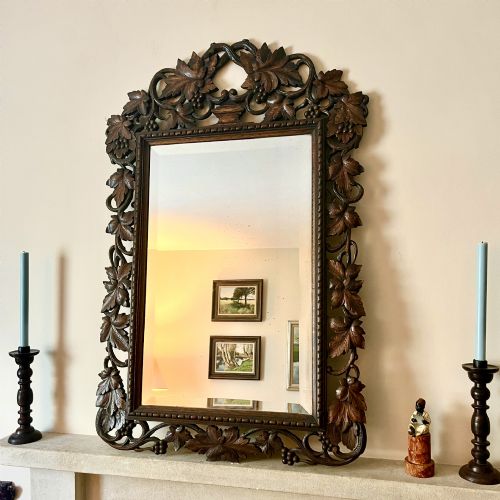
The sophistication of the frame carving distinguishes standard production from exceptional craftsmanship, visible in the crispness of acanthus leaves, scrollwork, and moulded details. Hand-gilded surfaces demonstrate depth through burnishing, whereas lesser pieces show flat or uniform metallic application.
The purity and depth of the mirror plate itself set the standard, with older mercury plates or thick bevelled glass creating distinct optical warmth. Structural integrity in the joints and original backboards indicate whether a piece retains its original construction.
Waring and Gillow
The Bevelled Overmantel Mirror Glossary
- Overmantel
- A mirror or painting designed specifically to hang on the wall directly above a fireplace mantelpiece. These pieces often feature wide horizontal proportions to match the width of the hearth below.
- Bevel
- An angled edge ground along the perimeter of a mirror plate. This technique catches and refracts light differently across the face of the glass.
- Gesso
- A plaster-like mixture applied to wood frames as a smooth base for gilding or painting. Skilled artisans carved intricate relief patterns directly into this dried surface.
- Giltwood
- Timber that has been coated with a thin layer of gold leaf. It remains a defining feature of formal decorative mirrors from the eighteenth and nineteenth centuries.
- Triple plate
- A mirror construction divided into three distinct vertical sections within a single frame. This layout was popular in larger nineteenth-century overmantel designs to distribute reflection evenly.
Bevelled Overmantel Mirror: Frequently Asked Questions
How do I choose the right size overmantel mirror?
Select a mirror that matches or sits slightly narrower than the width of your mantelpiece shelf. This maintains visual balance between the fireplace surround and the wall above.
Consider the ceiling height of the room as well, allowing tall frames to draw the eye upward without touching architectural mouldings.
Where should an overmantel mirror be hung?
These mirrors traditionally anchor the chimney breast in a principal reception room or dining space. Placing them directly above the fireplace reflects light from opposite windows deep into the interior.
Ensure the wall fixings are robust enough to support heavy timber and glass assemblies safely.
How do I identify a Victorian overmantel mirror?
Victorian examples frequently display heavy giltwood and gesso frames with Rococo revival curves or architectural cushion mouldings. They often incorporate wide bevelled plates and robust timber backboards.
Look for nineteenth-century construction methods in the framing joints to confirm the era.
Are these mirrors suitable for modern interiors?
The architectural scale of these pieces adds immediate depth and character to contemporary rooms. They contrast effectively against plain walls, bringing historical texture into minimalist spaces.
Lean the mirror securely on the mantel shelf or mount it firmly at eye level depending on the desired room layout.