

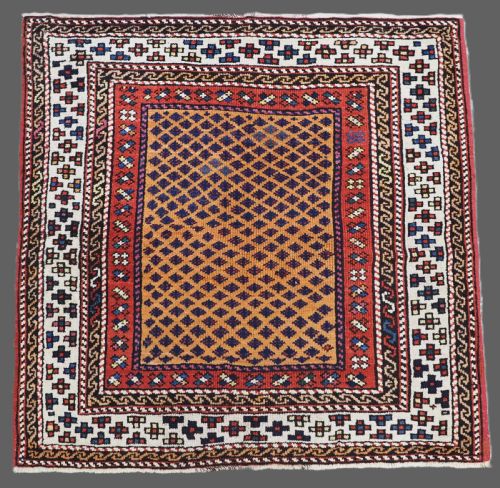
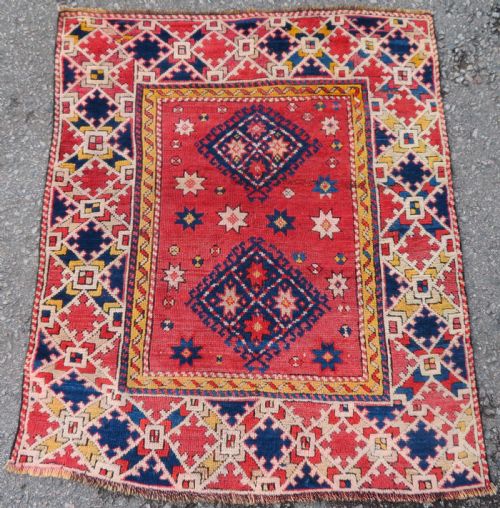


Bergama Rug
When you handle a bergama rug, you touch centuries of west Anatolian village tradition woven into rich, durable floor coverings.
Bergama Rug
A bergama rug originates from the historic market town and surrounding villages in west Anatolia, representing an enduring tradition of Turkish tribal and village weaving. These pieces often arrive as village prayer rugs, small square formats, or larger formats carrying classic geometric, lattice, and compartment designs.
The materials you encounter are wool and cotton, utilised in traditional village structures including flatweaves like kilims woven in two parts. Pieces span from the nineteenth century into the early twentieth century, showing the persistence of traditional motifs across decades of domestic use.
How they were made
Weavers constructed these textiles primarily using wool for the pile and foundation, occasionally incorporating cotton, knotted by hand in village workshops and nomadic camps. The structure relies on sturdy village techniques that produced robust carpets capable of withstanding heavy daily wear.
Natural dyestuffs yielded the distinctive palette recorded in the evidence, including soft tones, rich shades, and occasional bright yellows set against ivory or darker grounds. The construction encompasses both piled carpets and flatwoven kilims formed of multiple panels joined together.
Bergama Rug Retail Price Guide 2026
Typical asking prices for bergama rug among the pieces listed under this phrase on Sellingantiques today, from the lower quarter to the upper quarter. They describe what is for sale here now, not the wider market.
What varies in quality
Quality in a bergama rug rests upon the handling of colour, the clarity of the graphic design, and the integrity of the wool. Pieces exhibiting superior colour balance and bold, well-executed Anatolian motifs stand apart from standard village productions.
The handle of the wool and the precision of the village knotting determine the longevity and tactile appeal of the weave. Finer examples retain crisp geometric layouts, such as Holbein or lattice patterns, showing greater intentionality in the tribal design.
The Bergama Rug Glossary
- Bergama rug
- A woven floor covering produced in the region surrounding Bergama in west Anatolia, typically displaying traditional village or tribal motifs. These textiles range from small square formats to room-sized carpets.
- Prayer rug
- A textile featuring a mihrab or niche design intended to direct the worshipper, commonly found among nineteenth and early twentieth century west Anatolian village weavings.
- Kilim
- A flatwoven textile produced without a pile, sometimes constructed in two separate parts and joined down the centre as seen in regional Karakecili pieces.
- Anatolian
- Pertaining to the geographic region of Asia Minor encompassing diverse weaving traditions influenced by Ottoman village and tribal cultures.
- Holbein design
- A geometric pattern featuring octagons enclosed within squares, named after the Renaissance painters who depicted such carpets in their artwork.
Bergama Rug: Frequently Asked Questions
What is a bergama rug?
A bergama rug is a hand-knotted or flatwoven textile originating from the west Anatolian region of Turkey. These pieces are traditionally made by village and tribal weavers using wool and cotton.
They reflect historic design idioms, including geometric patterns, prayer niches, and compartment layouts passed down through generations.
How were these rugs used?
These textiles served primarily as functional floor coverings and decorative furnishings within domestic spaces. Prayer variants also held specific devotional purposes in households.
Their robust wool construction allowed them to endure heavy daily use while adding warmth and colour to interiors.
How do I live with one?
Living with a village rug involves placing it in low-to-medium traffic areas where the natural wool pile can be appreciated without excessive abrasion. Using a quality underlay protects the historic foundation from slipping and premature wear.
Regular gentle vacuuming without a rotating brush helps maintain the cleanliness of the fibres over time.
How do I date these pieces?
Dating relies on examining the structural characteristics, dyestuffs, and design evolution visible across nineteenth and early twentieth century examples. Earlier pieces often display deeper secondary colours and more archaic village drawing.
Comparisons with dated or documented archive examples help establish whether a piece belongs to the nineteenth century or the subsequent decades.