


Baroque Wood Carving
Baroque wood carving brings heavy drama to interiors through deep relief, scrolling foliage and rich gilding.
Baroque Wood Carving
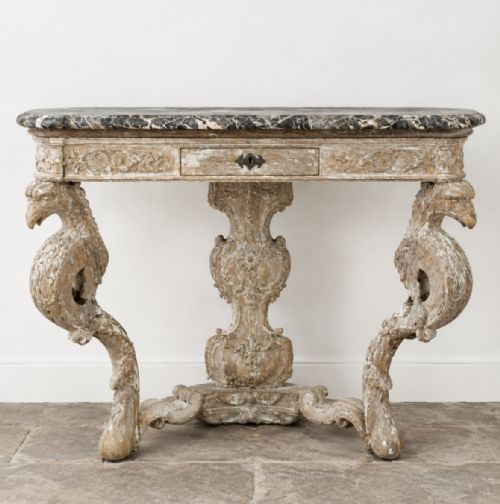
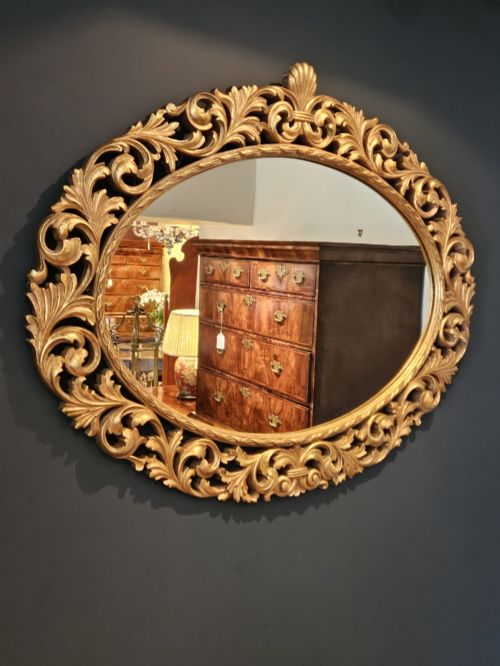
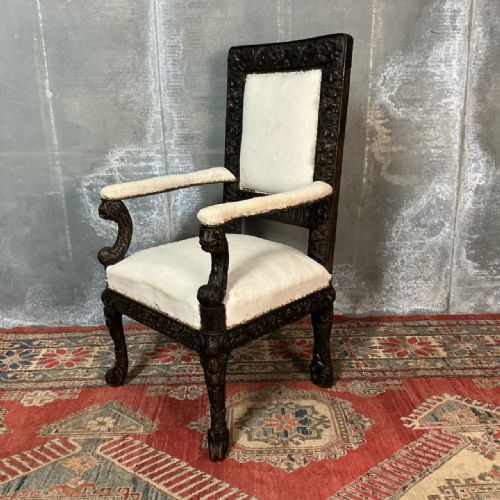
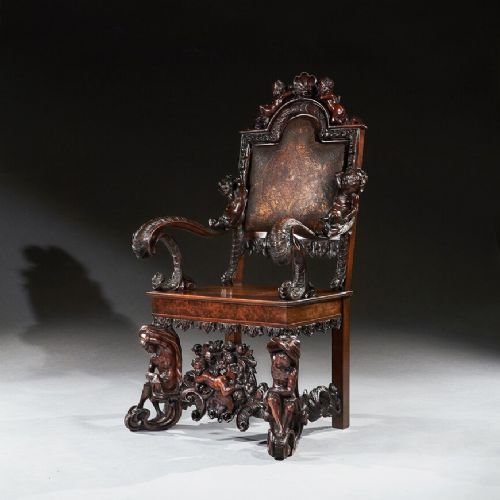
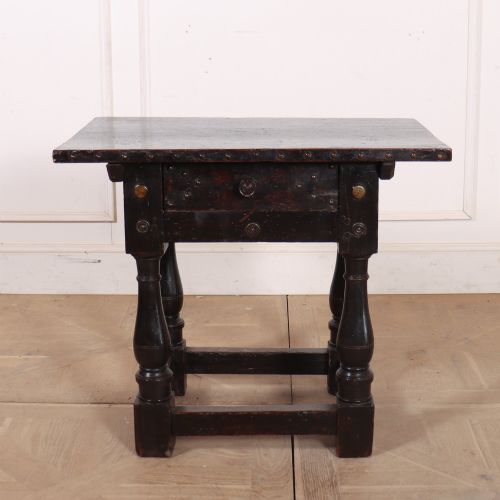
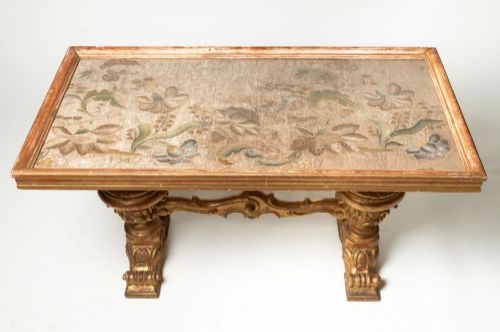
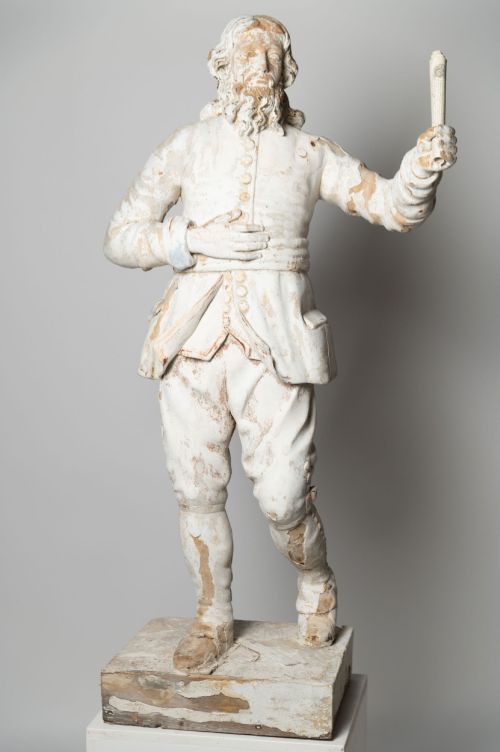
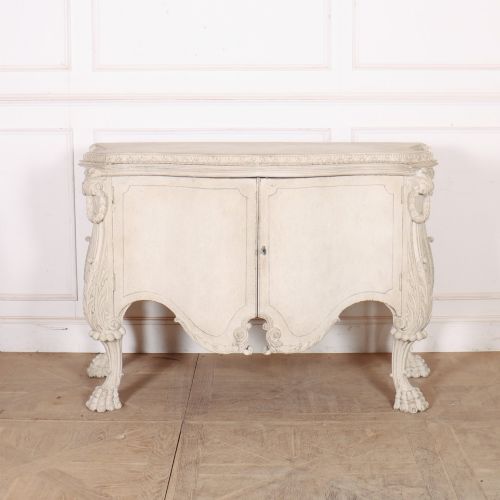
When you search for baroque wood carving, you encounter objects shaped by seventeenth, eighteenth and nineteenth century hands, dominated by Italian and Dutch workshops. The selection here leans heavily toward wall mirrors, giltwood brackets, console tables and figurative sculptures rather than everyday furniture. These pieces span centuries of revival work alongside authentic period production, maintaining a focus on solid timber and applied ornament.
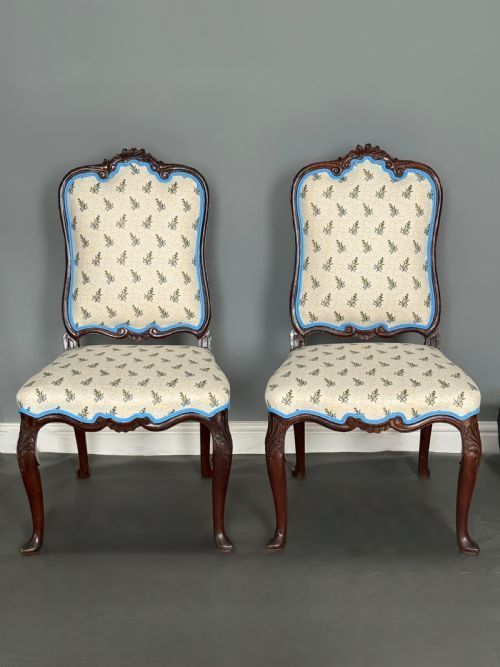
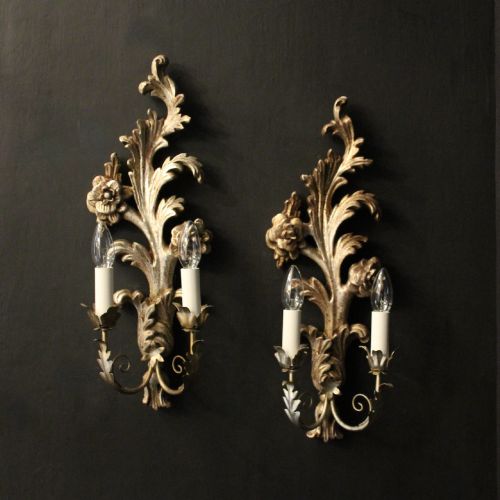
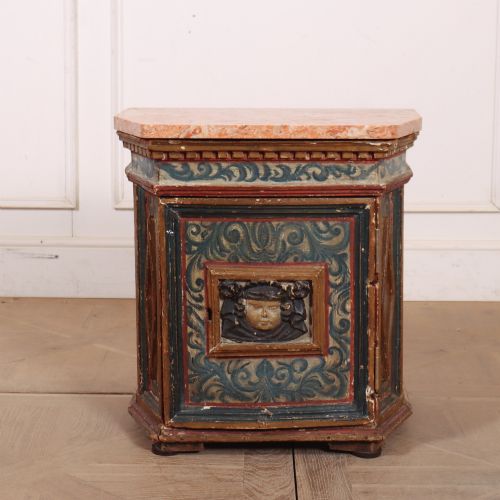
Mirrors and wall lights frequently appear in Florentine and Venetian styles, often finished in gold leaf or silver gilt over gesso. Tables and chairs emerge in walnut, oak and mahogany, carrying intricate profiles that reflect regional European tastes. Figures of saints, cherubs and putti provide the sculptural element within this grouping, showing polychrome paint or exposed timber surfaces.
How they were made
Craftsmen shaped these items from woods such as walnut, oak, mahogany and rosewood, applying hand tools to achieve high relief and undercut foliage. Many surfaces received a preparation of gesso before layers of gold leaf or silver were laid down and burnished. Paint and polychrome finishes appear on figures and panels, sealing the timber and adding colour.
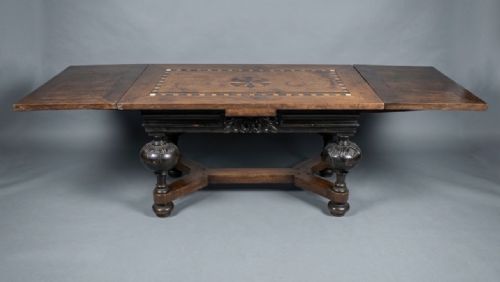
Joinery techniques like draw leaves and pegged frames support larger tables and chests, whilst mirrors use rebated wooden frames to hold heavy glass plates. Carvers worked directly into the solid timber or built up decorative motifs in gesso over wood substrates for intricate mirror frames.
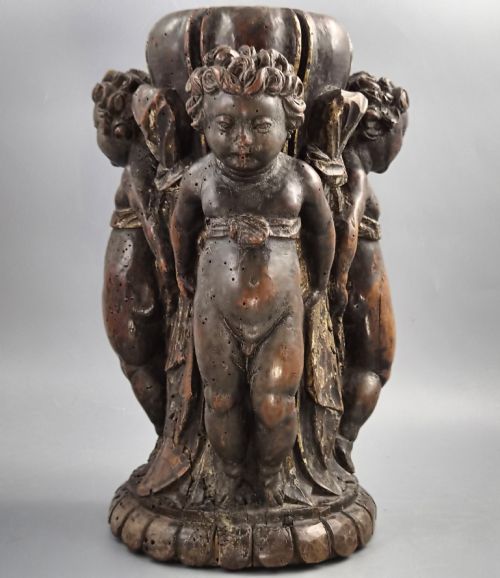
Cherubs and putti maintain a constant watch over these centuries, peeking from mirrors, brackets and table bases alike.
What varies in quality
The depth and crispness of the chisel work distinguish superior carvings from softer, mechanically smoothed production. Pieces displaying naturalistic movement in drapery, hair and musculature demonstrate greater skill than stiff or repetitive ornamentation. Original gilding and untouched polychrome surfaces carry more integrity than later overpainting or re-gilding.
The quality of the underlying timber dictates the longevity of the object, with dense hardwoods holding sharp edges better than softer substitutes. Architectural integration, such as the scale of a console table top relative to its carved base, separates bespoke commissions from standard workshop output.
Andrea Brustolon·Amleto Bertoni·Toussaint Gelton
The Baroque Wood Carving Glossary
- Giltwood
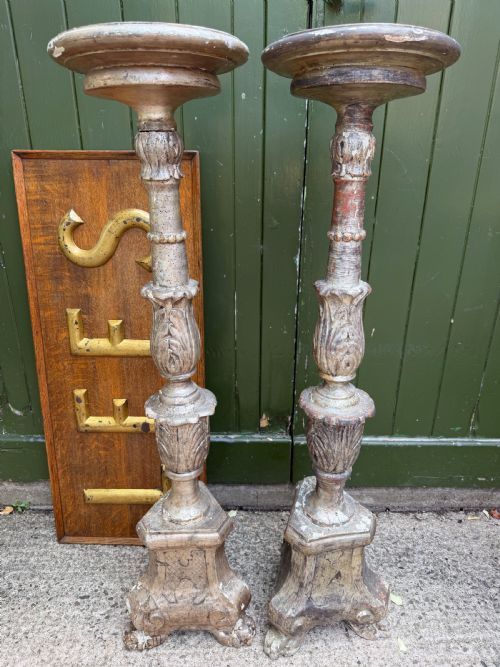
- Timber coated with gold leaf over a prepared gesso base. This finish brightens dark interiors by reflecting candlelight.
- Gesso
- A mixture of gypsum and binder applied to wood before gilding or painting. It provides a smooth ground for fine detail work.
- Torchiere
- A tall stand or candlestick holder designed to support a light source. They frequently feature carved figures or twisted columns.
- Putti
- Depictions of plump, winged infants derived from classical art. They populate frames, brackets and sculptural bases across this period.
- Console table
- A table designed to stand against a wall, often supported by carved brackets or legs. These items served as decorative display surfaces in grand reception rooms.
Baroque Wood Carving: Frequently Asked Questions
Are these pieces made of solid wood?
Most items utilise solid timbers like walnut, oak and mahogany for their structural frames and sculptural elements.
Some decorative mirror frames combine carved wooden foundations with moulded gesso ornamentation to achieve high relief.
How do I identify a revival piece?
Nineteenth and twentieth century revival items often display machine tool marks and uniform timber seasoning behind the surface carving.
Period pieces from the seventeenth and eighteenth centuries show tool inconsistencies and natural oxidation within the grain.
Where should I place a wall bracket?
Mount these small shelves at eye level to display porcelain, small sculptures or clocks securely against the wall.
Ensure the wall fixings engage with solid masonry or studs to support the weight of the carved timber.